
Share This Article



Last updated: March 20, 2026
The Divine Keychain
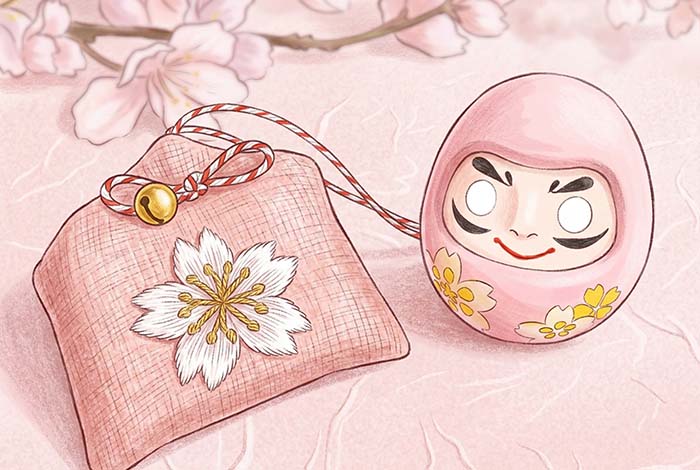
If you look closely at a Japanese student’s backpack or a businessman’s briefcase, you will often spot a tiny, beautifully embroidered silk bag hanging like a keychain. These are not fashion accessories; they are portable magic called “Omamori” (Amulets).
Buying a Wish
When Japanese people visit Shinto shrines or Buddhist temples, they buy these Omamori. They usually cost around 500 to 1,000 yen. Inside the small fabric bag is a small piece of wood or paper with a prayer written on it by the priests. It is believed to contain the power of the gods.
Highly Specific Gods
There is an Omamori for almost every desire in life. The standard ones are for “Traffic Safety,” “Good Health,” or “Financial Success.” But recently, they have become incredibly niche! You can find Omamori for “Passing the IT Certification Exam,” “Pet Health,” or even “Winning Concert Tickets.” Some shrines even collaborate with popular anime characters!
Do Not Open It!
There is one absolute rule with an Omamori: Never look inside. It is tied tightly with a special knot. If you open it to see the prayer paper inside, the magic escapes, and the amulet becomes useless.
The One-Year Expiration Date
Unlike normal keychains, Omamori have an “expiration date.” They absorb bad luck on your behalf. Therefore, after exactly one year, you are supposed to return the old Omamori to the shrine so the priests can purify and burn it in a sacred fire. Then, you buy a fresh one for the new year!
Shrines as the Center of Life (Related Articles)
Shrines in Japan are not just quiet places for praying and buying Omamori. They are the vibrant, chaotic center of community life and traditional festivals!
- The Glowing Wonderlands
In summer, those quiet local shrines transform into chaotic, glowing wonderlands for “Omatsuri” (Summer Festivals)! Red paper lanterns are hung everywhere, and teenagers wearing casual “Yukata” kimonos walk around eating from food stalls and scooping live goldfish with a paper net.
👉 What is the huge circle of dancing people?
Check out: “What Happens to Japanese Shrines in Summer? (The ‘Omatsuri’ Magic)”
2.The Wall of Wooden Wishes
Besides buying portable Omamori, there is another famous way to make a wish at a shrine: writing it on a wooden board called “Ema”. Shrines have large wooden racks overflowing with these plaques, and people write anything from passing exams to hoping for concert tickets, creating a wall of dreams (and sometimes an anime art gallery!).
👉 Why is there a picture of a horse on it?
Check out: “Why Are There Thousands of Wooden Boards at Japanese Shrines? (The ‘Ema’ Wishes)”
.
.
Share This Article
Related Articles
Pick Up
- Pokemon Worlds Takes Over San Francisco, and We Got ...
- Japan Now! She Said Yes. Olympic Champions Riku Miur...
- Japan Now! 7,000 Stranded at Narita as Record Rain S...
- Japan Now! Japan Answered. The Monster Falls, and th...
- Japan Now! The Spear Won. Chiben Wakayama Takes Kosh...
-

- Japan Now! Whole Torched Purin on a Crepe. Ise’...
- Japan Now! It’s Rice Day in Japan, So Dragon Q...
- Japan Now! Doraemon Is Taking a Steam Train to Victo...
- Japan Now! 156 km/h. Bases Loaded. No Outs. Koshien&...
- Japan Now! The Final Four Is Set. Ariake’s Mir...
- See more Fun Facts articles >








Latest Articles
- WA Dining Suya Enjoy the Flavors of Fall with Limit...
- Free Medicare Seminars, Learn the Besics and Review...
- Den’s Tea ...
- Capture Special Memories at Kimono no Kobeya ...
- Recommended for Those on a Diet! Healthy Noodles
-

- Savor Seasonal Specials at TAKAGI COFFEE!
- Daikokuya El Monte Celebrates 10th Anniversary! ...
- Check Out JINS 360°! New Store Now Open!
- Pho-Inspired Asian Spicy Ramen Returns for a Limited...
- Discover JINS’ Revolutionary Multi-Directional Movem...
- See all articles >