What Is the Japanese Secret to a Long Life? (The 84-Year Mystery)

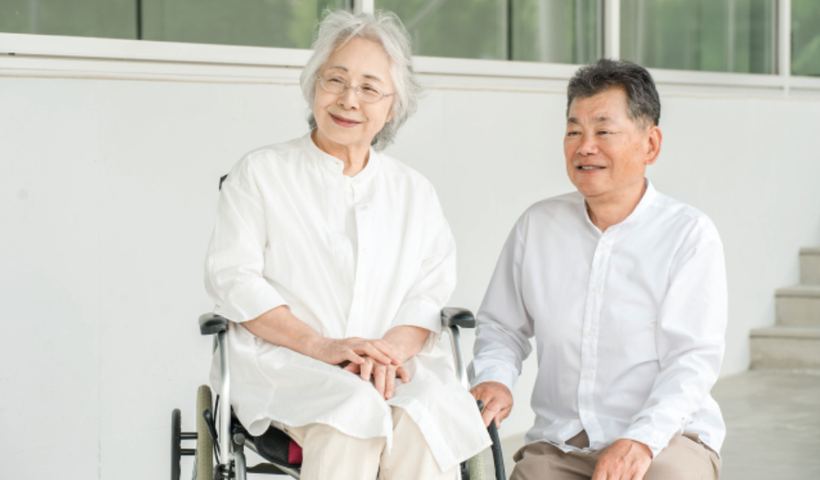
The Global Longevity Champions If you are searching for the fountain of youth, you should probably book a flight to Japan. The country consistently ranks at the very top of the global life expectancy charts, with the average citizen living to be around 84 years old (and women often reaching 87!). In regions like Okinawa, there is an unusually high concentration of active, healthy centenarians (people over 100 years old). For Americans dealing with a culture of massive portion sizes, highly processed fast food, and heavy reliance on driving, the Japanese lifestyle seems almost like magic. So, what is the…

View More What Is the Japanese Secret to a Long Life? (The 84-Year Mystery)

[Japanese Interviews: Life in LA] Dan Sawada : “I Take Pride in What I Build — Loving the Product Is What Kept Me Going”

“It all started with coming here to chase my dream of forming a band with Americans, touring the world, and becoming a rock star.” Atsushi Nakagawa founded AMAZAKE CO. in Los Angeles in April 2019. He is the creator of the “Amazake Latte,” which has gained popularity at Farmers Markets in Torrance and Hollywood. How did his dream evolve? We took a closer look at his life.

View More [Japanese Interviews: Life in LA] Dan Sawada : “I Take Pride in What I Build — Loving the Product Is What Kept Me Going”

Is Japan Actually a Concrete Jungle? (The 65% Forest Secret)

The Cyberpunk Illusion When foreigners think of Japan, they usually picture the ultra-modern, neon-soaked streets of Tokyo, the chaotic sea of pedestrians at Shibuya Crossing, or the endless concrete sprawl of Osaka. It is easy to assume that Japan is just one giant, futuristic concrete jungle. However, this is a massive geographical illusion. If you take a bullet train (Shinkansen) just 30 minutes outside of any major Japanese city, the concrete suddenly disappears, replaced by an endless ocean of deep green mountains. Shockingly, roughly 65% of Japan’s entire landmass is covered in dense, uninhabited forests! The Squeeze of the Mountains…

View More Is Japan Actually a Concrete Jungle? (The 65% Forest Secret)

Need a Best Man? Just Rent One! (Japan’s Fake Friend Industry)

The Pressure of Perfection In the United States, weddings are usually relaxed celebrations where you invite whoever is closest to you, regardless of the numbers. But in Japan, societal appearances (called “Seken-tei”) are incredibly important. A Japanese wedding is often highly structured, and there is an unspoken rule that the number of guests on the bride’s side should perfectly match the groom’s side. But what happens if the groom has 50 friends and the bride only has 10? Or what if you need a charismatic boss to give a speech, but you recently quit your job? In Japan, you don’t…

View More Need a Best Man? Just Rent One! (Japan’s Fake Friend Industry)

Why Does Japan Have 300,000 Different Last Names? (The Naming Chaos)

The Global Surname Contrast In many Asian countries, family names are highly concentrated. In South Korea, roughly half of the entire population shares just three last names: Kim, Lee, and Park. In China, huge portions of the population are named Wang or Li. But Japan is a massive, confusing outlier on the global stage. It is estimated that there are over 300,000 different surnames actively used in Japan today! This makes Japan one of the most surname-diverse countries in the world. It is incredibly common for people in specific local regions or rural villages to have unique, hyper-specific last names…

View More Why Does Japan Have 300,000 Different Last Names? (The Naming Chaos)

Why Is Japanese Anime So Incredibly Addictive? (The Secret Behind the Screen)

Beyond “Cartoons for Kids” If you look around Los Angeles today, Japanese anime is absolutely everywhere. From giant billboards on Sunset Boulevard to teenagers wearing Demon Slayer or Jujutsu Kaisen shirts at the mall, it has completely conquered global pop culture. But why is Japanese animation so uniquely captivating compared to Western shows? The biggest difference is the target audience. Historically, American cartoons were strictly designed for young children, focusing on simple comedy or moral lessons. In Japan, however, anime has always been respected as a serious medium for all ages. Creators are not afraid to tackle deep, complex, and…

View More Why Is Japanese Anime So Incredibly Addictive? (The Secret Behind the Screen)

[ Interview ] Yuriyan Retriever – Comedian | Netflix Is A Joke Presents: Yuriyan Retriever at Laugh Factory is coming up!

“It all started with coming here to chase my dream of forming a band with Americans, touring the world, and becoming a rock star.” Atsushi Nakagawa founded AMAZAKE CO. in Los Angeles in April 2019. He is the creator of the “Amazake Latte,” which has gained popularity at Farmers Markets in Torrance and Hollywood. How did his dream evolve? We took a closer look at his life.

View More [ Interview ] Yuriyan Retriever – Comedian | Netflix Is A Joke Presents: Yuriyan Retriever at Laugh Factory is coming up!

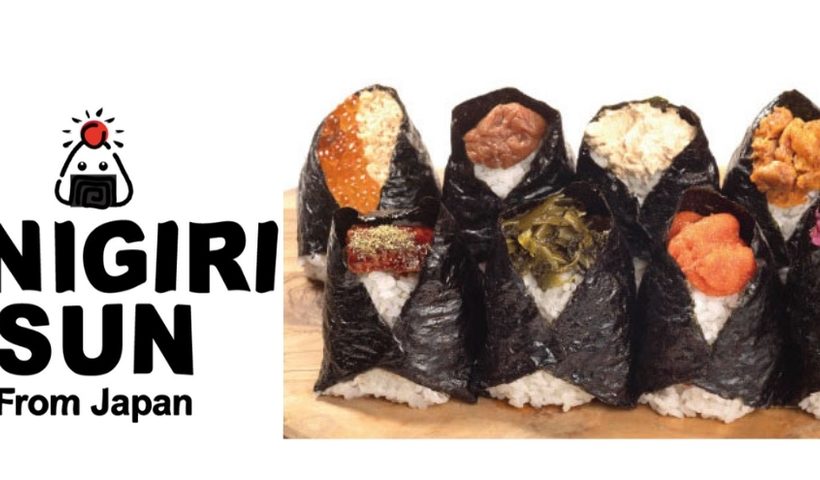
【NOW HIRING】 Onigiri Sun – Store Manager

Opening a 2nd DTLA location this summer! We are seeking Store Manager candidates. If you are interested in restaurant management and want to spread our new onigiri concept in the US, join us! Part-time staff also welcome. Onigiri Sun Contact: Murata Email: satoru.murata@kintetsu.com Phone: 310-349-7792 Please apply via email. Website: https://onigirisun.com/

View More 【NOW HIRING】 Onigiri Sun – Store Manager

What Do Japanese Kids Do After School? (The “Naraigoto” Culture)

The Busy Life of a Japanese Child In the United States, after-school activities are usually dominated by seasonal sports like AYSO soccer, Little League baseball, or casual gymnastics. But in Japan, kids are remarkably busy all year round with “Naraigoto” (extracurricular lessons). It is incredibly common for elementary school students to attend different specialized classes three to five days a week! While popular global sports like swimming, soccer, and baseball are always at the top of the list, the Japanese after-school industry includes fascinating traditional and modern subjects that you rarely see in a standard American neighborhood. Training the Brain:…

View More What Do Japanese Kids Do After School? (The “Naraigoto” Culture)

Costco vs. “Kosutoko”: Why Do Famous Names Sound Completely Different in Japan?

The Katakana Trap When you travel between Los Angeles and Tokyo, knowing a little English can sometimes be a disadvantage. Because Japan imports thousands of foreign words, they adapt them into their own phonetic alphabet called “Katakana.” While words like “Computer” (Konpyuta) are easy to figure out, global brand names and Hollywood celebrity names often undergo massive, confusing transformations. Sometimes the Japanese pronunciation is based strictly on the spelling, and sometimes it is actually closer to the original European pronunciation, leaving American tourists completely baffled during conversations! The IKEA and Costco Confusion Let’s start with the big box stores. If…

View More Costco vs. “Kosutoko”: Why Do Famous Names Sound Completely Different in Japan?

Why Is the Number “1” on Japanese Dice Always Red? (The Wakayama Marketing Trick)

The Casino Standard vs. Japan Whether you are playing a board game with your family in Los Angeles or rolling the dice at a craps table in Las Vegas, traditional dice always look the exact same. They are small white cubes with solid black dots on all six sides. However, if you play a traditional game in Japan like Sugoroku, or just buy a cheap pack of dice at a local 100-yen shop, you will immediately notice a glaring design difference. On almost every standard Japanese die, the single dot for the number “1” is significantly larger than the rest,…

View More Why Is the Number “1” on Japanese Dice Always Red? (The Wakayama Marketing Trick)

Why Don’t Japanese People Have Middle Names? (The Koseki Law)

The Missing Name In the United States, having a middle name is entirely standard. Whether it is John Fitzgerald Kennedy or just a family name passed down to honor a grandfather, the middle name is a crucial part of personal identity. But if you look at a Japanese passport or a driver’s license, you will notice that the space between the family name and the given name is always empty. In Japan, middle names simply do not exist. Even if a Japanese person living in LA wanted to officially give their child a middle name, the Japanese government would completely…

View More Why Don’t Japanese People Have Middle Names? (The Koseki Law)