
Share This Article



More Than a Simple Nod
In the United States, a greeting is usually physical and vocal—a firm handshake, a friendly “Hello,” or a casual nod of the head. But in Japan, the most vital form of communication is “O-jigi” (bowing). To a visitor, it might seem like people are just constantly nodding at each other, but bowing is actually a highly sophisticated non-verbal language. The depth, speed, and timing of a bow communicate everything from a simple “thanks” to a profound apology or deep professional respect. In a society that values “Wa” (harmony), mastering the geometry of the bow is the key to navigating social and business interactions.
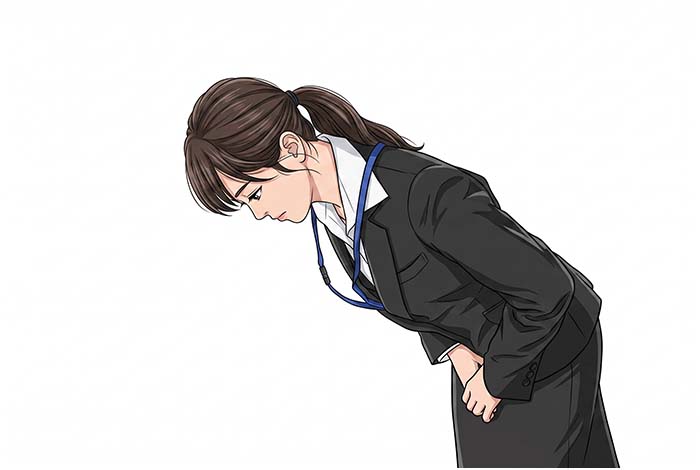
The Three Degrees of Respect
There are three primary levels of bowing, each with its own specific angle. The most common is the “Eshaku” (15 degrees), used for casual greetings with coworkers or neighbors. It’s quick, polite, and equivalent to a friendly wave. The second is the “Keirei” (30 degrees), the standard business bow used when meeting clients or showing respect to a supervisor. Finally, there is the “Saikeirei” (45 degrees or more), reserved for the highest level of respect, religious worship, or a sincere, deep apology. For an American, leaning your body at a 45-degree angle in a business meeting might feel extreme, but in Japan, it demonstrates that you are placing the other person’s status above your own ego.
👉 Want to read more about Japanese demographics and society?
Read Next: The Invisible Japanese Seating Chart: What Are “Kamiza” and “Shimoza”?
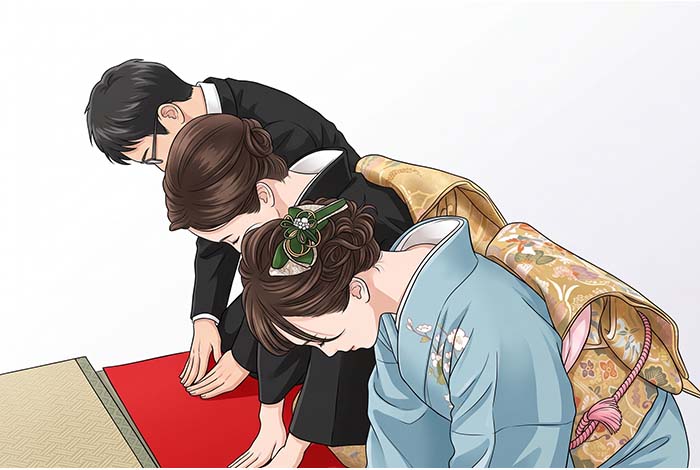
The Art of Timing and Posture
It’s not just about the angle; it’s about the physical discipline. A perfect bow requires you to keep your back straight, your eyes looking downward, and your hands placed neatly—at your sides for men, or clasped in front for women. There is even a technique called “Bun-retsu-rei,” where you stop speaking, perform the bow, and then finish your sentence. This prevents your voice from becoming muffled while your head is down. In Los Angeles, being “assertive” is often the goal, but in Japan, the discipline of a well-timed bow shows that you are a person of high character and cultural intelligence.
▼ Read Next:
🔗 Why Does Standing Near the Elevator Buttons in Japan Make You an Employee?
.
.
Share This Article
Related Articles
Pick Up
- Japan Now! The Final Four Is Set. Ariake’s Mir...
- Japan Now! 7,000 Stranded at Narita as Record Rain S...
- Pokemon Worlds Takes Over San Francisco, and We Got ...
- Japan Now! Whole Torched Purin on a Crepe. Ise’...
- Japan Now! Japan Answered. The Monster Falls, and th...
-

- Japan Now! She Said Yes. Olympic Champions Riku Miur...
- Japan Now! The Spear Won. Chiben Wakayama Takes Kosh...
- Japan Now! Doraemon Is Taking a Steam Train to Victo...
- Japan Now! It’s Rice Day in Japan, So Dragon Q...
- Japan Now! 156 km/h. Bases Loaded. No Outs. Koshien&...
- See more Fun Facts articles >










Latest Articles
- Looking for a Car? Visit South Bay Toyoya! Reliable...
- WA Dining Suya Enjoy the Flavors of Fall with Limit...
- Free Medicare Seminars, Learn the Besics and Review...
- Den’s Tea ...
- Capture Special Memories at Kimono no Kobeya ...
-

- Recommended for Those on a Diet! Healthy Noodles
- Savor Seasonal Specials at TAKAGI COFFEE!
- Daikokuya El Monte Celebrates 10th Anniversary! ...
- Check Out JINS 360°! New Store Now Open!
- Pho-Inspired Asian Spicy Ramen Returns for a Limited...
- See all articles >