Share This Article



The California Breeze vs. The Japanese Marathon
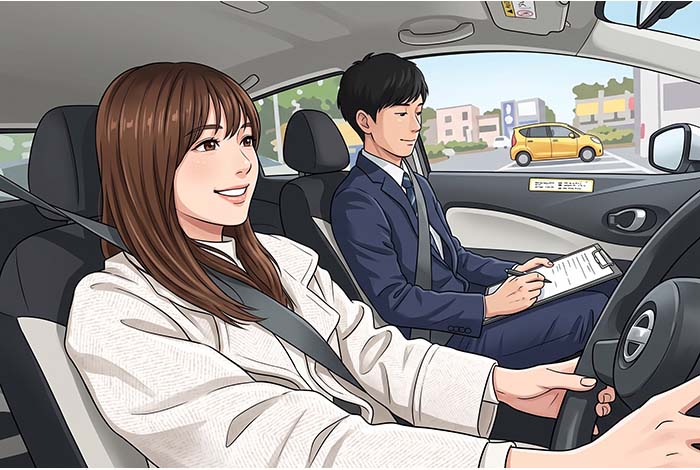
Taking a practical driving test in California is usually a fairly quick and painless process. You drive around the neighborhood with an evaluator for 15 minutes, and if you don’t crash, you walk out with your Interim Driver License the exact same day. However, getting a driver’s license from scratch in Japan is an entirely different, brutally exhausting universe. You cannot simply show up at the DMV and take a test. By law, you must enroll in a certified driving school (Kyoshujo), which requires completing over 60 hours of mandatory classroom lectures and heavily supervised driving practice. Oh, and it will cost you roughly $2,500 to $3,000 out of pocket!
The “Gasshuku” (Driving Boot Camp)
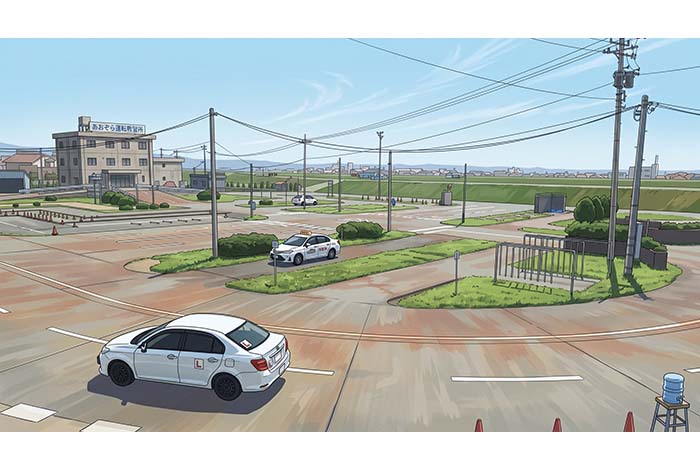
Because attending a driving school while working or going to college can easily take three to four months, Japan has developed a highly unique alternative called “Gasshuku Menkyo” (Driving License Training Camp). Young adults will travel to a rural countryside facility and live in a dormitory for two to three weeks. During this time, they do absolutely nothing but study traffic laws and drive from morning until night, accelerating the graduation process. It feels less like an educational course and more like a strict military boot camp, though many students end up making lifelong friends during their shared suffering!
👉 Want to read more about Japanese demographics and society?
Read Next:What Is a Mobile Supermarket? (Japan’s Traveling Convenience Stores)
The S-Curves and Reverse Parking
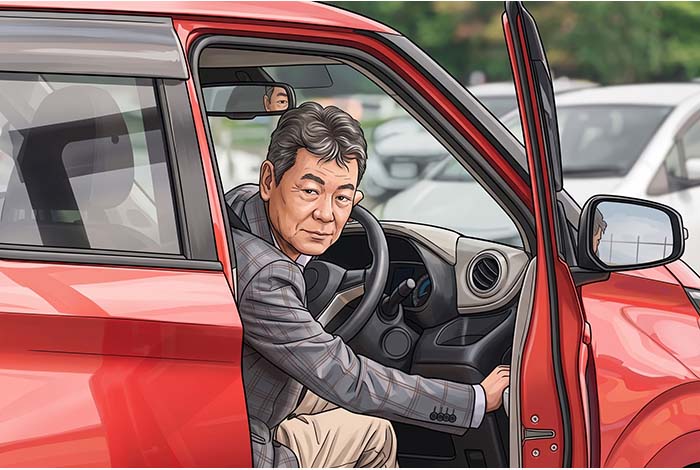
The actual practical test in Japan is legendary for its unforgiving strictness. The driving schools have massive, custom-built obstacle courses. You are not just tested on driving straight; you must master navigating impossibly tight “S-curves” and “Crank” (L-shaped) narrow roads without letting your tires drop off the edge. Furthermore, you must perform a flawless “Shako-ire” (reverse parking into a tight garage space). Evaluators will deduct points for the tiniest mistakes, such as forgetting to physically look under the car for sleeping cats before getting into the driver’s seat. It is a grueling, highly technical process, but it is exactly why Japanese roads remain incredibly safe and orderly.
▼ Read Next:
🔗What Are the Tiny, Boxy Cars Everywhere in Japan? (The “Kei Car” Secret)
.
.
Share This Article
Related Articles
Pick Up
- Japan Now! 156 km/h. Bases Loaded. No Outs. Koshien&...
- Japan Now! Doraemon Is Taking a Steam Train to Victo...
- Japan Now! 7,000 Stranded at Narita as Record Rain S...
- Pokemon Worlds Takes Over San Francisco, and We Got ...
- Japan Now! Japan Answered. The Monster Falls, and th...
-

- Japan Now! She Said Yes. Olympic Champions Riku Miur...
- Japan Now! It’s Rice Day in Japan, So Dragon Q...
- Japan Now! The Final Four Is Set. Ariake’s Mir...
- Japan Now! The Spear Won. Chiben Wakayama Takes Kosh...
- Japan Now! Whole Torched Purin on a Crepe. Ise’...
- See more Fun Facts articles >








Latest Articles
- WA Dining Suya Enjoy the Flavors of Fall with Limit...
- Free Medicare Seminars, Learn the Besics and Review...
- Den’s Tea ...
- Capture Special Memories at Kimono no Kobeya ...
- Recommended for Those on a Diet! Healthy Noodles
-

- Savor Seasonal Specials at TAKAGI COFFEE!
- Daikokuya El Monte Celebrates 10th Anniversary! ...
- Check Out JINS 360°! New Store Now Open!
- Pho-Inspired Asian Spicy Ramen Returns for a Limited...
- Discover JINS’ Revolutionary Multi-Directional Movem...
- See all articles >