Share This Article




Jun 2026 (VOL.224)
Carine Lantignac
- Home country/city: France from many places, my own parents were from far away places and we kept on moving following my father’s career needs
- Occupation: Artist and Cultural consultant
- Duration of living in Japan: 13 years
- Why do you live in Japan?: I followed my partner back to his for his career. (Which was a big mistake as I lost my employment security and financial independence)

What is it really like to live in Japan as a foreign artist? In this I Live in Japan interview, French artist and cultural consultant Carine Lantignac shares 13 years of life in Tokyo, raising three children and building Mapponica, her art maps made from traditional Japanese paper.
What do you do in Japan?
I have been going through different phases of adaptations following my family needs, being the prime physical carer of my children I had to constantly find the most suitable solution. I have three children and a Japanese husband, so caring. My first job opportunity after arriving was to rejoin the airline I had worked for as a cabin attendant for 14 years, and go back to them as an external freelance instructor. With all my years of experience on board, I was then in charge of inducing the Japanese way of work and to promote the company spirit to the non-native Japanese employees working in that Japanese airline, but also and not less importantly, induced to the Japanese natives how to work with foreigners.
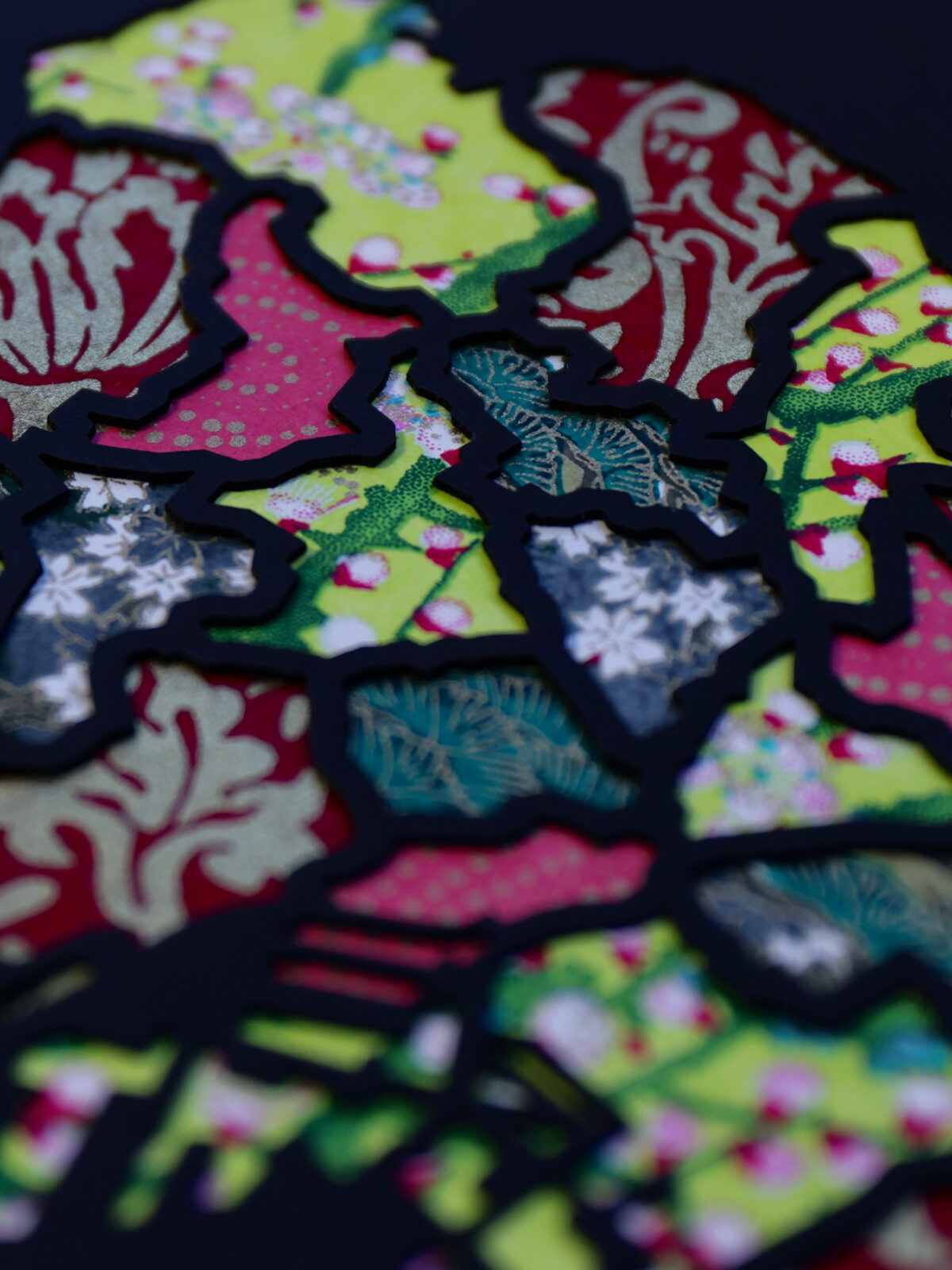
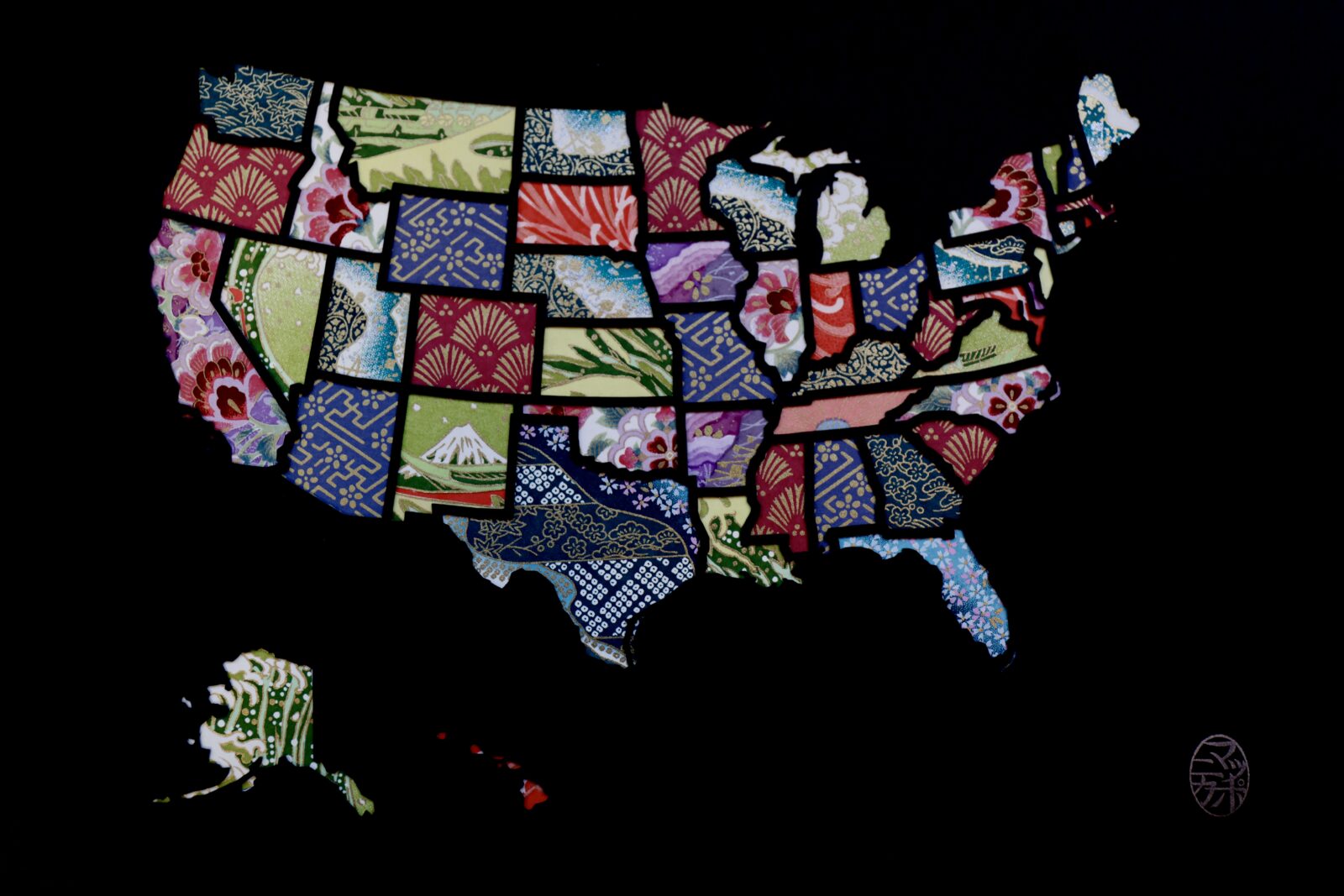
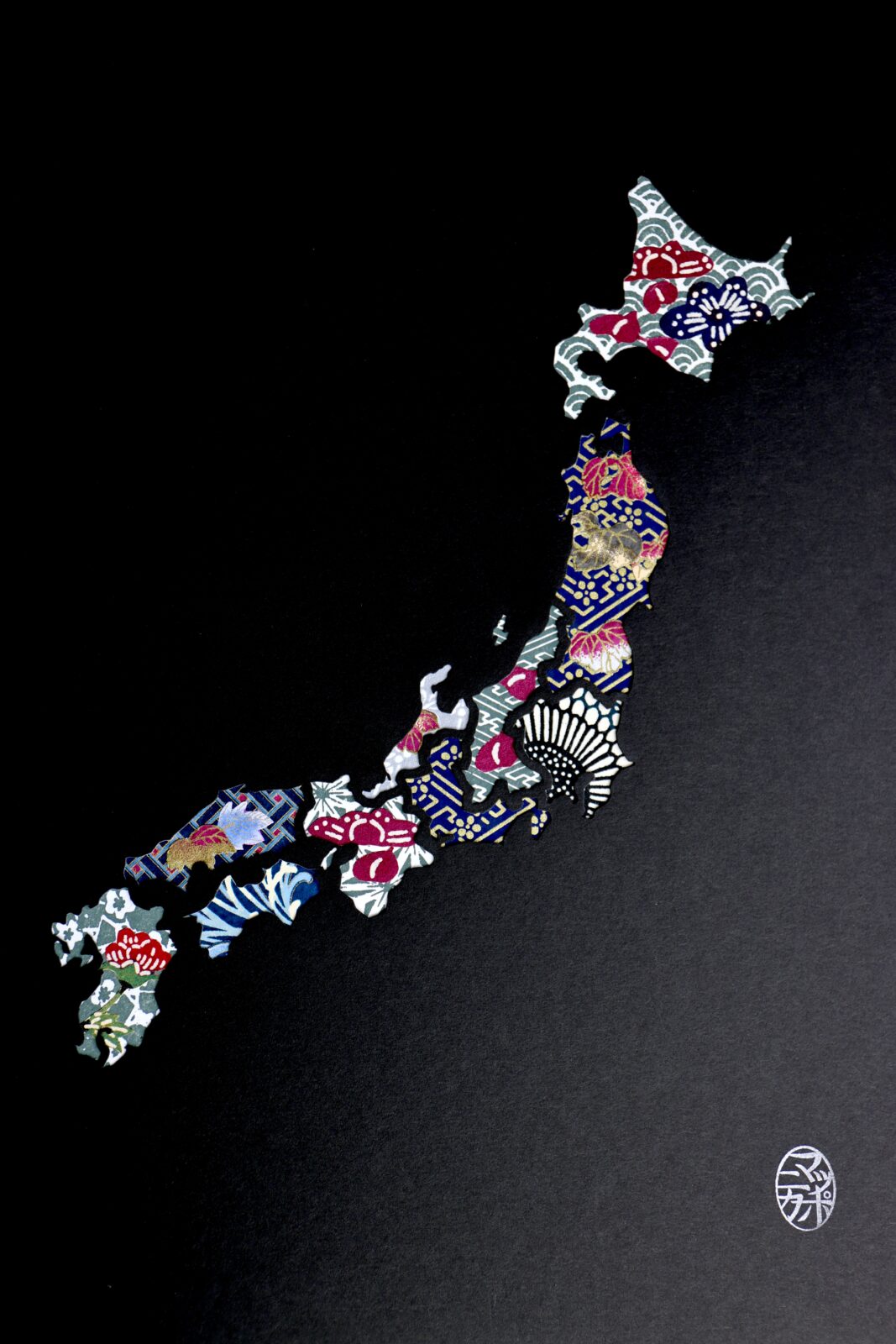
Many people underestimate the gaps between our respective cultural heritages and how it dictates our natural behaviors. Unfortunately, COVID impacted the airline industry very strongly and everything was put on hold. I used the quiet time to focus on my own long standby art project and created Mapponica, my art maps. I have been mainly focusing on it since its creation 4 years ago. I have always been passionate about crafting and dreamed of living form my art. Like all artists you realize that being an artist is being much more than creative. Mapponica creates a medium to display paper craftsmanship and Japanese patterns under one frame. It also represents identities or Tavel memories of cherished places.
Can you talk about your job in Japan?
My job has been met with countless layers of discoveries. Creating is personal, a self-journey, but the attempt to share and make a living out of it is a totally different perspective. Being an artist is to multitask with subject’s miles apart from your creative mind. Finding your crowd, your markets, your suppliers, learning your bestselling seasons and adjusting your production patterns according to them and using the quieter time for the creative part. I work with Japanese papers of an incredible quality papers printed with traditional methods such as silk screens, including Katazome or Katazuri, also with paper screens prints and even wood block prints. I sometimes manage to track down the artisans behind the making of my treasures. I go to my suppliers with the greatest piece of mind. The only stressful part is the short production of most of the papers. While patterns may be recurrent, the colors with cease and change. Every print is destined to be short-lived and as exciting as it can be, it can also be nerve wracking. I create color patterns following the latest supply from the cycle production. It has happened too many times to sell products that I was not ready to let go. I Know I could not produce any longer and loved to bits.
Why are you interested in Japan?
Japan is constantly taking us out of our comfort zone. It is never short of surprises. I have not yet reached any situation where I know for certain that I can totally anticipate the full pattern. They do everything their own way and have a different vision of life. It never lacks stimulating your curiosity.
What is the distinctive difference between your country’s flower arrangement and Ikebana?
The difference would be the same as the Rockefeller Centre Christmas Tree compared with the imperial palace pine trees. They are both beautiful if they are in the right place for the right event.
What do you find different about living in Japan over the term compared when you first arrived or come as a tourist?
When you come as a tourist, Japanese have no expectations from short time stayers, however when you live in Japan, and the Japanese people around you know it, you are not considered as a spectator any longer but as a full-time actor and participant of the social life. I have always noticed that the DO NOT list is far longer than HOW TO, and often we learn from observation until we get it right. We are far more conscious about how to fit and how to blend as much as we can. We eventually read the air as all participants are expected to. I have been living abroad for 27 years and as much as my competences would allow me years after years, I have always tried to adapt. Needless to say that making flows in Japan will take you nowhere near settling.

Writer: Minobu Kondo
Photojournalist in Tokyo, writing for Japanese and American magazines. Publishing an essay “101 of green stories” with the other Japanese artists such as Kosetsu Minami. Languages: Japanese, English and French.
V
Share This Article
Related Articles
Pick Up
- I LIVE IN JAPAN / TIAN JING / Director
- I LIVE IN JAPAN / Gaelle Chatenet / Well-Being Coach
- I LIVE IN JAPAN / Nicoleta Oprisan / Ikebana artist ...
- I LIVE IN JAPAN / Sabrina / Tour Guide & YouTuber
- I LIVE IN JAPAN / Charles MULLER / Engineer and Game...
-

- I LIVE IN JAPAN / Karine Jamet / Tea Ceremony Guide
- I LIVE IN JAPAN / Stephanie C / Content Creator &...
- I LIVE IN JAPAN / Samia Jamai / Diversity & Incl...
- I LIVE IN JAPAN / Tami Mason / Assistant Language Te...
- I LIVE IN JAPAN / AL-X (Alex) / Pole dancer/translat...
- See more Interview articles >




Latest Articles
- Free Medicare Seminars, Learn the Besics and Review...
- Den’s Tea ...
- Capture Special Memories at Kimono no Kobeya ...
- Recommended for Those on a Diet! Healthy Noodles
- Savor Seasonal Specials at TAKAGI COFFEE!
-

- Daikokuya El Monte Celebrates 10th Anniversary! ...
- Check Out JINS 360°! New Store Now Open!
- Pho-Inspired Asian Spicy Ramen Returns for a Limited...
- Discover JINS’ Revolutionary Multi-Directional Movem...
- Celebrate 10 Years!! Daikokuya El Monte Launches Ann...
- See all articles >