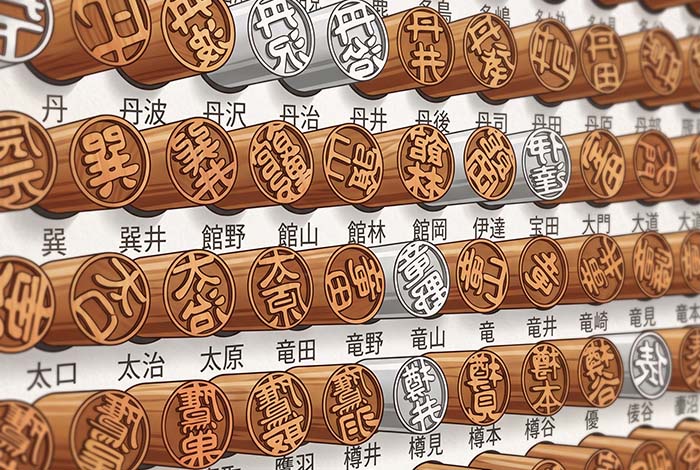
The Global Surname Contrast In many Asian countries, family names are highly concentrated. In South Korea, roughly half of the entire population shares just three last names: Kim, Lee, and Park. In China, huge portions of the population are named Wang or Li. But Japan is a massive, confusing outlier on the global stage. It is estimated that there are over 300,000 different surnames actively used in Japan today! This makes Japan one of the most surname-diverse countries in the world. It is incredibly common for people in specific local regions or rural villages to have unique, hyper-specific last names…
View More Why Does Japan Have 300,000 Different Last Names? (The Naming Chaos)Category: JAPANICTIONARY
Costco vs. “Kosutoko”: Why Do Famous Names Sound Completely Different in Japan?
The Katakana Trap When you travel between Los Angeles and Tokyo, knowing a little English can sometimes be a disadvantage. Because Japan imports thousands of foreign words, they adapt them into their own phonetic alphabet called “Katakana.” While words like “Computer” (Konpyuta) are easy to figure out, global brand names and Hollywood celebrity names often undergo massive, confusing transformations. Sometimes the Japanese pronunciation is based strictly on the spelling, and sometimes it is actually closer to the original European pronunciation, leaving American tourists completely baffled during conversations! The IKEA and Costco Confusion Let’s start with the big box stores. If…
View More Costco vs. “Kosutoko”: Why Do Famous Names Sound Completely Different in Japan?Why Don’t Japanese People Have Middle Names? (The Koseki Law)
The Missing Name In the United States, having a middle name is entirely standard. Whether it is John Fitzgerald Kennedy or just a family name passed down to honor a grandfather, the middle name is a crucial part of personal identity. But if you look at a Japanese passport or a driver’s license, you will notice that the space between the family name and the given name is always empty. In Japan, middle names simply do not exist. Even if a Japanese person living in LA wanted to officially give their child a middle name, the Japanese government would completely…
View More Why Don’t Japanese People Have Middle Names? (The Koseki Law)What Do “Itadakimasu” and “Gochisosama” Actually Mean? (The Words of Gratitude)
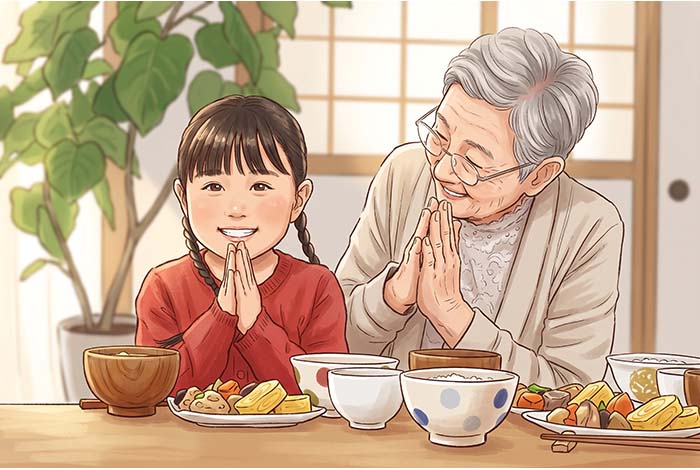
Receiving the Gift of Life Before taking the first bite of a meal, Japanese people seamlessly clasp their hands together and say “Itadakimasu.” It is often loosely translated as the French “Bon Appétit” or “Let’s eat,” but the true meaning is far more profound. The word literally translates to “I humbly receive.” Rooted deeply in Buddhist and Shinto animism, it is a direct expression of gratitude toward the plants and animals that sacrificed their lives to become your food. You are acknowledging that to sustain your own life, you are humbly receiving the life energy of the ingredients in front…
View More What Do “Itadakimasu” and “Gochisosama” Actually Mean? (The Words of Gratitude)Why Does Japan Have Four Different Words for “State”? (The To-Do-Fu-Ken Mystery)
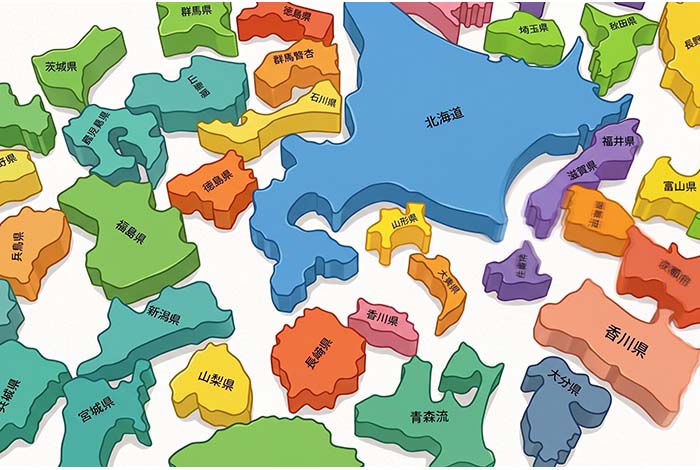
The American “State” vs. Japan In the United States, administrative divisions are perfectly unified: whether you are in California, Texas, or Hawaii, all 50 regions are simply called “States.” But if you look at a map of Japan, the country is divided into 47 regions using four completely different titles: “To” (Tokyo), “Do” (Hokkaido), “Fu” (Osaka and Kyoto), and “Ken” (the remaining 43 prefectures). When Japanese people refer to their country’s regions collectively, they call it “To-Do-Fu-Ken.” But why isn’t it just unified under one word? The Historical Status Rankings The reason lies in the late 19th century during the…
View More Why Does Japan Have Four Different Words for “State”? (The To-Do-Fu-Ken Mystery)Why Is Every Single Day a Holiday in Japan? (The “Goroawase” Pun Culture)
The Daily Celebratio In the US, we have major holidays like Thanksgiving or the 4th of July, and occasionally quirky ones like “National Pizza Day.” But in Japan, almost every single day of the year is an officially recognized, specific anniversary. If you look at a Japanese social media calendar, you will find a dizzying array of celebrations for everything from fish to wallets to pajamas. While these aren’t public holidays where schools close, they are massive cultural and commercial events that fill the country with fun marketing and limited-edition products. The sheer density of these “memorial days” reflects the…
View More Why Is Every Single Day a Holiday in Japan? (The “Goroawase” Pun Culture)Why Does Japanese Have Three Different Levels of Politeness? (The Magic of “Keigo”)
Beyond “Please” and “Thank You” In English, showing respect is usually a matter of using words like “please,” “sir,” or choosing a slightly more formal vocabulary. However, in Japan, social hierarchy and distance are hardwired directly into the grammar. This system is called “Keigo” (Honorific Language). It isn’t just about being polite; it’s a sophisticated linguistic tool used to define the relationship between two people instantly. For an English speaker, learning that there are three entirely different categories of Keigo—Teineigo (polite), Sonkeigo (respectful), and Kenjougo (humble)—can be a mind-blowing challenge. Each category requires changing not only the endings of sentences…
View More Why Does Japanese Have Three Different Levels of Politeness? (The Magic of “Keigo”)Why Is the Kyoto Dialect So Hard to Read? (The Art of “Tatemae”)
The Elegant Melody of Kyo-kotoba When you travel down from Tokyo to the ancient capital of Kyoto, the language suddenly shifts. The locals speak “Kyo-kotoba” (Kyoto dialect), which is famous for sounding incredibly soft, elegant, and exceptionally polite. To a foreign tourist, a Kyoto shopkeeper thanking you with a melodic “Ookini” (Thank you) sounds incredibly welcoming and deeply traditional. However, beneath this beautiful and gentle linguistic surface lies a highly complex, indirect communication style. The social rules in Kyoto are so incredibly nuanced that even native Japanese people from other cities find it terrifyingly difficult to navigate their true intentions!…
View More Why Is the Kyoto Dialect So Hard to Read? (The Art of “Tatemae”)Why Is Japanese So Easy to Pronounce? (The 100-Syllable Secret)
The Language Barrier For many native English speakers in LA, trying to pronounce French or Mandarin can be a nightmare of tricky tones and weird throat sounds. But Japanese? It is surprisingly easy to pronounce. On the flip side, Japanese people famously struggle to pronounce English words. Why? The Syllable Count It all comes down to math. English is a massive, chaotic language with anywhere from 10,000 to 15,000 different possible syllables (sound units). Japanese, however, is incredibly streamlined. The entire language is built on roughly 100 basic syllables! The Vowel Foundation In Japanese, almost every single sound must end…
View More Why Is Japanese So Easy to Pronounce? (The 100-Syllable Secret)The Great Japanese Spice Lie: What Is “Yuzu Kosho”? (The Missing Black Pepper)
The Ultimate Citrus Spice If you are a fan of spicy food, your fridge in LA is probably stocked with Sriracha, Jalapeños, or Cholula. But in Japan, there is an elite, intensely flavorful condiment that will completely change the way you eat chicken and hot pot: “Yuzu Kosho.” The Translation Trap If you translate the name literally, it seems simple. “Yuzu” is Japan’s famous, highly aromatic citrus fruit. “Kosho” translates to “Black Pepper.” So, it must be a mix of citrus and black pepper, right? Absolutely not! There is zero black pepper in this paste. The Kyushu Secret This is…
View More The Great Japanese Spice Lie: What Is “Yuzu Kosho”? (The Missing Black Pepper)Why Is Everyone Dining Alone in Japan? (The Rise of “Solo-Katsu”)
The Table for One In many Western countries, going to a restaurant or an amusement park completely alone can feel awkward. People worry that others might think they have no friends. But in Japan, doing things by yourself isn’t lonely—it is a booming lifestyle trend called “Solo-Katsu” (Solo Activities). The Ramen Booths The trend started with practical dining. Famous ramen chains like Ichiran pioneered the “flavor focus booth.” You sit at a counter with wooden dividers on both sides, completely isolated from other customers. You don’t even see the waiter’s face. It is just you and the noodles. Solo BBQ…
View More Why Is Everyone Dining Alone in Japan? (The Rise of “Solo-Katsu”)Why Do 4,000 Japanese Characters Contain the Word “Woman”? (The Kanji Time Capsule)
The Building Blocks of Kanji Learning Japanese Kanji is like solving a puzzle. Complex characters are built by combining smaller, basic symbols called “radicals.” For example, if you combine the radical for “Sun” (日) and “Moon” (月), you get the character for “Bright” (明). A Massive Gender Imbalance But there is a shocking linguistic statistic hidden in the dictionary. If you search for characters containing the radical for “Woman” (女 – Onna), you will find over 4,000 of them! However, if you search for characters containing the radical for “Man” (男 – Otoko), there are only about 100. The Ancient…
View More Why Do 4,000 Japanese Characters Contain the Word “Woman”? (The Kanji Time Capsule)