
Share This Article



The Ultimate Spa Food
Traveling to a traditional Japanese hot spring (Onsen) resort isn’t just about relaxing in the mineral-rich water; it is also about the food. And the most famous, iconic snack you can eat at a volcanic resort is an “Onsen Tamago” (Hot Spring Egg).
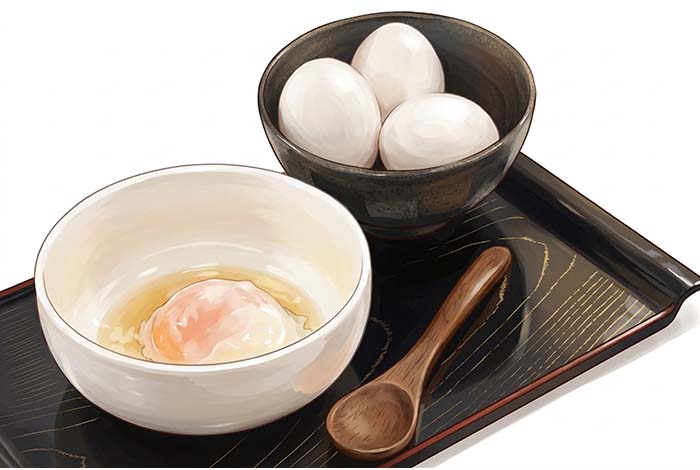
Cooking in the Earth
An Onsen Tamago isn’t cooked on a stove. Locals literally place baskets of raw eggs directly into the natural, steaming geothermal pools of the hot springs, allowing the warm volcanic water to slow-cook them to perfection.
👉 Planning a relaxing trip to a Japanese hot spring?
Read Next:https://japanupmagazine.com/archives/18350
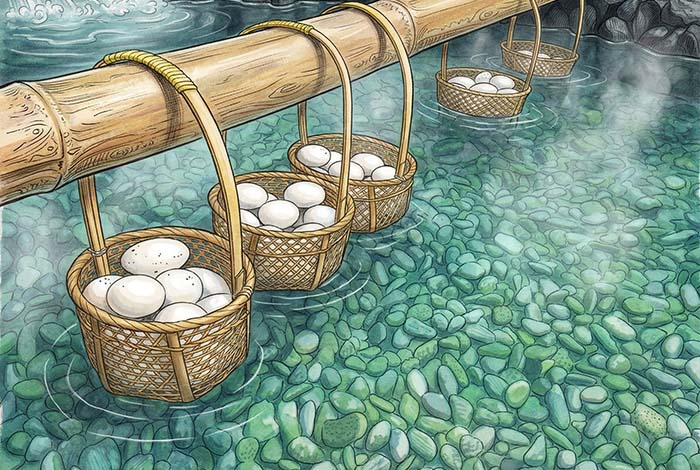
The Scientific Miracle
The result is a culinary and scientific miracle. Because egg yolks harden at a slightly lower temperature (around 158°F) than egg whites (around 176°F), the slow heat of the hot spring creates an egg where the yolk is firm and custardy, but the white remains incredibly soft, milky, and silky.
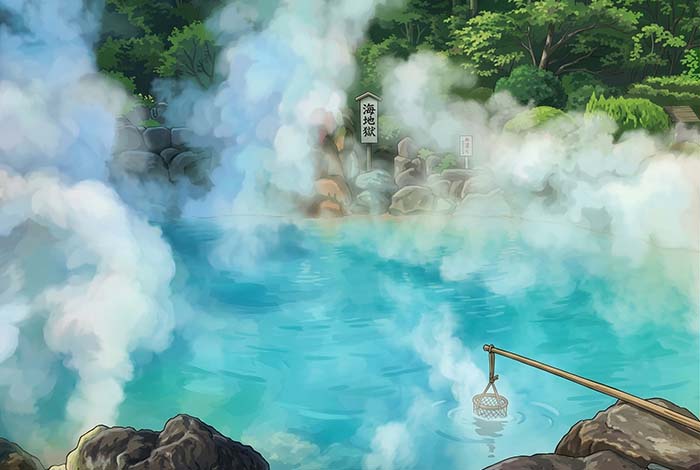
The Black Eggs of Hakone
Some areas take it even further. At the Owakudani volcanic valley in Hakone, the sulfur and iron in the hot spring water react with the eggshells, turning them completely jet-black! Local legend says eating just one of these black eggs will add seven years to your life.
The Perfect Breakfast
Usually served lightly cracked in a small bowl with a splash of dashi (savory broth) and soy sauce, Onsen Tamago is a staple of a traditional Ryokan breakfast. Slurping down this silky, geothermal delicacy is the ultimate way to taste the power of Japan’s volcanic earth.
▼ Read Next:
.
.
Share This Article
Related Articles
Pick Up
- Onigiri Sun DTLA Location Now Open
- Honda-ya Charity Event Celebrates Kappo Honda’...
- LA Dassai Experience: Japan and USA’s Finest S...
- Torikizoku’s second location in Anaheim Takeout yaki...
- A popular spot for authentic tempura rice bowls and ...
-

- Pho-Inspired Asian Spicy Ramen Returns for a Limited...
- Zespri Kiwifruit: A Sweet, Vitamin-C Boost for Fall
- Half-Price Hakata Ramen: Shin-Sen-Gumi Rosemead̵...
- Celebrate 10 Years!! Daikokuya El Monte Launches Ann...
- Daikokuya El Monte Celebrates 10th Anniversary! ...
- See more Fun Facts articles >





Latest Articles
- Free Medicare Seminars, Learn the Besics and Review...
- Capture Special Memories at Kimono no Kobeya ...
- Check Out JINS 360°! New Store Now Open!
- Discover JINS’ Revolutionary Multi-Directional Movem...
- 2027 Coming-of-Age Ceremony presented by Nadeshiko-k...
-

- Kappo Honda 30th Anniversary Charity Event
- JapanUp! 228 – October 2026
- Quiz – October 2026
- Chiikawa comes to Channel Oishii with 20 curated foo...
- Kanagawa: The Many Faces of Japan, All in One Place
- See all articles >