
Share This Article



Last updated: March 20, 2026
The Toy Cars
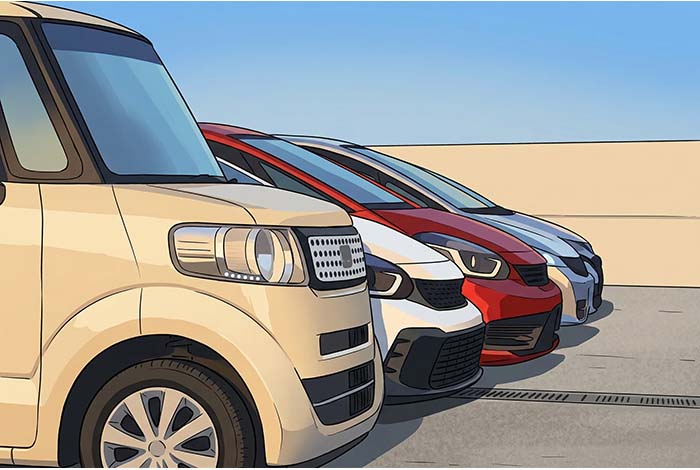
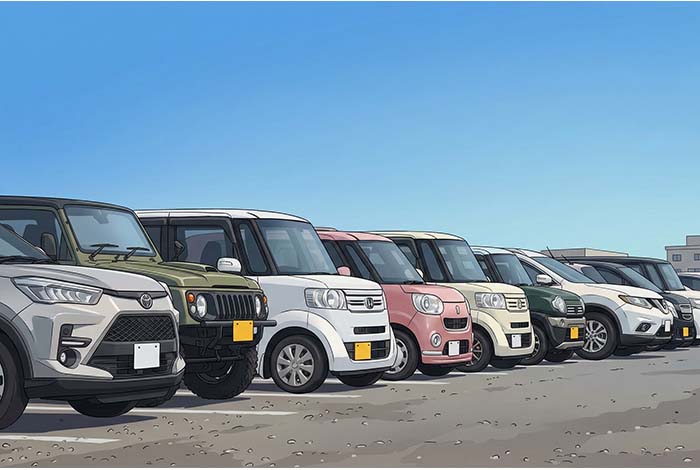
When you look at traffic in Japan, you will notice something funny. Almost half of the cars on the road look like cute, highly-efficient toy boxes on wheels. They are incredibly small but surprisingly tall. What are they?
The “Kei” Standard
These are “Kei Jidosha” (Light Vehicles), often just called K-cars. This is a unique vehicle category that only exists in Japan. To be classified as a Kei car, the vehicle must meet extremely strict legal limits on its physical size and its engine power (a tiny 660cc engine limit).
Look at the License Plate
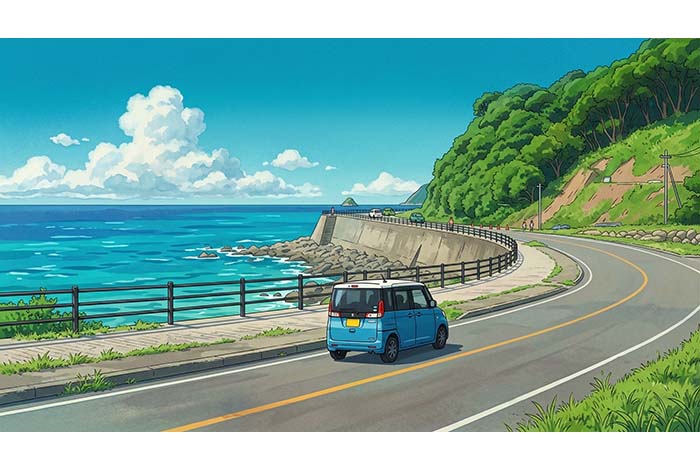
You can instantly identify a Kei car just by looking at the back of it. While regular cars in Japan have white license plates, Kei cars always have yellow license plates (with black numbers).
Why Are They So Popular?
In America, people love massive SUVs. But in Japan, roads and parking spaces are impossibly narrow. A Kei car can easily squeeze down a tiny alleyway that a regular car couldn’t enter. Furthermore, because they are so small, the government gives the owners massive discounts on taxes, insurance, and highway tolls.
Bigger on the Inside
Don’t be fooled by their tiny exterior. Japanese engineers design them like magic boxes. By making the roof tall and the seats completely flat, they maximize every centimeter of interior space. Some Kei cars are actually more spacious inside than a normal sedan!
Exploring the Japanese Highways (Related Articles)
Driving a tiny Kei car is the most cost-effective way to travel, which is important because getting on the Japanese highway can be quite an adventure (and expensive)!
1. The Highway Trap
If you drive on the Japanese “Kosoku Doro” (Expressway), prepare your wallet. Because Japan is covered in mountains and the roads require massive tunnels, a drive from Tokyo to Osaka can cost over $100 in tolls! Make sure you rent an ETC card to zip through the purple toll booths easily.
👉 Is driving cheaper than the train?
Check out: “Why Do You Pay $50 to Drive 2 Hours? (The Expensive Highway Trap)”
2. The Service Area Paradise
The expensive tolls might be worth it because Japanese highway “Service Areas” are basically luxury shopping malls! They are gourmet destinations serving high-quality regional food like sushi and ramen, and some even have Ferris wheels or natural hot springs.
👉 Are the bathrooms actually clean?
Check out: “Why Is the ‘Rest Stop’ Better Than the Destination? (The Service Area Paradise)”
.
.
Share This Article
Related Articles
Pick Up
- Japan Now! The Spear Won. Chiben Wakayama Takes Kosh...
- Japan Now! Whole Torched Purin on a Crepe. Ise’...
- Japan Now! Doraemon Is Taking a Steam Train to Victo...
- Japan Now! 156 km/h. Bases Loaded. No Outs. Koshien&...
- Japan Now! She Said Yes. Olympic Champions Riku Miur...
-

- Japan Now! The Final Four Is Set. Ariake’s Mir...
- Japan Now! It’s Rice Day in Japan, So Dragon Q...
- Japan Now! 7,000 Stranded at Narita as Record Rain S...
- Pokemon Worlds Takes Over San Francisco, and We Got ...
- Japan Now! Japan Answered. The Monster Falls, and th...
- See more Fun Facts articles >





Latest Articles
- Free Medicare Seminars, Learn the Besics and Review...
- Den’s Tea ...
- Capture Special Memories at Kimono no Kobeya ...
- Recommended for Those on a Diet! Healthy Noodles
- Savor Seasonal Specials at TAKAGI COFFEE!
-

- Daikokuya El Monte Celebrates 10th Anniversary! ...
- Check Out JINS 360°! New Store Now Open!
- Pho-Inspired Asian Spicy Ramen Returns for a Limited...
- Discover JINS’ Revolutionary Multi-Directional Movem...
- Celebrate 10 Years!! Daikokuya El Monte Launches Ann...
- See all articles >