Share This Article



The American Fitting Room Experience
Trying on clothes in an American department store or fast-fashion retailer is a highly utilitarian experience. You grab a few shirts, walk into a dimly lit cubicle with a simple curtain, and stand on a dusty, hard floor with your shoes on while you quickly change. If you accidentally drop a white t-shirt on the floor, it is almost guaranteed to get dirty. But if you decide to go shopping for clothes in Japan, you must prepare yourself for a completely different level of retail etiquette. In Japan, the fitting room is not just a closet; it is treated with the exact same respect and cleanliness as the inside of a traditional Japanese home.
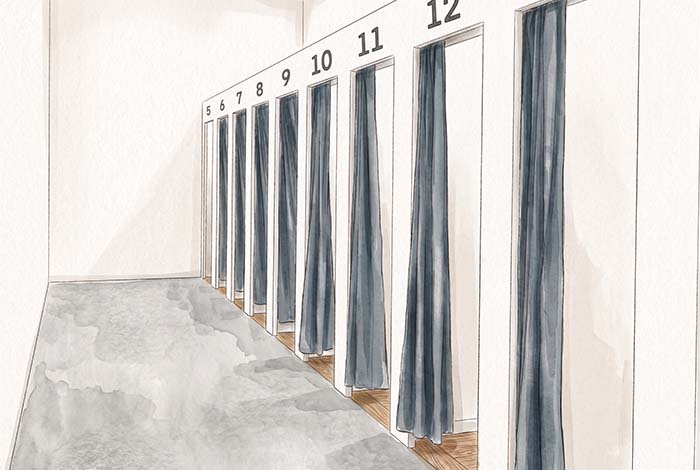
Stepping Up and Taking Off Your Shoes
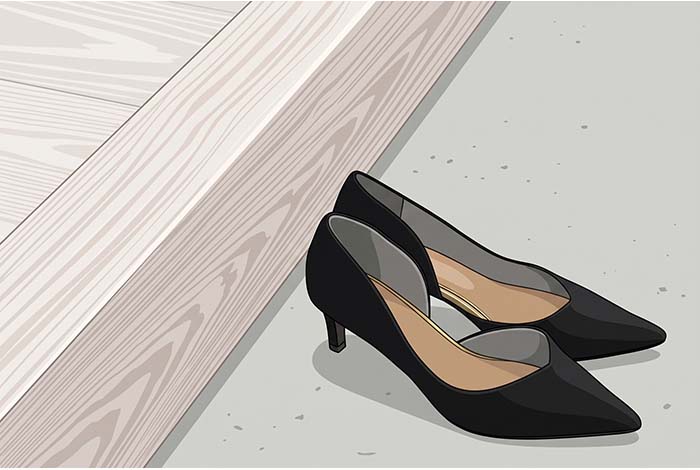
The first major shock for Western tourists happens before they even enter the fitting room. You will notice that the floor of the room is elevated slightly above the main store floor, creating a clear boundary. Just like entering a Japanese house, you are strictly required to take off your shoes before stepping onto the plush, spotlessly clean carpet inside the room. Because every single customer removes their dirty outside shoes, the floor remains so incredibly pristine that you can confidently drop a brand-new white dress on the carpet without a single fear of it catching a stain!
👉 Want to read more about Japanese demographics and society?
Read Next:Why Do Japanese Kids Clean Their Own School? (The “O-Soji” Culture)

The Mystery of the White Face Cover
The cleanliness rules extend far beyond your feet. If you are trying on a shirt or a dress that goes over your head, the retail staff will hand you a strange, semi-transparent white non-woven hood. This is called a “Face Cover.” Shoppers (especially women wearing cosmetics) are required to place this cover over their entire head before pulling the garment on. This ingenious system completely prevents foundation, lipstick, or sweat from transferring onto the collar of the store’s merchandise. It perfectly encapsulates the Japanese cultural mindset: showing ultimate respect not just for the store’s property, but for the next customer who might buy that exact shirt!
▼ Read Next:
.
.
Share This Article
Related Articles
Pick Up
- Japan Now! It’s Rice Day in Japan, So Dragon Q...
- Japan Now! The Spear Won. Chiben Wakayama Takes Kosh...
- Pokemon Worlds Takes Over San Francisco, and We Got ...
- Japan Now! 7,000 Stranded at Narita as Record Rain S...
- Japan Now! Doraemon Is Taking a Steam Train to Victo...
-

- Japan Now! The Final Four Is Set. Ariake’s Mir...
- Japan Now! 156 km/h. Bases Loaded. No Outs. Koshien&...
- Japan Now! Japan Answered. The Monster Falls, and th...
- Japan Now! Whole Torched Purin on a Crepe. Ise’...
- Japan Now! She Said Yes. Olympic Champions Riku Miur...
- See more Fun Facts articles >










Latest Articles
- Free Medicare Seminars, Learn the Besics and Review...
- Den’s Tea ...
- Capture Special Memories at Kimono no Kobeya ...
- Recommended for Those on a Diet! Healthy Noodles
- Savor Seasonal Specials at TAKAGI COFFEE!
-

- Daikokuya El Monte Celebrates 10th Anniversary! ...
- Check Out JINS 360°! New Store Now Open!
- Pho-Inspired Asian Spicy Ramen Returns for a Limited...
- Discover JINS’ Revolutionary Multi-Directional Movem...
- Celebrate 10 Years!! Daikokuya El Monte Launches Ann...
- See all articles >