Share This Article



The Linear vs. Area Thinking
If you drive around Los Angeles, finding a specific location is perfectly intuitive. Streets like Sunset Boulevard or Hawthorne Boulevard run for miles, and every building is assigned a sequential number along that linear path. But if you step onto the streets of Tokyo, you will notice something incredibly bizarre: almost none of the roads have names. Aside from a few massive avenues, the entire maze of streets in Japan is completely nameless. To a Westerner, this looks like a logistical nightmare. How can millions of people navigate a world-class megacity when the streets don’t even have names?
The Magic of the Nesting Blocks
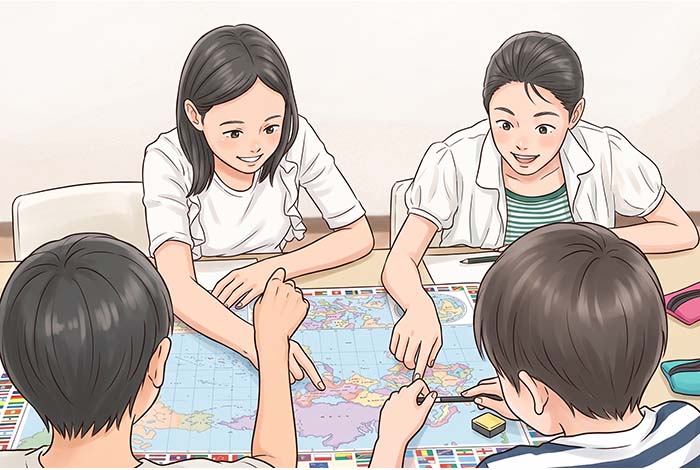
The secret lies in a completely different philosophical framework for thinking about space. Instead of naming the “lines” (streets), Japan names the “spaces” (blocks). The Japanese address system divides a city into distinct geometric zones. It starts from the large prefecture, moves to the city or ward, and then down to the neighborhood name. Inside that specific neighborhood, everything is managed by three sets of numbers: the district (Chome), the block (Ban), and the building (Go). When you look for an address, you aren’t looking for a spot along a road; you are playing a geographical game of hot-and-cold, hunting for a specific puzzle piece inside a shrinking grid!
👉 Want to read more about Japanese demographics and society?
Read Next:Why Does Japan Have Four Different Words for “State”? (The To-Do-Fu-Ken Mystery)
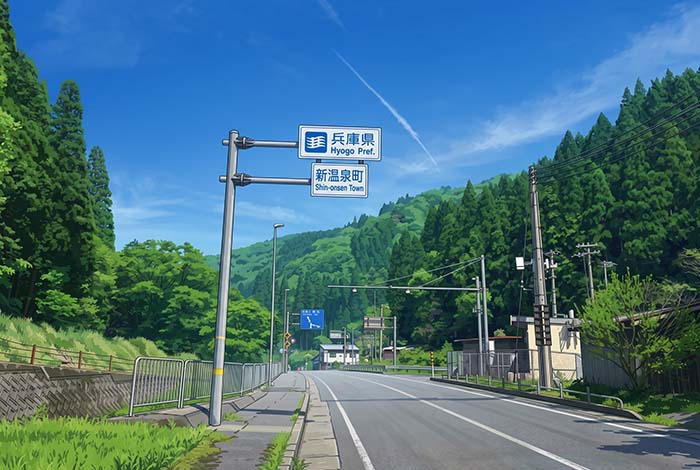
The Age vs. Order Paradox
Furthermore, there is a fascinating historical paradox to the final building numbers. In the United States, houses are numbered sequentially (101, 103, 105). In Japan, however, buildings inside a specific block were historically numbered based on the order of when they were built. This means House No. 1 could be sitting right next to House No. 15 if it was constructed decades later! While this system causes massive confusion for tourists and foreign delivery drivers, it perfectly reflects Japan’s traditional communal mindset—valuing bounded neighborhoods over endless, linear open roads. Just make sure your smartphone battery is fully charged before you start exploring!
▼ Read Next:
🔗 The Macro to Micro Trap: Why Japanese Addresses Are Written Completely Backward
.
.
Share This Article
Related Articles
Pick Up
- Japan Now! The Spear Won. Chiben Wakayama Takes Kosh...
- Pokemon Worlds Takes Over San Francisco, and We Got ...
- Japan Now! Doraemon Is Taking a Steam Train to Victo...
- Japan Now! The Final Four Is Set. Ariake’s Mir...
- Japan Now! 156 km/h. Bases Loaded. No Outs. Koshien&...
-

- Japan Now! Whole Torched Purin on a Crepe. Ise’...
- Japan Now! It’s Rice Day in Japan, So Dragon Q...
- Japan Now! She Said Yes. Olympic Champions Riku Miur...
- Japan Now! 7,000 Stranded at Narita as Record Rain S...
- Japan Now! Japan Answered. The Monster Falls, and th...
- See more Fun Facts articles >









Latest Articles
- Free Medicare Seminars, Learn the Besics and Review...
- Den’s Tea ...
- Capture Special Memories at Kimono no Kobeya ...
- Recommended for Those on a Diet! Healthy Noodles
- Savor Seasonal Specials at TAKAGI COFFEE!
-

- Daikokuya El Monte Celebrates 10th Anniversary! ...
- Check Out JINS 360°! New Store Now Open!
- Pho-Inspired Asian Spicy Ramen Returns for a Limited...
- Discover JINS’ Revolutionary Multi-Directional Movem...
- Celebrate 10 Years!! Daikokuya El Monte Launches Ann...
- See all articles >