
Share This Article



A Unique Political Governance
In the United States, the governance structure is perfectly unified under a single individual: the President. The U.S. President serves simultaneously as the head of government, the head of state, and the commander-in-chief of the military. However, if you look at the governing system of Japan, you will discover a unique dual structure that coexists at the top of the nation. Japan operates as a constitutional monarchy, meaning the country has both a Prime Minister (Souri Daijin) and an Emperor (Tenno). This division of national roles represents a fascinating balance of modern politics and ancient tradition.
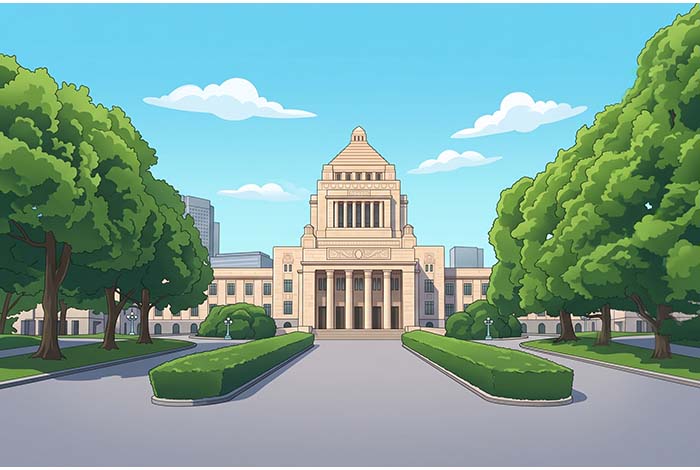
The Emperor as the Symbol
The most legally distinct aspect of this system is the role of the Emperor. Today, Japan’s royal family is recognized as the oldest continuous hereditary monarchy in the entire world, with a history spanning over 2,000 years. However, under the modern Japanese Constitution established after World War II, the Emperor holds absolutely zero political or governing power. The Emperor is officially defined as the “Symbol of the State and of the Unity of the People.” His duties are strictly ceremonial and cultural—such as welcoming foreign ambassadors, attending state ceremonies, and acting as a living anchor for Japan’s cultural identity and long history.
👉 Want to read more about Japanese demographics and society?
Read Next:No Touchscreens Allowed: The Extreme Strictness of Japan’s Handwritten Elections
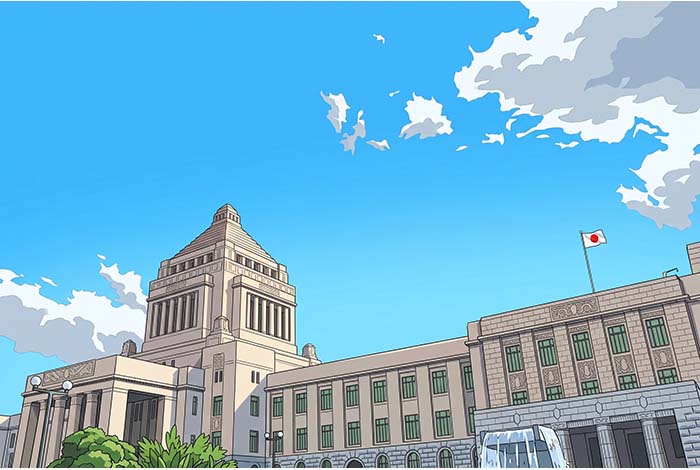
The Prime Minister and the Diet
The actual everyday political power and governance of the nation belong entirely to the Prime Minister. The Prime Minister is not elected directly by the public like the U.S. President; instead, they are chosen by the members of the national parliament, known as the “Diet” (Kokkai). The Prime Minister leads the cabinet, proposes laws, controls the budget, and manages national policies. This dual system ensures that while the political leadership of the country can change frequently through democratic elections, the cultural heart and historical continuity of Japan remain perfectly stable through the enduring presence of the Emperor.
▼ Read Next:
🔗 Is Tokyo’s Imperial Palace Really Bigger Than the City of London? (The Royal Run)
.
.
Share This Article
Related Articles
Pick Up
- Japan Now! She Said Yes. Olympic Champions Riku Miur...
- Japan Now! It’s Rice Day in Japan, So Dragon Q...
- Japan Now! 7,000 Stranded at Narita as Record Rain S...
- Japan Now! The Spear Won. Chiben Wakayama Takes Kosh...
- Japan Now! The Final Four Is Set. Ariake’s Mir...
-

- Pokemon Worlds Takes Over San Francisco, and We Got ...
- Japan Now! Japan Answered. The Monster Falls, and th...
- Japan Now! 156 km/h. Bases Loaded. No Outs. Koshien&...
- Japan Now! Whole Torched Purin on a Crepe. Ise’...
- Japan Now! Doraemon Is Taking a Steam Train to Victo...
- See more Fun Facts articles >








Latest Articles
- Free Medicare Seminars, Learn the Besics and Review...
- Den’s Tea ...
- Capture Special Memories at Kimono no Kobeya ...
- Recommended for Those on a Diet! Healthy Noodles
- Savor Seasonal Specials at TAKAGI COFFEE!
-

- Daikokuya El Monte Celebrates 10th Anniversary! ...
- Check Out JINS 360°! New Store Now Open!
- Pho-Inspired Asian Spicy Ramen Returns for a Limited...
- Discover JINS’ Revolutionary Multi-Directional Movem...
- Celebrate 10 Years!! Daikokuya El Monte Launches Ann...
- See all articles >