Share This Article



The American Postal Order
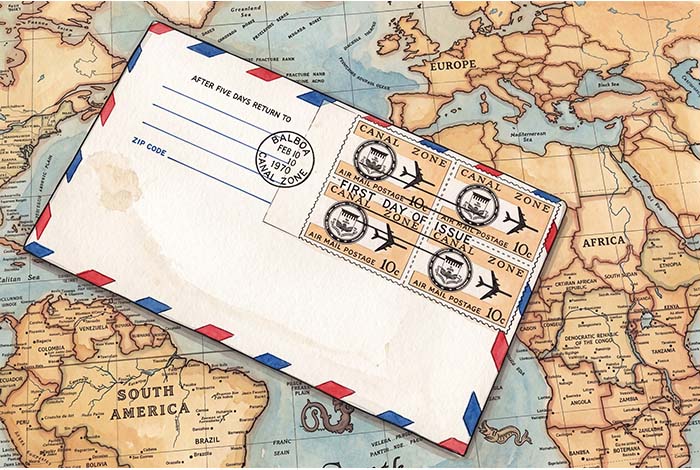
When you fill out a shipping label or type an address into Google Maps in the United States, you follow a strict, universally understood order that moves from the specific to the general. You start with the smallest detail—the house or building number—and gradually expand outward: the street name, the city, the state, and finally, the massive zone of the zip code. It is a system that funnels the mail carrier from a specific front door out to the wider country. However, if you try to apply this Western postal logic when sending a package or an email to Japan, you will quickly find yourself completely lost in transition.
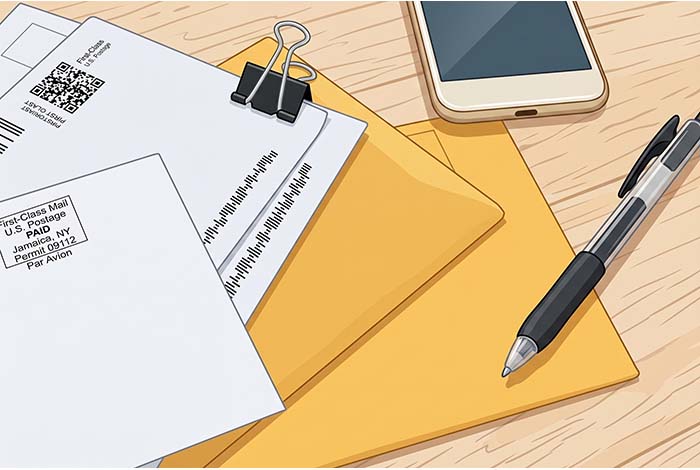
From the Universe to the Front Door
The Japanese address system operates on the exact opposite philosophical framework: it moves strictly from the macro to the micro. Instead of starting with the house number, a Japanese address begins with the largest possible geographical category—the postal code and the prefecture (such as Tokyo-to or Osaka-fu). From there, it funnels downward into the city (shi) or ward (ku), then into the specific neighborhood district (chome), followed by the block number (ban), and finally, the specific building or room number (go). It is a system that views location not as a single spot on a street, but as a series of nesting boxes shrinking down from the wide universe to your specific front door.
👉 Want to read more about Japanese demographics and society?
Read Next:Why Does Japan Drive on the Left? (The Hidden Samurai Sword Rule)
The Email and Mailing Warning
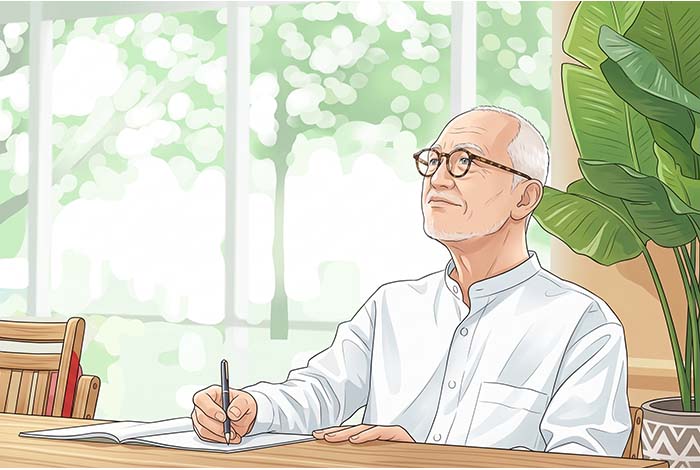
This structural inversion creates a massive trap for international professionals and expats sending emails, business invoices, or holiday packages from Los Angeles to Japan. If you write a Japanese address in the Western order on a local Japanese document, the computerized postal scanners or office staff can easily become confused, leading to severe delays or returned mail. Furthermore, many Japanese towns do not even use official street names; they rely entirely on this block-numbering puzzle. When communicating with Japanese clients, always remember to flip your perspective and start big—because in Japan, the country always comes before the room number!
▼ Read Next:
🔗 Why Does Japan Have Four Different Words for “State”? (The To-Do-Fu-Ken Mystery)
.
.
Share This Article
Related Articles
Pick Up
- Japan Now! She Said Yes. Olympic Champions Riku Miur...
- Japan Now! It’s Rice Day in Japan, So Dragon Q...
- Japan Now! 7,000 Stranded at Narita as Record Rain S...
- Japan Now! Japan Answered. The Monster Falls, and th...
- Pokemon Worlds Takes Over San Francisco, and We Got ...
-

- Japan Now! Doraemon Is Taking a Steam Train to Victo...
- Japan Now! 156 km/h. Bases Loaded. No Outs. Koshien&...
- Japan Now! Whole Torched Purin on a Crepe. Ise’...
- Japan Now! The Final Four Is Set. Ariake’s Mir...
- Japan Now! The Spear Won. Chiben Wakayama Takes Kosh...
- See more Fun Facts articles >









Latest Articles
- Free Medicare Seminars, Learn the Besics and Review...
- Den’s Tea ...
- Capture Special Memories at Kimono no Kobeya ...
- Recommended for Those on a Diet! Healthy Noodles
- Savor Seasonal Specials at TAKAGI COFFEE!
-

- Daikokuya El Monte Celebrates 10th Anniversary! ...
- Check Out JINS 360°! New Store Now Open!
- Pho-Inspired Asian Spicy Ramen Returns for a Limited...
- Discover JINS’ Revolutionary Multi-Directional Movem...
- Celebrate 10 Years!! Daikokuya El Monte Launches Ann...
- See all articles >