Share This Article



The Cash Register Confusion
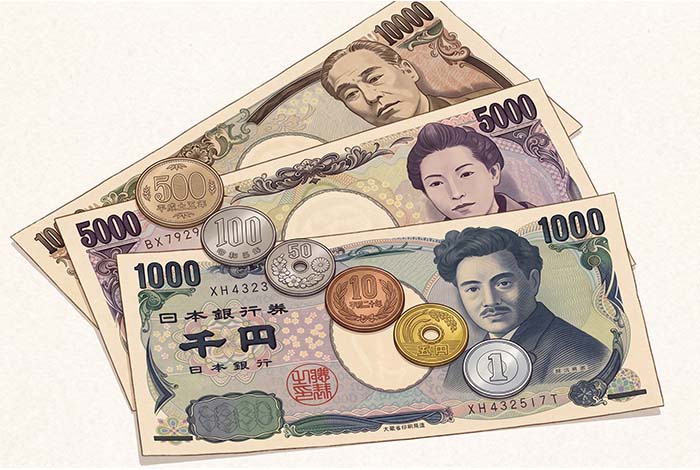
If you work as a cashier in Los Angeles, you expect customers to pay the exact amount or simply hand you a large bill and wait for their change. But if you watch a Japanese customer pay at a convenience store, you might witness a mathematical transaction that completely breaks a Westerner’s brain. Imagine the total bill is 680 yen. The customer hands the cashier a 1,000 yen bill. This makes sense. But suddenly, the customer digs into their pocket and adds a 100-yen coin and an 80-yen coin to the tray, handing over a total of 1,180 yen. In the US, a cashier might stare at you in utter confusion and hand the extra coins back. But in Japan, the cashier perfectly understands the assignment!
The Art of Minimizing Coins
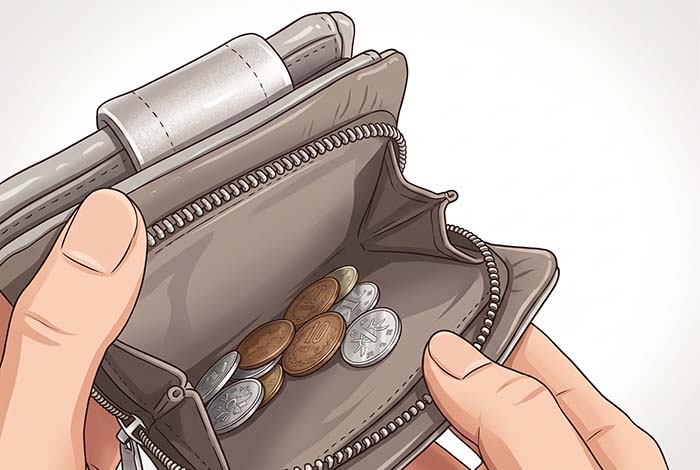
Why would someone intentionally hand over extra, seemingly random coins? The answer lies in the intense desire to minimize the physical weight of their wallet. While Japan is slowly moving toward digital payments, it has historically been a cash-heavy society. Japanese wallets feature large, dedicated coin pouches because the country uses a massive variety of coins (1, 5, 10, 50, 100, and 500 yen). If the customer simply paid 1,000 yen for a 680 yen item, they would receive 320 yen in change (meaning at least five separate coins). By strategically paying 1,180 yen, the math perfectly rounds out, and the cashier hands back a single, glorious 500-yen coin.
👉 Want to read more about Japanese demographics and society?
Read Next:Why Is Shopping in Japan So Much Easier? (The Beautifully Simple Tax System)

The Unspoken Math Test
This everyday habit is actually a brilliant demonstration of the country’s high baseline of mathematical literacy. It requires a silent, split-second collaboration between the customer and the cashier. The customer must do the reverse-subtraction in their head while staring at their coin pouch, and the cashier must instantly recognize the logic behind the weird combination of money placed on the tray. It happens flawlessly millions of times a day across the country. It is a highly satisfying, real-world math puzzle that proves how deeply the Japanese value efficiency, order, and carrying as little metal in their pockets as humanly possible!
▼ Read Next:
🔗The Half-Price Rush: Surviving the Twilight Hour at Japanese Supermarkets
.
.
Share This Article
Related Articles
Pick Up
- Japan Now! 156 km/h. Bases Loaded. No Outs. Koshien&...
- Japan Now! She Said Yes. Olympic Champions Riku Miur...
- Pokemon Worlds Takes Over San Francisco, and We Got ...
- Japan Now! 7,000 Stranded at Narita as Record Rain S...
- Japan Now! It’s Rice Day in Japan, So Dragon Q...
-

- Japan Now! The Spear Won. Chiben Wakayama Takes Kosh...
- Japan Now! Doraemon Is Taking a Steam Train to Victo...
- Japan Now! The Final Four Is Set. Ariake’s Mir...
- Japan Now! Japan Answered. The Monster Falls, and th...
- Japan Now! Whole Torched Purin on a Crepe. Ise’...
- See more Fun Facts articles >









Latest Articles
- WA Dining Suya Enjoy the Flavors of Fall with Limit...
- Free Medicare Seminars, Learn the Besics and Review...
- Den’s Tea ...
- Capture Special Memories at Kimono no Kobeya ...
- Recommended for Those on a Diet! Healthy Noodles
-

- Savor Seasonal Specials at TAKAGI COFFEE!
- Daikokuya El Monte Celebrates 10th Anniversary! ...
- Check Out JINS 360°! New Store Now Open!
- Pho-Inspired Asian Spicy Ramen Returns for a Limited...
- Discover JINS’ Revolutionary Multi-Directional Movem...
- See all articles >