Share This Article



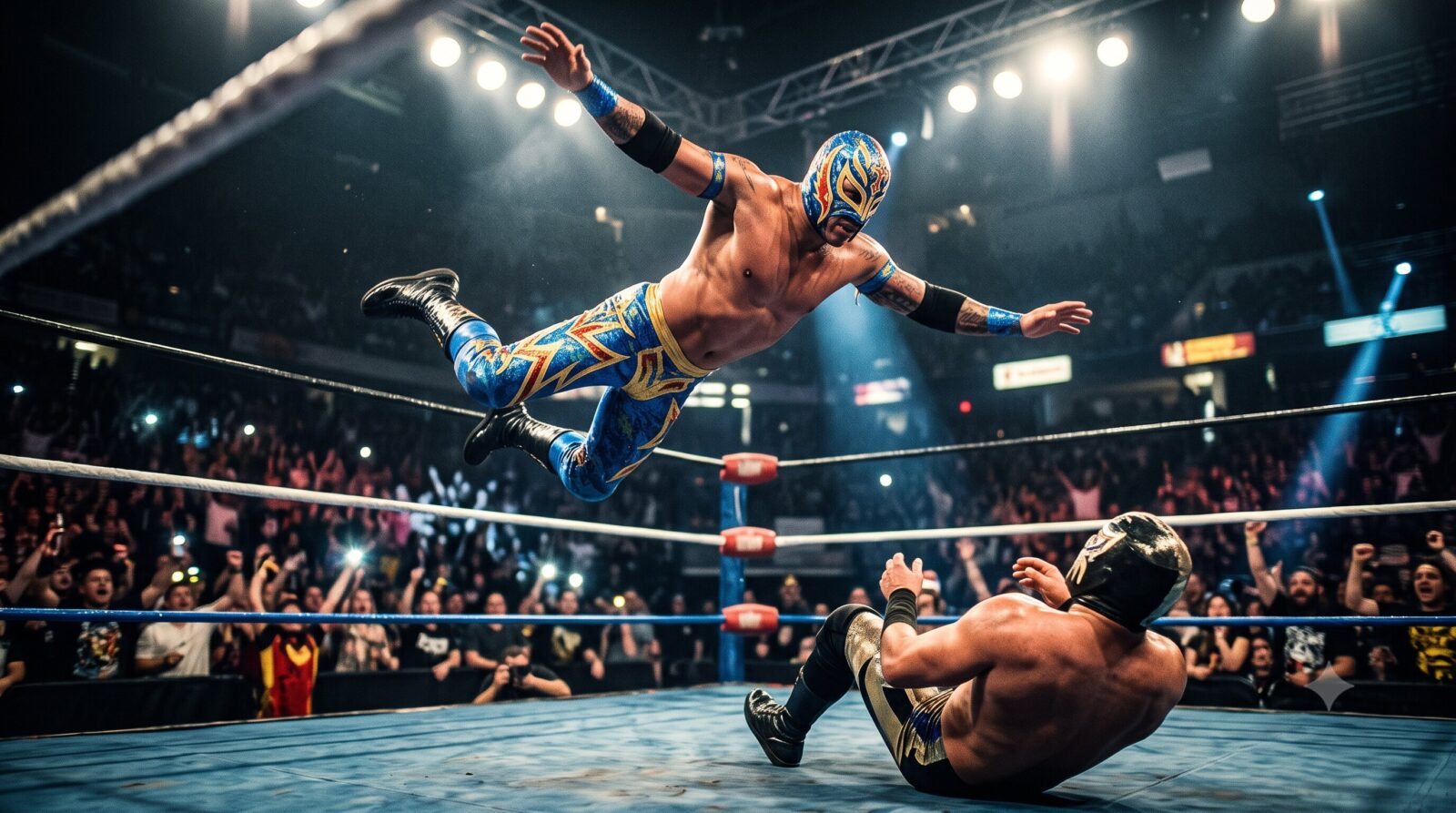
For Americans, pro wrestling means WWE: pyro, promos, and sports entertainment. However, Japan took the same raw material and built something closer to a martial religion, and today is its official birthday. July 30 is Pro Wrestling Day (Puroresu Kinenbi) in Japan, marking the day in 1953 when a former sumo wrestler named Rikidozan founded the Japan Pro Wrestling Alliance and accidentally created modern Japanese television, a national mythology, and the puroresu fighting style your favorite WWE and AEW stars grew up on.
Quick Answer: Pro Wrestling Day commemorates July 30, 1953, when Rikidozan, the “father of Japanese pro wrestling,” formed Japan’s first major wrestling organization. Puroresu (the Japanese pronunciation of “pro wrestling”) has since grown into a distinct tradition famous for its hard-hitting “strong style,” and its stars, from Shinsuke Nakamura and Asuka to Iyo Sky, are now headliners in American rings.
To understand puroresu, start with the single greatest TV moment in Japanese history.
In February 1954, months after founding his alliance, Rikidozan teamed with judo legend Masahiko Kimura against America’s Sharpe Brothers. NHK and NTV broadcast it live, and an estimated 20,000 people crammed the plaza outside Shimbashi Station to watch on a street-corner television, one of 53 public TV sets installed around Tokyo. In a Japan still climbing out of postwar occupation, the sight of a Japanese hero chopping down giant American opponents became a national catharsis, and the wrestling boom is widely credited with accelerating television adoption itself. Rikidozan died young, at 39 in 1963, but the two protégés he trained, Giant Baba and Antonio Inoki, split the puroresu universe between them and built the industry that thrives today.
Fittingly, the anniversary reminder came this year from Televi-kun, the kids’ hero magazine, which noted the crossover between wrestling and tokusatsu superhero shows: “Today is Pro Wrestling Day, dating to July 30, 1953, when Rikidozan and others formed their alliance. Many wrestlers have appeared in tokusatsu shows, from the late Strong Kobayashi to Hiroshi Tanahashi, and the late Antonio Inoki and his New Japan cohort appeared in Aste Kaiser.” In Japan, wrestlers do not just fight. They moonlight as superheroes, and nobody finds that strange.
The Reality Check: Puroresu’s Fingerprints Are All Over American Wrestling
If you watch WWE or AEW, you are already watching puroresu’s children. The Japanese tradition’s calling card is “strong style,” stiff strikes, fighting-spirit no-sells, and an athlete-first presentation that treats matches as competition rather than storyline garnish, a philosophy exported by New Japan Pro-Wrestling and absorbed by a generation of American workers. The pipeline flows both ways: Shinsuke Nakamura, Asuka, and Iyo Sky carried Japanese main-event pedigree into WWE, AEW built its in-ring identity on talent formed in Japan, and NJPW now streams worldwide with English commentary and runs US shows outright. And the crossover instinct is nothing new: just last month marked 50 years since Antonio Inoki fought Muhammad Ali in a bizarre, genuinely contested 1976 Tokyo bout now remembered as a foundation stone of MMA. Half a century later, the fight everyone once mocked looks like prophecy.
Why This Is Sparking Debate in Japan
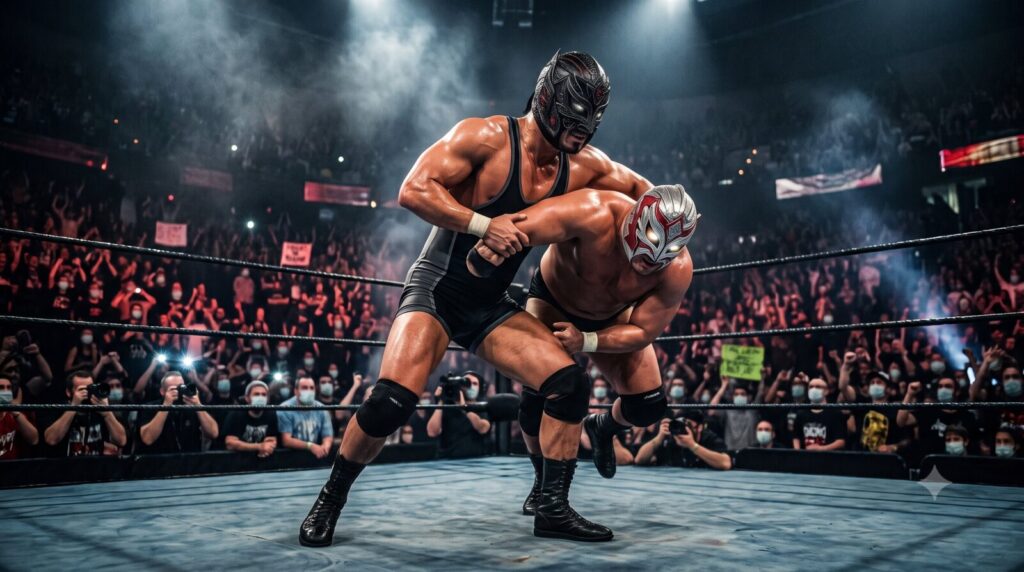
Is pro wrestling “fake”? Try asking that in Japan.
The American industry long ago embraced the word “entertainment,” but Japan never fully signed the treaty. Puroresu is covered in the sports pages of national newspapers, its dojo system trains rookies with a severity closer to sumo stables than acting schools, and the culture’s founding image, Rikidozan avenging a defeated nation with a karate chop, gave the genre an emotional seriousness it never shed. Critics call the reverence naive; devotees answer that the outcomes may be planned, but the suplexes, the injuries, and the fighting spirit are as real as anything in sports. It is the same question American fans argue about, except in Japan the default answer has been “it matters” for 73 years.
Fun Fact
Fun Fact: Did you know?
Giant Baba and Antonio Inoki, the two titans who would divide Japanese wrestling into rival kingdoms (All Japan and New Japan) and feud for decades, both made their professional debuts on the exact same day: September 30, 1960, on the same Japan Pro Wrestling card. Imagine if Batman and Superman had punched in for their first shift together. Japanese wrestling’s greatest rivalry started as literal classmates.
So tonight, in honor of the day: fire up a New Japan stream, appreciate one crisp forearm strike, and thank a sumo wrestler from 1953. Ichi, ni, san, da!
FAQ

Q: What is Pro Wrestling Day in Japan?
A: July 30, commemorating the founding of the Japan Pro Wrestling Alliance by Rikidozan on July 30, 1953, the event that launched organized pro wrestling in Japan. A separate “Puroresu no Hi” on February 19 marks Japan’s first major international match in 1954.
Q: Who was Rikidozan?
A: A former sumo wrestler (1924-1963) who became postwar Japan’s biggest hero by defeating American opponents in the ring during the early TV era. He is called the father of Japanese pro wrestling and trained both Giant Baba and Antonio Inoki.
Q: What is “strong style”?
A: The hard-hitting, athletically serious Japanese wrestling philosophy associated with Antonio Inoki and New Japan Pro-Wrestling, emphasizing realistic strikes and fighting spirit. It heavily influenced modern American wrestling and stars like Shinsuke Nakamura.
Q: How can I watch Japanese pro wrestling in the US?
A: NJPW World streams New Japan events worldwide with English commentary options, and NJPW regularly runs shows in the United States. Promotions like AEW also feature Japanese talent and crossover events.
Japan Now! is our daily series bringing you the trends, news, and cultural moments happening in Japan right now. For anyone curious about Japan, check back every day to stay in the know. You never know when it might come in handy on your next trip!
Related Articles
Step Into the Action: Japan’s Ultimate Pro Wrestling Experience
https://japanupmagazine.com/archives/18136
Wikipedia
https://en.wikipedia.org/wiki/Puroresu
Share This Article
Related Articles
Pick Up
- Japan Now! The Final Four Is Set. Ariake’s Mir...
- Japan Now! Doraemon Is Taking a Steam Train to Victo...
- Japan Now! The Spear Won. Chiben Wakayama Takes Kosh...
- Japan Now! 7,000 Stranded at Narita as Record Rain S...
- Japan Now! Japan Answered. The Monster Falls, and th...
-

- Japan Now! Whole Torched Purin on a Crepe. Ise’...
- Pokemon Worlds Takes Over San Francisco, and We Got ...
- Japan Now! 156 km/h. Bases Loaded. No Outs. Koshien&...
- Japan Now! She Said Yes. Olympic Champions Riku Miur...
- Japan Now! It’s Rice Day in Japan, So Dragon Q...
- See more Fun Facts articles >



Latest Articles
- Free Medicare Seminars, Learn the Besics and Review...
- Den’s Tea ...
- Capture Special Memories at Kimono no Kobeya ...
- Recommended for Those on a Diet! Healthy Noodles
- Savor Seasonal Specials at TAKAGI COFFEE!
-

- Daikokuya El Monte Celebrates 10th Anniversary! ...
- Check Out JINS 360°! New Store Now Open!
- Pho-Inspired Asian Spicy Ramen Returns for a Limited...
- Discover JINS’ Revolutionary Multi-Directional Movem...
- Celebrate 10 Years!! Daikokuya El Monte Launches Ann...
- See all articles >