Share This Article



The American Favorite
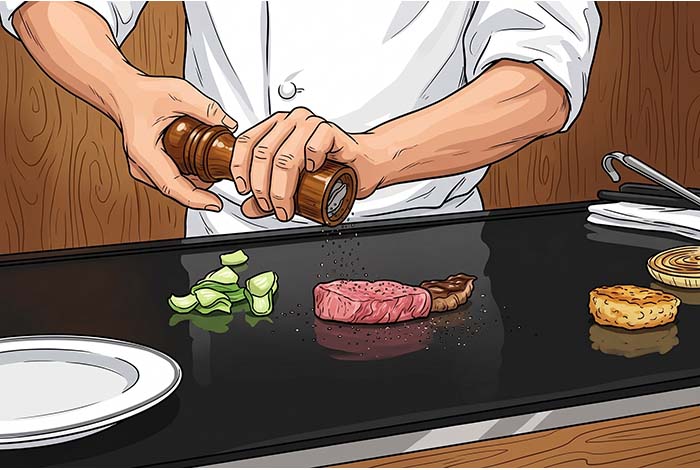
If you want a fun, fiery, and highly entertaining dinner in the US, you go to a “Hibachi” restaurant. Chefs wearing tall hats masterfully flip shrimp into their pockets, juggle sharp knives, and create massive volcanos out of stacked onions. It is a beloved American dining experience. But if you travel to Tokyo and ask your hotel concierge to recommend a good “Hibachi” restaurant, they will look at you in complete confusion.
The Translation Trap
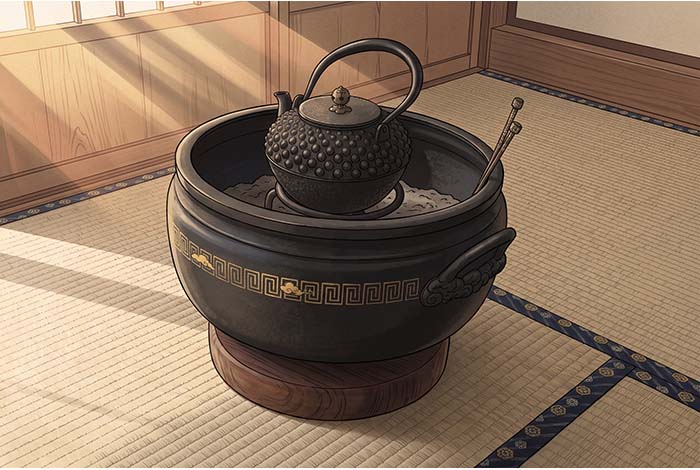
In Japanese, a “Hibachi” (literally “fire bowl”) is actually an ancient, traditional indoor heating stove. It is a ceramic pot filled with hot charcoal used to warm hands or boil water for tea, not a cooking grill! The correct Japanese word for cooking meat and vegetables on a flat iron griddle in front of guests is “Teppanyaki” (iron-plate grilling).
👉 Want to read more about Japanese demographics and society?
Read Next: Why Do Normal Japanese People Live in “Mansions”? (The Ultimate Real Estate Misunderstanding)
The Catchy Mistake
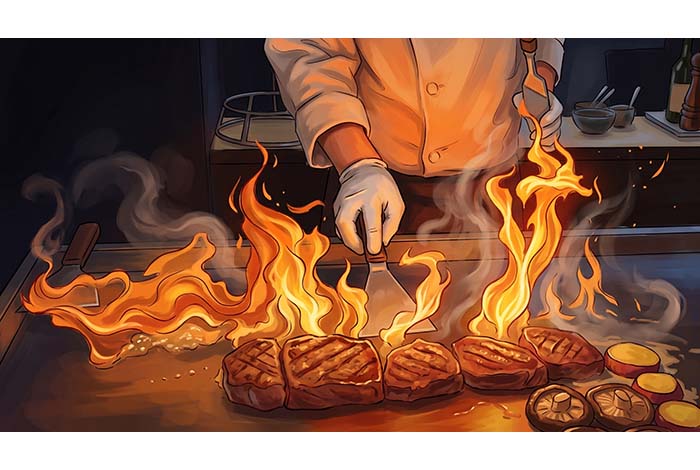
So why is it called Hibachi in America? When the famous “Benihana” chain first introduced Teppanyaki to the US in the 1960s, the word “Teppanyaki” was too long and difficult for Americans to pronounce. Restaurant owners likely adopted the word “Hibachi” simply because it sounded catchy, exotic, and easy to say. Enjoy your flaming onion volcano, but remember you are actually eating at a “Teppanyaki” joint!
▼ Read Next:
🔗 Popular Japanese Food Shows Now Streaming Free in North America
.
.
Share This Article
Related Articles
Pick Up
- Onigiri Sun DTLA Location Now Open
- Zespri Kiwifruit: A Sweet, Vitamin-C Boost for Fall
- Daikokuya El Monte Celebrates 10th Anniversary! ...
- Pho-Inspired Asian Spicy Ramen Returns for a Limited...
- Celebrate 10 Years!! Daikokuya El Monte Launches Ann...
-

- Honda-ya Charity Event Celebrates Kappo Honda’...
- A popular spot for authentic tempura rice bowls and ...
- Half-Price Hakata Ramen: Shin-Sen-Gumi Rosemead̵...
- Torikizoku’s second location in Anaheim Takeout yaki...
- LA Dassai Experience: Japan and USA’s Finest S...
- See more Fun Facts articles >





Latest Articles
- Free Medicare Seminars, Learn the Besics and Review...
- Capture Special Memories at Kimono no Kobeya ...
- Check Out JINS 360°! New Store Now Open!
- Discover JINS’ Revolutionary Multi-Directional Movem...
- 2027 Coming-of-Age Ceremony presented by Nadeshiko-k...
-

- Kappo Honda 30th Anniversary Charity Event
- JapanUp! 228 – October 2026
- Quiz – October 2026
- Chiikawa comes to Channel Oishii with 20 curated foo...
- Kanagawa: The Many Faces of Japan, All in One Place
- See all articles >