Share This Article



The American Sushi Boom
If you go out for sushi in the US, you are likely ordering a massive plate of rolls. From the classic California Roll to wild creations packed with cream cheese, spicy mayo, jalapeños, and deep-fried shrimp tempura, American sushi is a heavily decorated, multi-ingredient explosion of flavor.

The Simple Nigiri
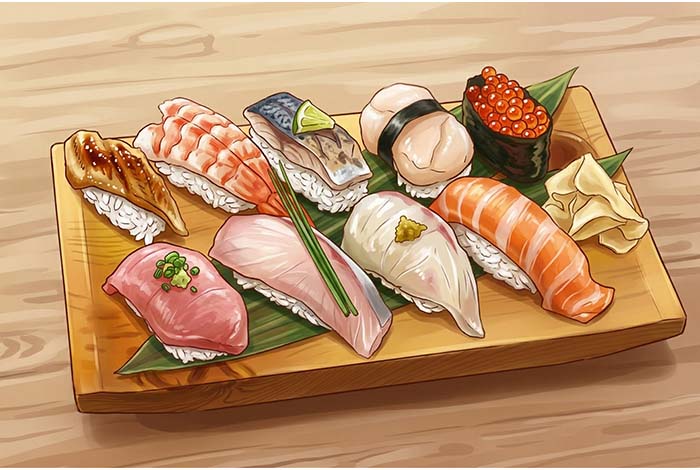
But if you sit down at an authentic sushi counter in Japan, those extravagant rolls simply do not exist. Japanese sushi is primarily focused on “Nigiri”—a small, elegantly shaped mound of vinegared rice draped with a single, pristine slice of raw fish.
👉 Want to read more about Japanese demographics and society?
Read Next:Popular Japanese Food Shows Now Streaming Free in North America

Respecting the Fish
Why is Japanese sushi so minimalist? It is all about deep respect for the ingredient. Japanese chefs believe that slathering a beautiful piece of fresh Bluefin tuna in spicy mayonnaise completely ruins its delicate, natural flavor. The goal is to taste the ocean, not the sauce.

The Western Evolution
So why is American sushi so complex? When sushi was first introduced to the US in the 1960s and 70s, many Westerners were terrified of eating raw fish and seaweed. To make it approachable, chefs brilliantly hid the seaweed inside the rice (the inside-out roll) and added familiar ingredients like avocado and crab.
A Culinary Reset
Both styles are delicious in their own way! But if you are used to eating massive, sauce-drenched Dragon Rolls in Torrance, eating a simple, perfectly crafted piece of Tuna Nigiri in Tokyo will completely reset and elevate your understanding of what sushi is meant to be.
▼ Read Next:
.
.
Share This Article
Related Articles
Pick Up
- LA Dassai Experience: Japan and USA’s Finest S...
- Pho-Inspired Asian Spicy Ramen Returns for a Limited...
- Celebrate 10 Years!! Daikokuya El Monte Launches Ann...
- Daikokuya El Monte Celebrates 10th Anniversary! ...
- Honda-ya Charity Event Celebrates Kappo Honda’...
-

- Zespri Kiwifruit: A Sweet, Vitamin-C Boost for Fall
- Half-Price Hakata Ramen: Shin-Sen-Gumi Rosemead̵...
- Onigiri Sun DTLA Location Now Open
- A popular spot for authentic tempura rice bowls and ...
- Torikizoku’s second location in Anaheim Takeout yaki...
- See more Fun Facts articles >


Latest Articles
- Free Medicare Seminars, Learn the Besics and Review...
- Capture Special Memories at Kimono no Kobeya ...
- Check Out JINS 360°! New Store Now Open!
- Discover JINS’ Revolutionary Multi-Directional Movem...
- 2027 Coming-of-Age Ceremony presented by Nadeshiko-k...
-

- Kappo Honda 30th Anniversary Charity Event
- JapanUp! 228 – October 2026
- Quiz – October 2026
- Chiikawa comes to Channel Oishii with 20 curated foo...
- Kanagawa: The Many Faces of Japan, All in One Place
- See all articles >