Share This Article



The Invisible Ladder of Society
In American corporate culture, the goal is often a “flat” hierarchy. New hires are encouraged to call the CEO by their first name, and everyone acts like casual peers. But if you step into a Japanese company or school, you are entering a “Tate Shakai” (Vertical Society). Every single human relationship is defined by a strict, invisible ladder of seniority, categorized into two vital roles: the “Senpai” (Senior) and the “Kohai” (Junior). This dynamic dictates exactly how you speak, where you sit in a room, and how deeply you bow. It is the absolute backbone of Japanese social structure, ensuring order and respect in every interaction.
Age vs. Entry Date
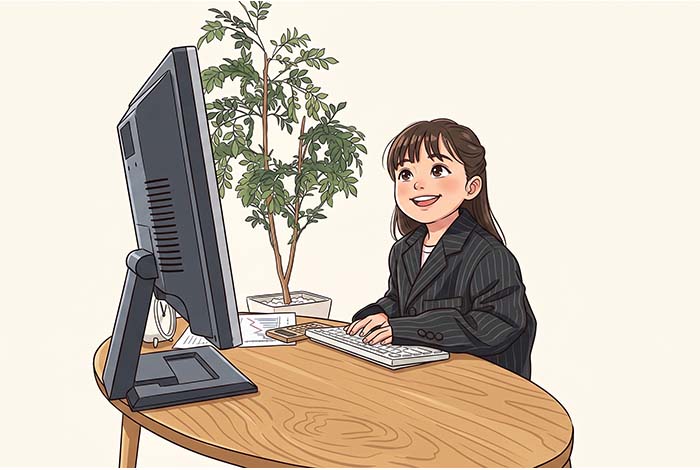
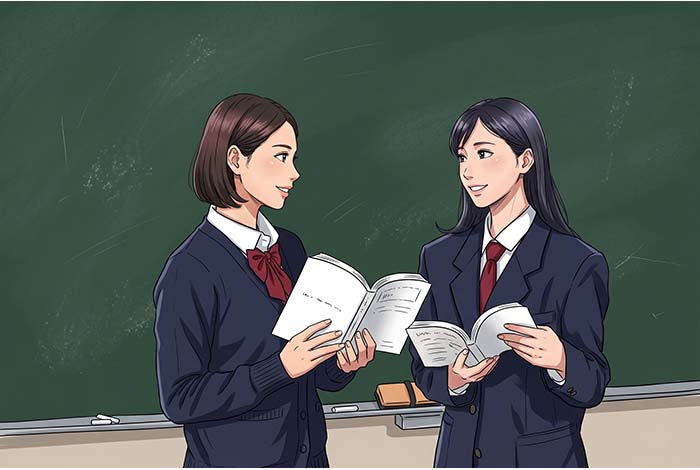
This intense hierarchy doesn’t start at the office; it is drilled into Japanese youth starting in junior high school sports clubs (Bukatsu). A first-year student (Kohai) must use perfectly polite “Keigo” (honorific language) when speaking to a second-year student (Senpai), even if they are only a few months apart in age. Furthermore, in the Japanese corporate world, seniority is strictly based on the exact date you entered the company, not your actual age. A 25-year-old who joined the company in 2020 is officially the “Senpai” to a 30-year-old who joined in 2021! The older employee must swallow their pride and treat the younger employee with the respect owed to a senior.
👉 Want to read more about Japanese demographics and society?
Read Next: The Invisible Japanese Seating Chart: What Are “Kamiza” and “Shimoza”?
The Generous Burden of the Senpai
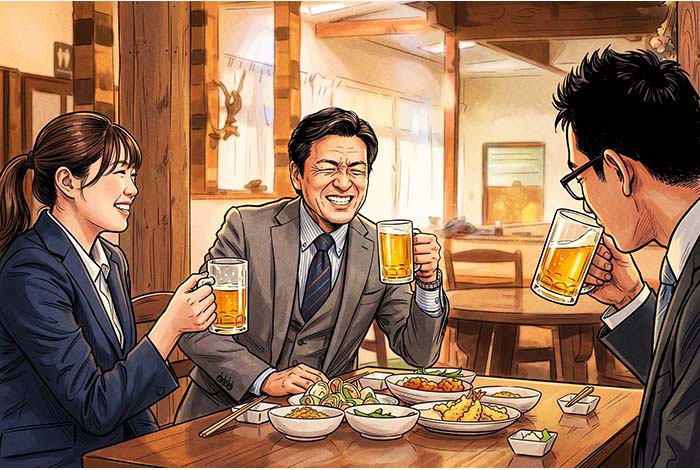
To a foreigner, this might sound exhausting and overly bossy, but it is actually a beautiful, two-way street of mutual reliance. Being a Senpai isn’t just about giving orders; it comes with a massive, unspoken obligation to protect and mentor. If a Kohai makes a mistake at work, the Senpai takes the blame and apologizes to the boss. And most importantly, when they go out for drinks or dinner after work, the Senpai is almost always expected to pay the entire bill (Ogori)! It is a deeply ingrained, familial culture: strict respect and loyalty flow upward, while generous care, guidance, and free drinks flow downward.
▼ Read Next:
🔗 Why Does Japanese Have Three Different Levels of Politeness? (The Magic of “Keigo”)
.
.
Share This Article
NEW MAGAZINE
Related Articles
Pick Up
- Japan Now! Why Are Japanese Teens Obsessed with R...
- Japan Now! BE:FIRST Drop New Song “MissingR...
- Japan Now! New Sword Art Online Movie “Integra...
- Japan Now! Why Did Male Artists Just Sweep ALL 10 of...
- Japan Now! Samurai Blue Stun Brazil with an Early Le...
-

- Japan Now! Why is Japan Quintupling Its Visa Fees? T...
- Japan Now! What Is Typhoon Season in Japan, and Shou...
- Japan Now! It’s Tanabata! Why All of Japan Is ...
- Japan Now! A “Once in a Decade” Heatwave...
- Japan Now! Why a Tiny Japanese Rubber Stamp Just Too...
- See more Fun Facts articles >










Latest Articles
- Binge-Watch The Solitary Gourmet on Channel Oishii
- GreeNoodle: Healthy Organic Instant Noodles Made wit...
- New at Garlic High: Yuzu Seafood Tsukemen, for a Lim...
- Kendo Trial Class in SFV area: Beginners Welcome in ...
- Watch Japanese Anime Free on Channel Oishii, No Sign...
-

- Like Tempura Carlos Jr. EXPRESS on Instagram and Get...
- Limited Time! RAKKAN Ramen’s Summer Special Menu
- Two Luxurious New Wafu Noodle Dishes Arrive at Takag...
- JAPANESE SAMURAI / Motoori Norinaga
- I LIVE IN JAPAN / Carine Lantignac / Artist and Cult...
- See all articles >