Share This Article



Last updated: January 13, 2026

Chiaki Yanagimoto
Profession: Film Producer / Founder of SAKKA
Born: 1984, Hokuto, Yamanashi, Japan.
Education: Studied at Tokyo University of Foreign Studies; graduated from California State University, Northridge (CSUN), majoring in Film.
Career Highlights: Began her career as a producer in 2009. Produced the internationally acclaimed documentary “Kampai! For the Love of Sake” (2015) and co-directed “AUM: The Cult at the End of the World” (Sundance Film Festival selection). Founded “SAKKA,” a platform connecting Japanese independent films with the world.

Turning Her Japanese Identity into a Strength: “I Came Here Out of Interest in Movies and English.”
“There was absolutely no entertainment in my hometown. No karaoke, no convenience stores. The only thing we had was a video rental shop. My mother, who loved Western movies, would often rent films, and we would watch them together. That is my starting point.”
Hollywood is the center of the film industry. We spoke with Chiaki Yanagimoto, a film producer thriving in this city where talent converges.
Born in 1984 in Hokuto City, Yamanashi Prefecture, she grew up with her parents and a sister three years her senior. In a town without movie theaters or arcades, the rental video shop in front of the station was the only source of entertainment. She would rent VHS tapes and watch them in the living room with her mother, becoming obsessed with Spielberg films like E.T. Thanks to her mother, who disliked dubbed movies, her ears naturally became accustomed to English.
She attended a local college-preparatory high school. While those around her aimed for top universities in Japan, Yanagimoto didn’t see the point. “My only interests were English and movies. I wanted to study at a film school in LA.” However, the 9/11 attacks occurred when she was a high school senior. Although she had acceptance letters from several universities, she temporarily gave up on moving to the US for the sake of her worried parents. It was an era when studying abroad was often dismissed as “lacking academic ability” or “just playing around.” Determined not to let anyone say that, she entered the Tokyo University of Foreign Studies (TUFS), majoring in English. “The shock of not being able to go to the US was huge. I was probably the gloomiest freshman there,” she recalls.

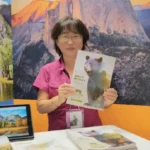
・Website: https://greenwichentertainment.com/film/aum-the-cult-at-the-end-of-the-world/
However, two good things happened. First, she spent all her time in the international student dorms, which improved her English. Second, she saw a notice on a bulletin board at TUFS that a UCLA film crew was looking for staff in Tokyo. She applied immediately. A Japanese person she met there told her, “California State University, Northridge (CSUN) has a very good film department.” This advice led her to her next step. She took the exam and passed. She quit TUFS after just six months and worked at an izakaya for a year to save money for her move. When asked if she could have stayed at TUFS a little longer, she replied, “I wanted to start at CSUN as a freshman. If I stayed at TUFS for a year, I would have earned credits and entered as a transfer student, so I withdrew after six months.”
After graduating from university, she worked at a production company in LA. As an interpreter and assistant to producers, she learned the overall picture of filmmaking. She began her career as a producer in 2009. Her 2015 documentary, Kampai! For the Love of Sake, was screened at many international film festivals, including the Tokyo International Film Festival. Her latest work, AUM: The Cult at the End of the World, premiered at the Sundance Film Festival and was released in theaters across North America this past March.

・Website: www.baruerukamu.com
・Instagram: @baruerukamu
While currently moving forward with multiple international projects, she has also launched “SAKKA,” a platform to deliver Japanese independent films to overseas audiences, actively bridging the film industries of Japan and the US. “Just like me—a girl in rural Japan obsessed with American movies—there must be a child somewhere in the world who will be captivated by Japanese movies. Creating that opportunity is my way of giving back to cinema and to my mother.” Her dreams continue to expand.
Share This Article
Related Articles
Pick Up
- I LIVE IN JAPAN / Bernard McEntee / Teacher
- [Japanese Interviews: Life in LA] Izumi Mitsuda : I’...
- [Japanese Interviews: Life in LA] Chizuko Higuchi : ...
- The Front Line of Anime Music “Yoko Takahashi ...
- [ Interview ] Yuriyan Retriever – Comedian | N...
-

- [Japanese Interviews: Life in LA] Arisa Nakamura : “...
- I LIVE IN JAPAN / Mathilde DUBOIIS / Co-founder of t...
- [Japanese Interviews: Life in LA] Yuki Mitsufuji : B...
- [Japanese Interviews: Life in LA] Dan Sawada : “I Ta...
- [Japanese Interviews: Life in LA] Yukari Fowler : Tr...
- See more Interview articles >





Latest Articles
- Onigiri Sun DTLA Location Now Open
- A popular spot for authentic tempura rice bowls and ...
- 2027 Coming-of-Age Ceremony presented by Nadeshiko-k...
- Kappo Honda 30th Anniversary Charity Event
- Torikizoku’s second location in Anaheim Takeout yaki...
-

- JapanUp! 228 – October 2026
- Quiz – October 2026
- Chiikawa comes to Channel Oishii with 20 curated foo...
- Kanagawa: The Many Faces of Japan, All in One Place
- Half-Price Hakata Ramen: Shin-Sen-Gumi Rosemead̵...
- See all articles >