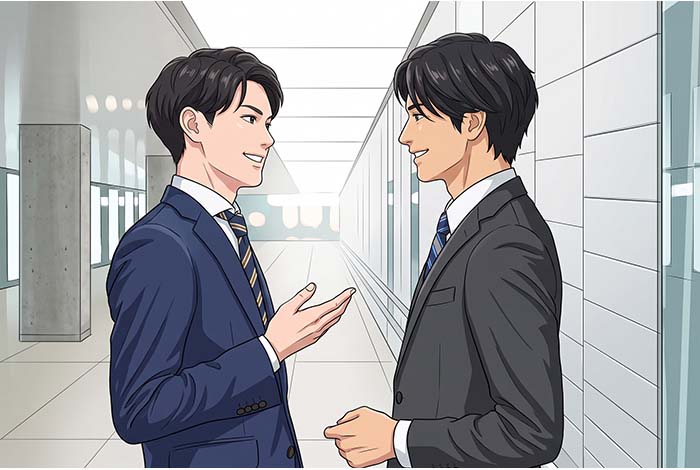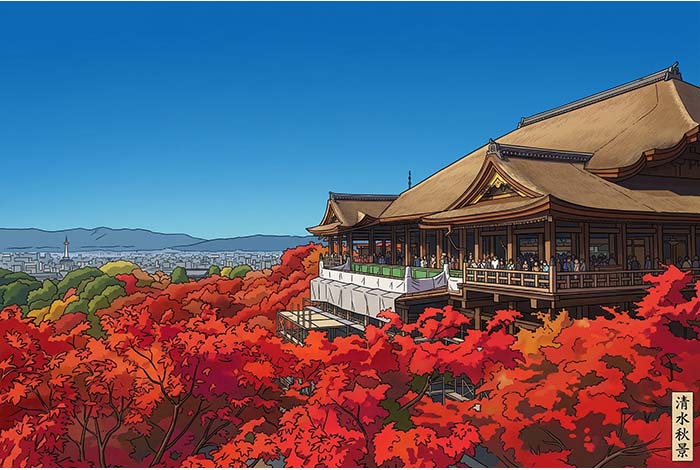
The Ultimate School MemoryIf you watch Japanese anime or dramas, you will often see a special episode where the whole class goes on a big trip, staying in hotels and exploring a new city. This is called “Shugaku-Ryoko” (School Excursion), and it is the most anticipated event of a Japanese student’s life. The Standard DestinationsUsually held in the final year of junior high or high school, the school organizes a multi-day trip for the entire grade. The most classic destinations are historic cities like Kyoto and Nara to learn about traditional culture, or Tokyo to visit Disneyland! Some lucky high…
View More Why Do Japanese Students Travel Together Before Graduating? (The “Shugaku-Ryoko” Tradition)Category: Fun Facts
Why Are Japanese Convenience Stores Like Mini-Cities? (The “Konbini” Magic)
More Than Just SnacksIn the US, a convenience store is usually attached to a gas station where you buy chips, soda, or lottery tickets. In Japan, a “Konbini” (like 7-Eleven, Lawson, or FamilyMart) is a vital lifeline. It is basically a restaurant, a bank, a post office, and a city hall packed into one tiny, bright room. The Ultimate Multitasking HubWhat can you do there? You can pay your gas and electricity bills at the register. You can ship a heavy package to your friend. You can buy concert tickets from a terminal. If you link your ID card, the…
View More Why Are Japanese Convenience Stores Like Mini-Cities? (The “Konbini” Magic)Where Does the Snow Meet the Sea? (The Magical Coast of Hokkaido)
The Viral Winter IllusionScroll through Japanese Instagram in winter, and you might stumble upon a breathtaking, surreal video. A pure white landscape extends perfectly onto a sandy beach, right up to the crashing ocean waves. It looks like a CGI movie scene, but it is real. The “Shirahama” PhenomenonThis is a magical winter phenomenon seen in the northernmost island of Japan, Hokkaido (such as the beautiful Shirahama Coast areas). While “Shirahama” usually translates to “White Sand Beach” in summer, during the harsh winter, it literally becomes a beach made of pure white snow! The Impossible ContrastWhy is this so special?…
View More Where Does the Snow Meet the Sea? (The Magical Coast of Hokkaido)Why Are Japanese Youth Obsessed with Sweating? (The “Sauna Boom”)
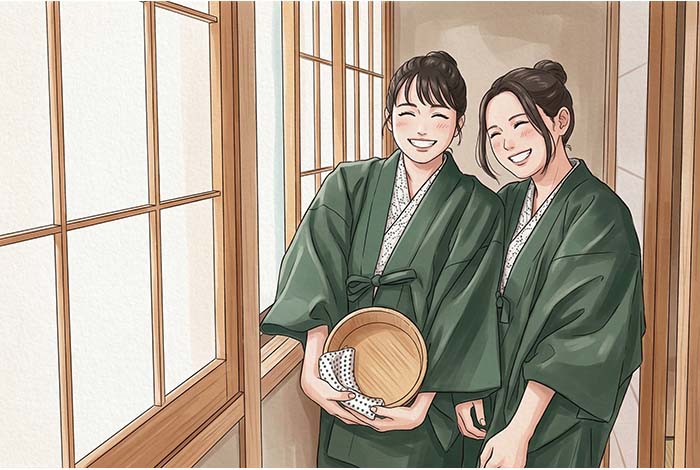
Not Just for GrandpasIn the past, saunas in Japan were seen as a place exclusively for tired middle-aged businessmen. But over the last 10 years, a massive “Sauna Boom” has exploded among young people, especially men in their 20s and 30s. It has evolved from a middle-aged habit into a trendy, subculture lifestyle. The Magic Word: “Totonou”The ultimate goal of this boom is to achieve a state called “Totonou” (to be arranged, or to be in tune). It is a euphoric, trance-like state you reach by repeating a cycle: Hot Sauna ➔ Freezing Cold Bath ➔ Resting in the fresh…
View More Why Are Japanese Youth Obsessed with Sweating? (The “Sauna Boom”)Why Is Everyone’s Underwear Outside? (The Balcony Laundry Culture)
The Balcony ViewIf you look up at Japanese apartment buildings, you will see a very domestic sight: shirts, pants, towels, and blankets hanging on every balcony. In the US, many neighborhoods (HOAs) ban hanging laundry outside because it looks “messy,” and people rely entirely on gas dryers. The Sun-Dried ObsessionSo, do Japanese people not have dryers? Actually, many modern Japanese washing machines have a drying function. But most people refuse to use it. Japanese people are obsessed with “Tenpi-boshi” (Sun-drying). They believe the sun’s UV rays kill bacteria and give clothes a crisp, fresh scent that machines simply cannot replicate.…
View More Why Is Everyone’s Underwear Outside? (The Balcony Laundry Culture)Why Does Every Japanese School Have a Pool? (The Mandatory Swim Class)
Ask any professional skier or snowboarder where their dream destination is. Many will say “Japan.” Specifically, regions like Niseko (Hokkaido) or Hakuba (Nagano). The snow here is legendary. It has a nickname among international athletes: “Japow” (Japan + Powder).
View More Why Does Every Japanese School Have a Pool? (The Mandatory Swim Class)Why Do 6-Year-Olds Carry $500 Leather Bags? (The “Randoseru” Evolution)
The Anime IconIf you watch Japanese anime, you have definitely seen it: elementary school students walking to school wearing giant, boxy, shiny leather backpacks. These special bags are called “Randoseru” (from the Dutch word ransel, meaning backpack). The Red and Black EraFor decades, there was a strict, unspoken rule in Japan. Boys had to wear Black Randoseru, and girls had to wear Red. That was it. There were no other choices. Parents and grandparents would buy them to celebrate the child entering the 1st grade. The Pastel RevolutionHowever, in recent years, the rules have completely changed! Visit a bag shop…
View More Why Do 6-Year-Olds Carry $500 Leather Bags? (The “Randoseru” Evolution)Why Don’t Packages Get Stolen in Japan? (The “Takuhai Box” Revolution)
The Porch Pirate ProblemIn the US, delivery drivers often just throw your package on the front porch. If you are not home, you have to pray that a “Porch Pirate” (a package thief) doesn’t steal it before you return. In Japan, leaving a package exposed on the porch used to be strictly unacceptable. The Redelivery CrisisJapanese delivery services are famous for politeness. If you weren’t home, the driver would take the package back and leave a “Redelivery Notice” in your mailbox. They would try again and again until they handed it to you directly. But with the boom of online…
View More Why Don’t Packages Get Stolen in Japan? (The “Takuhai Box” Revolution)Why Are There Photo Booths in Supermarket Parking Lots? (The “Shoumei-Shashin” Mystery)
Not for FunIf you walk around Japan, you will see box-like machines outside train stations, bookstores, and even convenience stores in the countryside. Are they “Purikura” (fun sticker photo booths)? No. They have a blue curtain and a stool inside. They are “Shoumei-Shashin” (ID Photo) machines. A Paper-Heavy SocietyIn the US, you take your passport photo at a post office or pharmacy. In Japan, you need physical ID photos constantly. You need them for resumes (job hunting), driver’s licenses, university applications, and visa renewals. Because the demand is so high, these machines are everywhere. The Ultimate Proof of SafetyThink about…
View More Why Are There Photo Booths in Supermarket Parking Lots? (The “Shoumei-Shashin” Mystery)Why Are the Noodles Floating Inside the Cup? (The Secret of Japanese Engineering)
The Hidden GapIf you carefully cut a Cup Noodle in half before adding water, you will discover a shocking secret. The block of dry noodles does not touch the bottom of the cup! It is floating perfectly in the middle. There is a large empty gap underneath. A Masterpiece of “Monozukuri”When you see this empty space, your first thought might be, “They are cheating me to save money!” Don’t worry, that is not true. This gap is a brilliant feat of Japanese “Monozukuri” (craftsmanship and manufacturing engineering) called the “Middle Suspension” structure. Shock AbsorptionThe first reason is protection. Cup Noodles…
View More Why Are the Noodles Floating Inside the Cup? (The Secret of Japanese Engineering)Why Do Cup Noodles Take Exactly 3 Minutes? (The Japanese Invention of Hunger)
A Japanese MasterpiecePour hot water, close the lid, and wait 3 minutes. This is the universal rule of Cup Noodles anywhere in the world. But did you know this global standard was born in Japan in 1971? It was invented by Momofuku Ando, the Japanese founder of Nissin. Not a Technological LimitYou might think, “It takes 3 minutes for the dry noodles to soften.” Actually, that is wrong. Japanese food technology is so incredibly advanced that companies can easily make “1-Minute Cup Noodles.” In fact, they have tried selling them in Japan, but they never became a hit. The “Wait…
View More Why Do Cup Noodles Take Exactly 3 Minutes? (The Japanese Invention of Hunger)Why Do Japanese Students Live Alone? (The “No Roommate” Culture)
The Solo CastleIn the US or Europe, if you are a college student or a young professional in a big city, having a roommate is totally normal. It saves money. But in Japan, having a roommate is incredibly rare. Almost all young people live completely alone in tiny apartments. The “1R” Micro-ApartmentsWhy? Because Japan has an abundance of “1R” (One-Room) or “1K” (One Room + Kitchen) apartments. These are micro-apartments explicitly designed for single living. They are very small (sometimes just 15 square meters) but surprisingly affordable. You don’t need to split the rent to survive in Tokyo. The “Meiwaku”…
View More Why Do Japanese Students Live Alone? (The “No Roommate” Culture)