
Share This Article



Last updated: March 20, 2026
The Cashier-Less Store
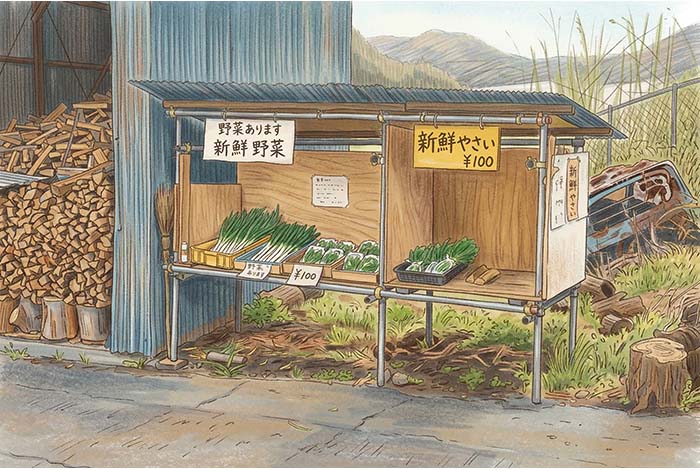
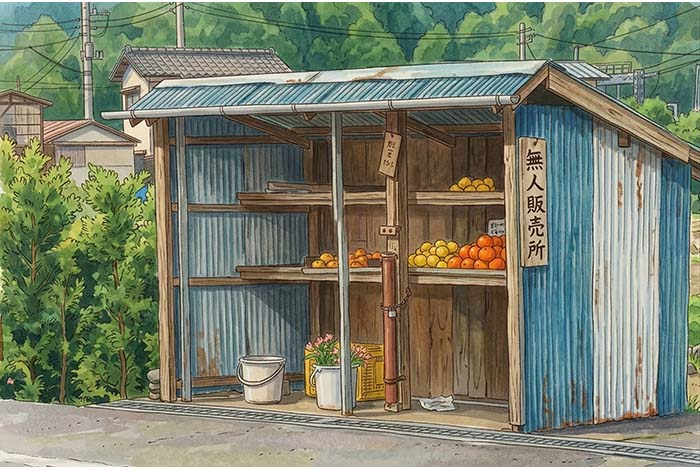
Long before Amazon Go invented modern cashier-less stores, the Japanese countryside perfected it. If you drive through rural Japan, you will frequently spot tiny wooden huts on the side of the road stacked with fresh tomatoes, cucumbers, and citrus fruits—with absolutely no one working there.
The Honor System
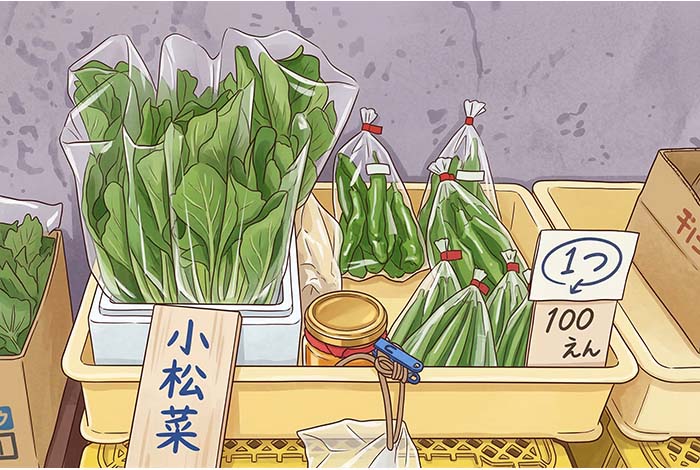
This is a “Mujin Hanbaijo” (Unmanned Vegetable Stand). It operates purely on the honor system. Local farmers place their freshly harvested produce in the stall with small price tags, usually around 100 or 200 yen. Customers simply drop their coins into a small wooden box and take the vegetables.
👉 Fascinated by Japan’s unique countryside culture?
Read Next: https://japanupmagazine.com/archives/19001
The “Seizensetsu” Philosophy
How does this business model not fail instantly? It is rooted in the Japanese philosophy of “Seizensetsu”—the fundamental belief that human nature is inherently good. Farmers trust their neighbors and passing drivers to do the right thing and pay for what they take.

The Reality of the Box
It is a beautiful system, but it isn’t completely perfect. Occasionally, the coin boxes or the vegetables do get stolen, which deeply breaks the community’s heart. Yet, the vast majority of these stands continue to operate successfully, proving that social trust still strongly exists in Japan.
The Ultimate Farmers Market
In LA, going to a Farmers Market is a big weekend event with trendy stalls and high prices. In Japan, grabbing dirt-cheap, incredibly fresh daikon radishes from an unmanned wooden box on a quiet country road is a heartwarming slice of everyday rural life.
▼ Read Next:
.
.
Share This Article
Related Articles
Pick Up
- Japan Now! Japan Answered. The Monster Falls, and th...
- Japan Now! The Final Four Is Set. Ariake’s Mir...
- Japan Now! She Said Yes. Olympic Champions Riku Miur...
- Japan Now! It’s Rice Day in Japan, So Dragon Q...
- Japan Now! Whole Torched Purin on a Crepe. Ise’...
-

- Pokemon Worlds Takes Over San Francisco, and We Got ...
- Japan Now! 7,000 Stranded at Narita as Record Rain S...
- Japan Now! The Spear Won. Chiben Wakayama Takes Kosh...
- Japan Now! 156 km/h. Bases Loaded. No Outs. Koshien&...
- Japan Now! Doraemon Is Taking a Steam Train to Victo...
- See more Fun Facts articles >










Latest Articles
- WA Dining Suya Enjoy the Flavors of Fall with Limit...
- Free Medicare Seminars, Learn the Besics and Review...
- Den’s Tea ...
- Capture Special Memories at Kimono no Kobeya ...
- Recommended for Those on a Diet! Healthy Noodles
-

- Savor Seasonal Specials at TAKAGI COFFEE!
- Daikokuya El Monte Celebrates 10th Anniversary! ...
- Check Out JINS 360°! New Store Now Open!
- Pho-Inspired Asian Spicy Ramen Returns for a Limited...
- Discover JINS’ Revolutionary Multi-Directional Movem...
- See all articles >