The Tissue Obsession If you look inside a typical American home, you will usually find a roll of rough paper towels in the kitchen for cleaning up spills, and maybe a single box of facial tissues hidden in the bathroom cabinet for when someone catches a cold. But in Japan, the consumption rate is absolutely staggering. Japan is the undisputed world #1 consumer of tissue paper. On average, a single Japanese person uses roughly 4.5 kilograms (nearly 10 pounds)—which equals about 18 full boxes of tissues—every single year! In a Japanese home, a soft box of tissues is a permanent,…
View More Why Is Japan the Undisputed World Champion of Toilet Paper and Tissues?Category: Fun Facts
What Do “Itadakimasu” and “Gochisosama” Actually Mean? (The Words of Gratitude)
Receiving the Gift of Life Before taking the first bite of a meal, Japanese people seamlessly clasp their hands together and say “Itadakimasu.” It is often loosely translated as the French “Bon Appétit” or “Let’s eat,” but the true meaning is far more profound. The word literally translates to “I humbly receive.” Rooted deeply in Buddhist and Shinto animism, it is a direct expression of gratitude toward the plants and animals that sacrificed their lives to become your food. You are acknowledging that to sustain your own life, you are humbly receiving the life energy of the ingredients in front…
View More What Do “Itadakimasu” and “Gochisosama” Actually Mean? (The Words of Gratitude)Why Is Shopping in Japan So Much Easier? (The Beautifully Simple Tax System)
The American Tax Nightmare Shopping in the United States requires advanced math skills. If you buy a shirt in Los Angeles, the sales tax is 9.5%. But if you drive 10 minutes to a neighboring city like Santa Monica, it jumps to 10.25%. Because local cities and counties set their own tax rates, you never truly know how much something will cost until the cashier rings it up. In Japan, however, the “Shohizei” (Consumption Tax) is unified across the entire country. Whether you are buying a souvenir in snowy Hokkaido or a t-shirt in tropical Okinawa, the standard consumption tax…
View More Why Is Shopping in Japan So Much Easier? (The Beautifully Simple Tax System)Why Is the World Suddenly Obsessed With J-Pop? (The Anime Music Pipeline)
The Global Billboard Invasion For decades, Western pop and recently K-Pop have completely dominated the global music charts. But over the past few years, a massive cultural shift has occurred. Japanese artists like YOASOBI, Kenshi Yonezu, and Ado are racking up hundreds of millions of streams worldwide, completely shattering language barriers and consistently hitting the top of the global Billboard charts. You can now hear upbeat Japanese songs blasting from car stereos in Los Angeles or playing in cafes in Europe. Why is Japanese pop music (J-Pop) suddenly exploding in international popularity? The Anime Streaming Golden Age The biggest driver…
View More Why Is the World Suddenly Obsessed With J-Pop? (The Anime Music Pipeline)Why Are Japanese Cars Always So Ridiculously Clean? (The Spiritual Car Wash)
The Pristine Streets of Japan If you live in Los Angeles, keeping your car perfectly clean is a losing battle. Between the freeway dust, the lack of rain, and aggressive seagulls, a fresh car wash lasts about 24 hours. But if you walk down any street or look at any highway in Japan, you will notice something incredibly eerie: almost every single car is spotlessly clean. Whether it is an ordinary family minivan, a commercial delivery truck, or a classic taxi, the paint is polished, and the windows are gleaming. In Japan, driving a dirty car is highly frowned upon…
View More Why Are Japanese Cars Always So Ridiculously Clean? (The Spiritual Car Wash)Why Are Tiny Japanese Trucks Taking Over America? (The “Kei Truck” Boom)
The American Behemoth vs. The Japanese Mini In the United States, pickup trucks are massive, aggressive, gas-guzzling beasts. Models like the Ford F-150 dominate the highways, growing taller and wider every year. But recently, a completely different kind of vehicle has been turning heads on American farms, ranches, and suburban streets: the Japanese “Kei Truck” (Kei-tora). These are shockingly tiny, street-legal micro-trucks that look almost like cute, oversized toys. Yet, despite their comical size, a massive wave of Americans are importing them from Japan, making them the hottest new vehicle trend. Cute but Incredibly Practical Why do Americans want them?…
View More Why Are Tiny Japanese Trucks Taking Over America? (The “Kei Truck” Boom)Why Does Japan Have Four Different Words for “State”? (The To-Do-Fu-Ken Mystery)
The American “State” vs. Japan In the United States, administrative divisions are perfectly unified: whether you are in California, Texas, or Hawaii, all 50 regions are simply called “States.” But if you look at a map of Japan, the country is divided into 47 regions using four completely different titles: “To” (Tokyo), “Do” (Hokkaido), “Fu” (Osaka and Kyoto), and “Ken” (the remaining 43 prefectures). When Japanese people refer to their country’s regions collectively, they call it “To-Do-Fu-Ken.” But why isn’t it just unified under one word? The Historical Status Rankings The reason lies in the late 19th century during the…
View More Why Does Japan Have Four Different Words for “State”? (The To-Do-Fu-Ken Mystery)Why Are Japanese Convenience Store Sweets So Good? (The Tuesday Miracle)
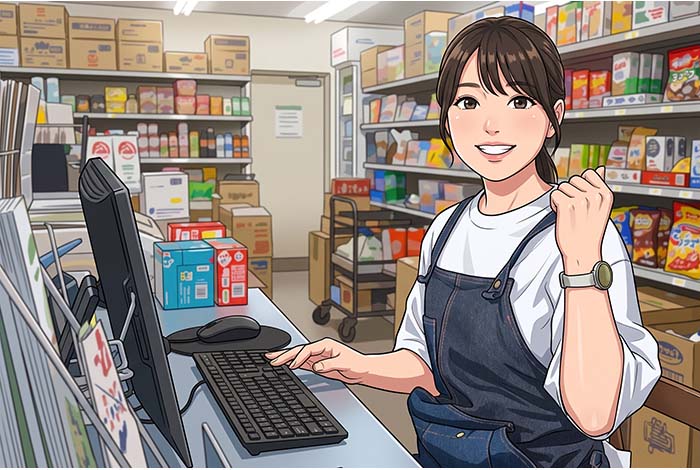
Beyond the Gas Station Snack In the US, gas station or convenience store desserts are usually sad, pre-packaged donuts or highly processed candy bars that sit on the shelf for months. But in Japan, the “Konbini” dessert aisle is a fiercely competitive culinary battleground. It genuinely rivals the quality of a high-end French bakery, offering everything from fluffy roll cakes made with premium Hokkaido cream to rich, bitter Uji matcha parfaits. The Tuesday Rule The secret to their success is the aggressive product development cycle. Japanese convenience stores release a brand-new lineup of seasonal sweets almost every single Tuesday! They…
View More Why Are Japanese Convenience Store Sweets So Good? (The Tuesday Miracle)What Is a Mobile Supermarket? (Japan’s Traveling Convenience Stores)
The “Shopping Refugee” Problem Japan has the oldest population in the world. As millions of elderly citizens surrender their driver’s licenses for safety reasons, a new social issue has emerged: “Kaimono Nanmin” (Shopping Refugees). In rural mountain villages, and even in the steep, hilly suburbs of major cities, many older adults simply cannot walk miles carrying heavy grocery bags. To solve this modern challenge, Japan invented the “Idou Super” (Mobile Supermarket). The Store on Wheels Major convenience store chains and local grocers have transformed small delivery trucks into fully-stocked mini-shops on wheels. They pack over 400 items—including fresh sashimi, vegetables,…
View More What Is a Mobile Supermarket? (Japan’s Traveling Convenience Stores)Why “Hibachi” Restaurants Are a Myth (The Teppanyaki Mix-Up)
The American Favorite If you want a fun, fiery, and highly entertaining dinner in the US, you go to a “Hibachi” restaurant. Chefs wearing tall hats masterfully flip shrimp into their pockets, juggle sharp knives, and create massive volcanos out of stacked onions. It is a beloved American dining experience. But if you travel to Tokyo and ask your hotel concierge to recommend a good “Hibachi” restaurant, they will look at you in complete confusion. The Translation Trap In Japanese, a “Hibachi” (literally “fire bowl”) is actually an ancient, traditional indoor heating stove. It is a ceramic pot filled with…
View More Why “Hibachi” Restaurants Are a Myth (The Teppanyaki Mix-Up)Who Invented the QR Code? (The Japanese Board Game Inspiration)
The Everyday Scan Today, QR codes are absolutely everywhere. Whether you are scanning a menu at a restaurant in Los Angeles, paying for groceries, or checking in for a flight, it is hard to imagine modern life without them. But did you know that this globally essential technology is not from Silicon Valley, but was actually born in Japan in the 1990s? The “Go” Board Inspiration In 1994, a Japanese engineer named Masahiro Hara was working for a Toyota subsidiary. He needed a way to track car parts on the factory line more efficiently because standard barcodes couldn’t hold enough…
View More Who Invented the QR Code? (The Japanese Board Game Inspiration)Will You Turn Into a Cow If You Lie Down After Eating? (The Japanese Table Manner Myth)
The Lazy Cow Curse Every culture has weird superstitions designed to scare children into behaving correctly. In the US, your parents might have warned you that if you swallow watermelon seeds, a watermelon will grow in your stomach. In Japan, one of the most famous warnings for children at the dinner table is: “If you lie down immediately after eating, you will turn into a cow!” This classic piece of folk wisdom is used by parents and grandparents nationwide to scold children who try to sprawl out on the floor the moment they finish their meal. It conjures up a…
View More Will You Turn Into a Cow If You Lie Down After Eating? (The Japanese Table Manner Myth)