Share This Article



The Casino Standard vs. Japan
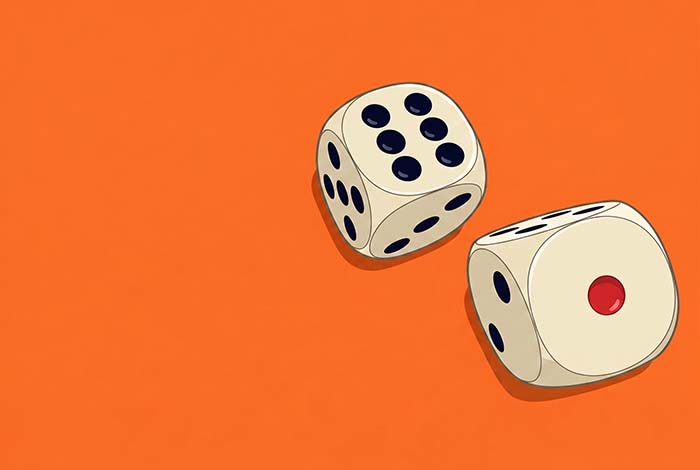
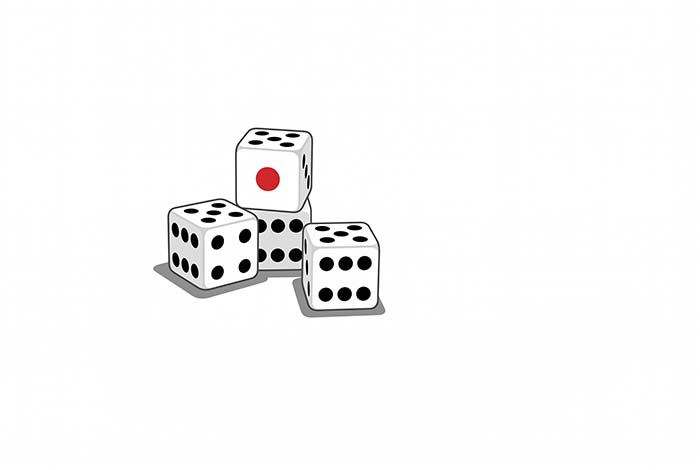
Whether you are playing a board game with your family in Los Angeles or rolling the dice at a craps table in Las Vegas, traditional dice always look the exact same. They are small white cubes with solid black dots on all six sides. However, if you play a traditional game in Japan like Sugoroku, or just buy a cheap pack of dice at a local 100-yen shop, you will immediately notice a glaring design difference. On almost every standard Japanese die, the single dot for the number “1” is significantly larger than the rest, and it is painted bright, striking red! To Japanese people, this is completely normal, but to a foreigner, it looks like a strange mistake.

The 1920s Marketing Strategy
Why is Japan the only country in the world with this red dot? Many people romantically assume it represents the “Hinomaru” (the red circle of the Japanese flag), but the true origin is purely commercial! Back in 1926, a dice manufacturing company in Wakayama Prefecture was struggling to stand out in a highly competitive market. At the time, all dice in Japan were completely black, just like in the West. To make their products instantly recognizable and differentiate them from rival companies, the Wakayama manufacturer decided to paint the number one red and make it slightly larger.
👉 Want to read more about Japanese demographics and society?
Read Next: Who Invented the QR Code? (The Japanese Board Game Inspiration)
A Design Phenomenon
This tiny, brilliant marketing trick was a massive success. The red dot was visually appealing, easy to read, and considered a symbol of good luck. It became so incredibly popular that consumers started specifically looking for the “red-dotted dice.” Eventually, every other dice manufacturer in the country had to copy the design just to stay in business! Today, this clever 1920s marketing gimmick has become the absolute, unquestioned cultural standard for dice across all of Japan.
▼ Read Next:
🔗 Why Does All of Japan Eat Eel in the Summer? (The Edo Period Marketing Genius)
.
.
Share This Article
Related Articles
Pick Up
- Japan Now! Japan Answered. The Monster Falls, and th...
- Japan Now! 7,000 Stranded at Narita as Record Rain S...
- Japan Now! It’s Rice Day in Japan, So Dragon Q...
- Japan Now! The Final Four Is Set. Ariake’s Mir...
- Japan Now! Doraemon Is Taking a Steam Train to Victo...
-

- Japan Now! The Spear Won. Chiben Wakayama Takes Kosh...
- Pokemon Worlds Takes Over San Francisco, and We Got ...
- Japan Now! Whole Torched Purin on a Crepe. Ise’...
- Japan Now! She Said Yes. Olympic Champions Riku Miur...
- Japan Now! 156 km/h. Bases Loaded. No Outs. Koshien&...
- See more Fun Facts articles >






Latest Articles
- Free Medicare Seminars, Learn the Besics and Review...
- Den’s Tea ...
- Capture Special Memories at Kimono no Kobeya ...
- Recommended for Those on a Diet! Healthy Noodles
- Savor Seasonal Specials at TAKAGI COFFEE!
-

- Daikokuya El Monte Celebrates 10th Anniversary! ...
- Check Out JINS 360°! New Store Now Open!
- Pho-Inspired Asian Spicy Ramen Returns for a Limited...
- Discover JINS’ Revolutionary Multi-Directional Movem...
- Celebrate 10 Years!! Daikokuya El Monte Launches Ann...
- See all articles >