Share This Article



The Sushi Menu Favorite
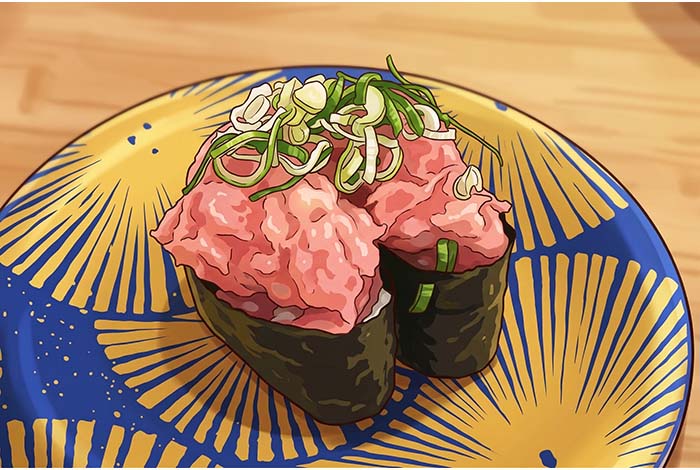
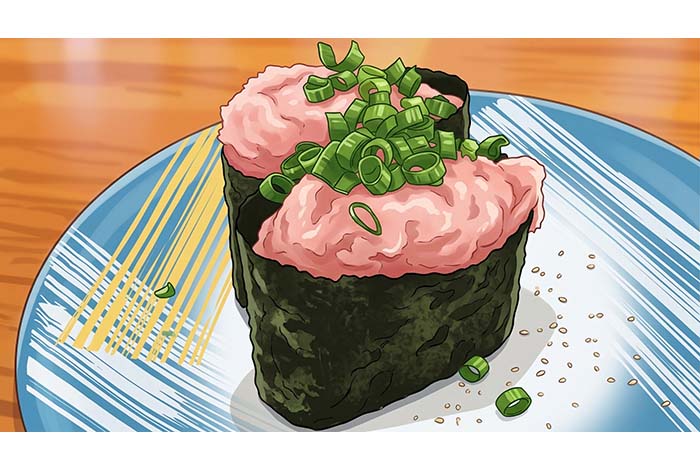
If you go to any sushi restaurant, from high-end Ginza counters to casual conveyor-belt chains in Torrance, you will find “Negitoro” on the menu. It is a delicious, soft, minced fatty tuna usually served in a sushi roll or on top of a rice bowl, often sprinkled with chopped green onions.
The Green Onion Misunderstanding
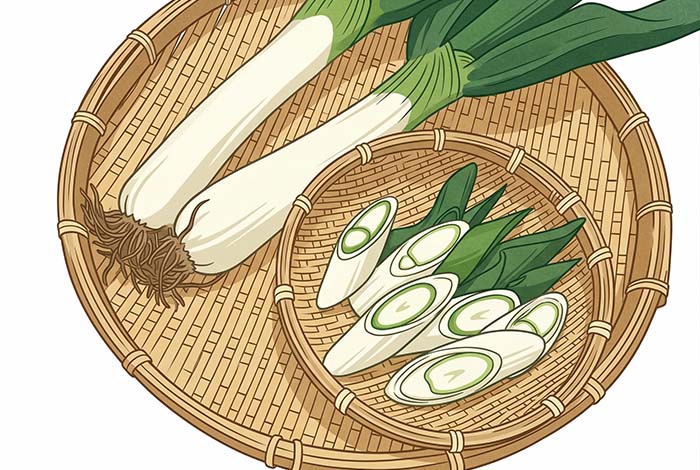
If you speak a little Japanese, the name seems obvious. “Negi” means green onion, and “Toro” means fatty tuna. Therefore, Negitoro means fatty tuna with green onions, right? Shockingly, this is a massive linguistic misunderstanding! The “Negi” in Negitoro has nothing to do with vegetables.
👉 Fascinated by the secret history of Japanese food?
Read Next: https://japanupmagazine.com/archives/18627
The Secret Verb
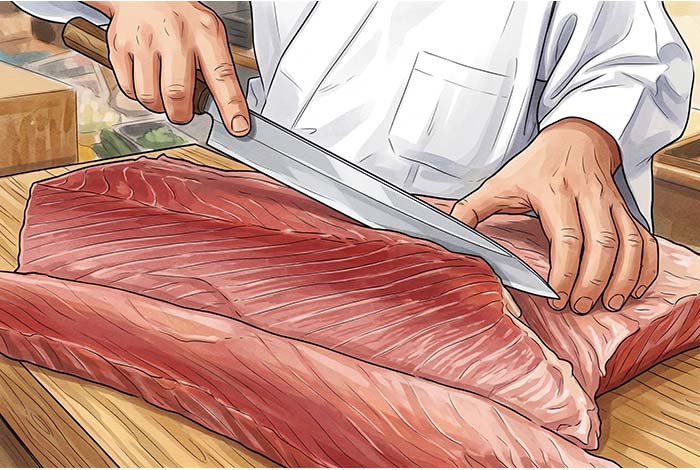
The real origin comes from a Japanese verb used by traditional sushi chefs: “Negitoru.” When cutting a massive tuna, a lot of highly flavorful, fatty meat gets stuck between the bones and the skin. Chefs use a spoon or a clam shell to meticulously scrape off and collect (“Negitoru”) this leftover meat.
The Zero-Waste Delicacy
Negitoro was originally a zero-waste, behind-the-scenes “賄い” (staff meal) created by clever chefs who didn’t want to throw away the most delicious, fatty parts of the fish. It eventually became so popular that it was added to the official menu for customers.
A Delicious Coincidence
So, why is it almost always served with green onions today? It is simply a delicious coincidence! Because the word sounded exactly like the vegetable, and because the sharp taste of green onions perfectly cuts through the rich fat of the minced tuna, chefs started adding them. It is a historical misunderstanding that tastes amazing!
▼ Read Next:
.
.
Share This Article
Related Articles
Pick Up
- A popular spot for authentic tempura rice bowls and ...
- Torikizoku’s second location in Anaheim Takeout yaki...
- Zespri Kiwifruit: A Sweet, Vitamin-C Boost for Fall
- Honda-ya Charity Event Celebrates Kappo Honda’...
- Daikokuya El Monte Celebrates 10th Anniversary! ...
-

- Onigiri Sun DTLA Location Now Open
- Half-Price Hakata Ramen: Shin-Sen-Gumi Rosemead̵...
- Celebrate 10 Years!! Daikokuya El Monte Launches Ann...
- Pho-Inspired Asian Spicy Ramen Returns for a Limited...
- LA Dassai Experience: Japan and USA’s Finest S...
- See more Fun Facts articles >


Latest Articles
- Free Medicare Seminars, Learn the Besics and Review...
- Capture Special Memories at Kimono no Kobeya ...
- Check Out JINS 360°! New Store Now Open!
- Discover JINS’ Revolutionary Multi-Directional Movem...
- 2027 Coming-of-Age Ceremony presented by Nadeshiko-k...
-

- Kappo Honda 30th Anniversary Charity Event
- JapanUp! 228 – October 2026
- Quiz – October 2026
- Chiikawa comes to Channel Oishii with 20 curated foo...
- Kanagawa: The Many Faces of Japan, All in One Place
- See all articles >