Share This Article



The Classic “Rice” or “Lice” Struggle
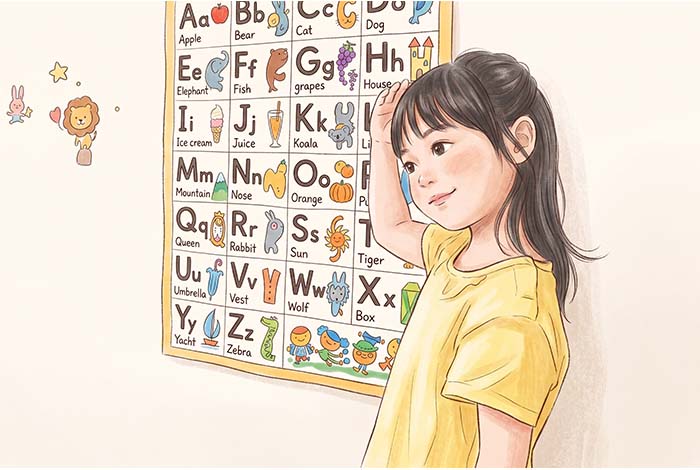
If you have ever had a conversation with a Japanese friend speaking English, you have almost certainly noticed a very specific linguistic struggle. Words that contain the letters “L” and “R” often become completely interchangeable. For example, a simple sentence like “I eat rice” might unintentionally sound like “I eat lice,” or asking for the “right” direction might sound like asking for the “light.” To a native English speaker, “L” and “R” are two drastically different sounds that completely change the meaning of a word. But to a native Japanese speaker, distinguishing between these two sounds is like trying to see a color that does not exist in their visible spectrum.
The Anatomy of the Japanese “Ra-行”
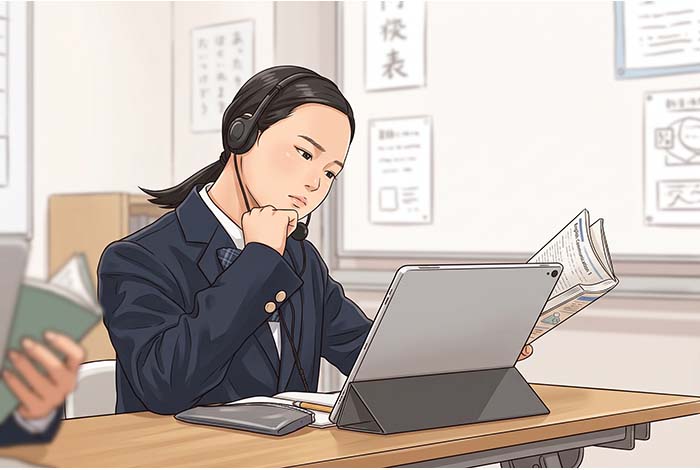
Why does this happen? The answer lies in the fundamental anatomy of the mouth and the rules of the Japanese alphabet. In English, making an “R” requires curling your tongue backward without touching the roof of your mouth, while an “L” requires pushing the tip of your tongue firmly against the back of your front teeth. However, the Japanese language has exactly zero sounds that require these specific muscle movements! Instead, Japanese utilizes a single row of sounds known as the “Ra-line” (Ra, Ri, Ru, Re, Ro). Phonetically, this Japanese sound is a completely unique hybrid—it lands somewhere perfectly in the middle of a soft “D,” an “L,” and an “R.” Because their brains were never trained to hear or produce the hard English “L” and “R” during childhood, the two letters simply merge into one ambiguous sound in their minds.
👉 Want to read more about Japanese demographics and society?
Read Next:Costco vs. “Kosutoko”: Why Do Famous Names Sound Completely Different in Japan?
Context is King
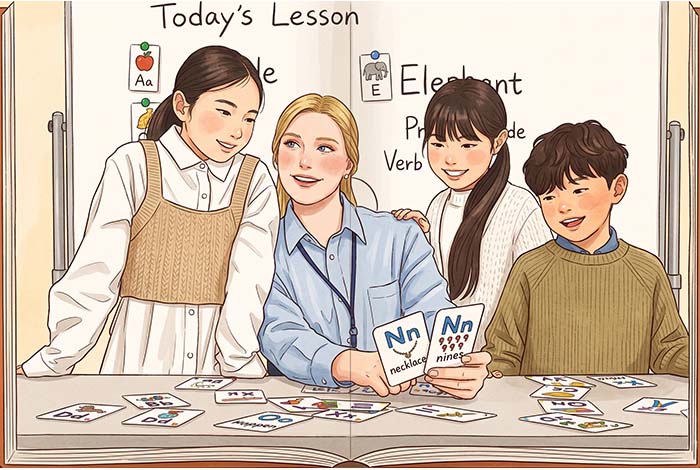
It is also important to understand that Japanese is a vowel-heavy, staccato language. Every single consonant must be followed by a vowel (like “Ma-ku-do-na-ru-do” for McDonald’s), which makes the harsh, consonant-heavy clusters of English physically exhausting for Japanese vocal cords. So, the next time you are speaking with a Japanese tourist or coworker who mixes up “Play” and “Pray,” do not correct them or look confused. In the Japanese communication style, context is king! Listen to the surrounding sentence, use your common sense to fill in the blank, and appreciate the massive linguistic effort they are making to speak your language!
▼ Read Next:
🔗The Art of Not Saying “No”: How to Decode Japanese Polite Refusals
.
.
Share This Article
Related Articles
Pick Up
- Japan Now! Japan Answered. The Monster Falls, and th...
- Pokemon Worlds Takes Over San Francisco, and We Got ...
- Japan Now! The Spear Won. Chiben Wakayama Takes Kosh...
- Japan Now! Doraemon Is Taking a Steam Train to Victo...
- Japan Now! 156 km/h. Bases Loaded. No Outs. Koshien&...
-

- Japan Now! 7,000 Stranded at Narita as Record Rain S...
- Japan Now! Whole Torched Purin on a Crepe. Ise’...
- Japan Now! The Final Four Is Set. Ariake’s Mir...
- Japan Now! It’s Rice Day in Japan, So Dragon Q...
- Japan Now! She Said Yes. Olympic Champions Riku Miur...
- See more Fun Facts articles >









Latest Articles
- Free Medicare Seminars, Learn the Besics and Review...
- Den’s Tea ...
- Capture Special Memories at Kimono no Kobeya ...
- Recommended for Those on a Diet! Healthy Noodles
- Savor Seasonal Specials at TAKAGI COFFEE!
-

- Daikokuya El Monte Celebrates 10th Anniversary! ...
- Check Out JINS 360°! New Store Now Open!
- Pho-Inspired Asian Spicy Ramen Returns for a Limited...
- Discover JINS’ Revolutionary Multi-Directional Movem...
- Celebrate 10 Years!! Daikokuya El Monte Launches Ann...
- See all articles >