Share This Article



The Delicacy of “Kani Miso”
If you sit down at a high-end sushi restaurant or an Izakaya in Japan, the chef might serve you a small, dark-green, paste-like dish called “Kani Miso.” It is incredibly rich, heavily umami-flavored, and pairs perfectly with a glass of cold sake. If you ask a translation app what you are eating, it will literally translate to “Crab Brains.” Because of this horrifying translation, many Western tourists completely freak out and refuse to eat it. However, this is a massive biological and linguistic misunderstanding. You are absolutely not eating the brain of a crab!
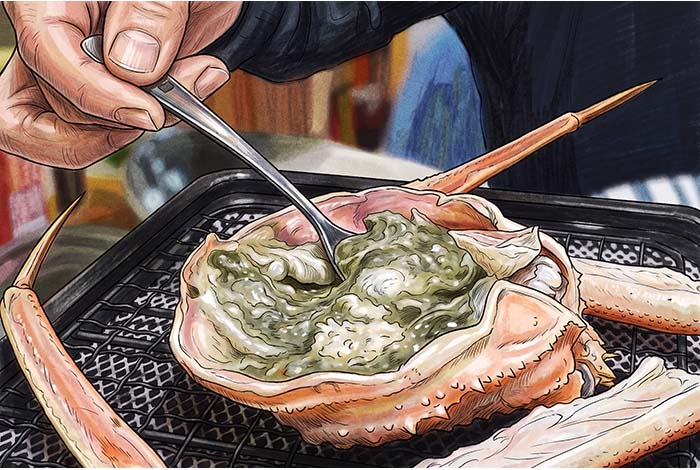
The Biological Truth
The word “Miso” in this context has nothing to do with soybean paste or literal brains. In Japanese culinary terms, it refers to a visually paste-like organ inside the crab. Scientifically, Kani Miso is the crab’s “Hepatopancreas”—a specialized digestive organ that functions as a combination of both a liver and a pancreas. Because this organ’s main job is to process and store all the nutrients from the food the crab eats, it acts as a massive flavor bomb. It concentrates the pure, rich essence of the ocean, making it one of the most prized and savory delicacies in Japanese seafood culture.
👉 Want to read more about Japanese demographics and society?
Read Next: Why Are Japanese Kids Attacking a Watermelon? (The “Suikawari” Ritual)
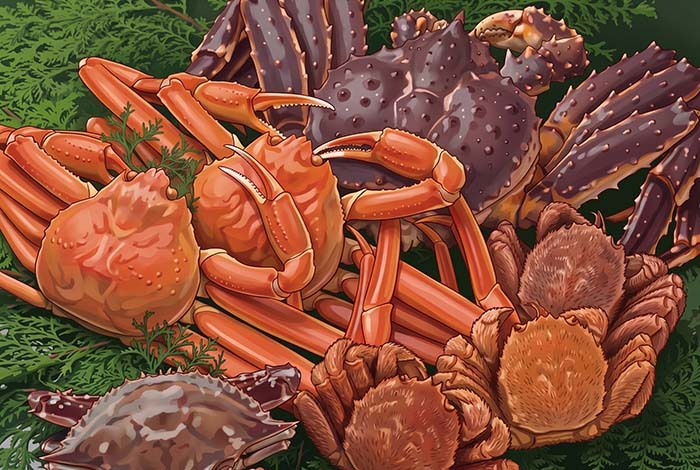
The King Crab Shock
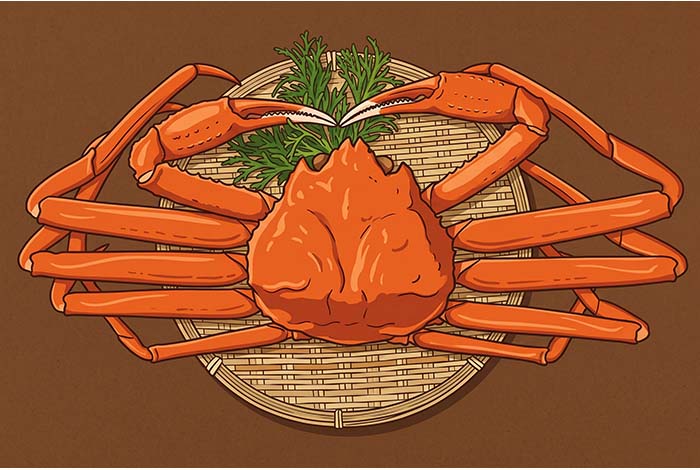
But here is an even crazier biological twist: not all crabs actually have “Kani Miso”! For example, the massive, expensive King Crab (Tarabagani)—which is highly sought after for its giant, meaty legs—is famous for having almost no edible Kani Miso inside its shell. Why? Because biologically speaking, the King Crab is not actually a crab! It is strictly classified as a member of the “Hermit Crab” (Yadokari) family. Its internal organs are completely different, and trying to cook its “miso” will ruin the meat. So, the next time you enjoy this green paste, remember you are eating a highly specific, nutrient-packed digestive organ, not a brain!
▼ Read Next:
🔗 Why Are Japanese People Eating Flowers? (The Edible “Sakura” Craze)
.
.
Share This Article
Related Articles
Pick Up
- Onigiri Sun DTLA Location Now Open
- Zespri Kiwifruit: A Sweet, Vitamin-C Boost for Fall
- Pho-Inspired Asian Spicy Ramen Returns for a Limited...
- Honda-ya Charity Event Celebrates Kappo Honda’...
- Celebrate 10 Years!! Daikokuya El Monte Launches Ann...
-

- Torikizoku’s second location in Anaheim Takeout yaki...
- Daikokuya El Monte Celebrates 10th Anniversary! ...
- A popular spot for authentic tempura rice bowls and ...
- Half-Price Hakata Ramen: Shin-Sen-Gumi Rosemead̵...
- LA Dassai Experience: Japan and USA’s Finest S...
- See more Fun Facts articles >




Latest Articles
- Free Medicare Seminars, Learn the Besics and Review...
- Capture Special Memories at Kimono no Kobeya ...
- Check Out JINS 360°! New Store Now Open!
- Discover JINS’ Revolutionary Multi-Directional Movem...
- 2027 Coming-of-Age Ceremony presented by Nadeshiko-k...
-

- Kappo Honda 30th Anniversary Charity Event
- JapanUp! 228 – October 2026
- Quiz – October 2026
- Chiikawa comes to Channel Oishii with 20 curated foo...
- Kanagawa: The Many Faces of Japan, All in One Place
- See all articles >