For many gamers in the United States, The Legend of Zelda: Ocarina of Time is a defining Nintendo 64 classic. Its possible return on the Nintendo Switch 2 in 2026 is already drawing attention. Nintendo Announces ‘The Legend of Zelda: Ocarina of Time’ for Switch 2 (2026) Nintendo has announced that The Legend of Zelda: Ocarina of Time will be released for the Nintendo Switch 2 in 2026, drawing significant attention from fans around the world. A landmark title in gaming history Originally released in 1998 for the Nintendo 64, The Legend of Zelda: Ocarina of Time is an action-adventure…
View More Japan Now! Why Is It Still So Popular? Nintendo Brings The Legend of Zelda: Ocarina of Time to Switch 2 🇯🇵 (6/9)Category: POPULAR
Yes, Your Senpai Might Be Your Kid’s Age
The Invisible Ladder of Society In American corporate culture, the goal is often a “flat” hierarchy. New hires are encouraged to call the CEO by their first name, and everyone acts like casual peers. But if you step into a Japanese company or school, you are entering a “Tate Shakai” (Vertical Society). Every single human relationship is defined by a strict, invisible ladder of seniority, categorized into two vital roles: the “Senpai” (Senior) and the “Kohai” (Junior). This dynamic dictates exactly how you speak, where you sit in a room, and how deeply you bow. It is the absolute backbone…
View More Yes, Your Senpai Might Be Your Kid’s AgeThe Human Calculator: Why Do Japanese People Intentionally Overpay in Cash?
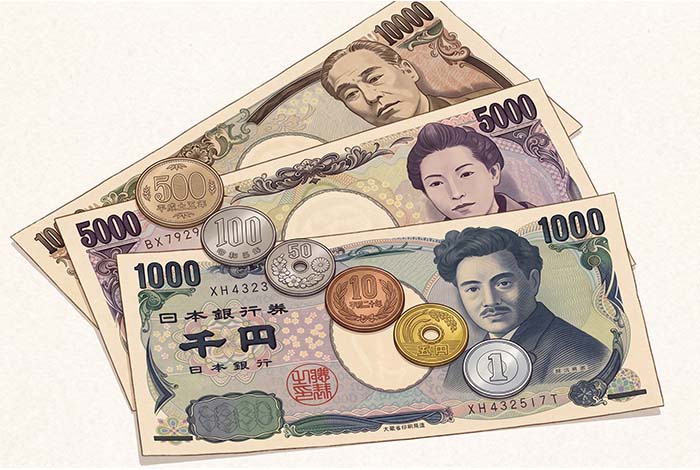
The Cash Register Confusion If you work as a cashier in Los Angeles, you expect customers to pay the exact amount or simply hand you a large bill and wait for their change. But if you watch a Japanese customer pay at a convenience store, you might witness a mathematical transaction that completely breaks a Westerner’s brain. Imagine the total bill is 680 yen. The customer hands the cashier a 1,000 yen bill. This makes sense. But suddenly, the customer digs into their pocket and adds a 100-yen coin and an 80-yen coin to the tray, handing over a total…
View More The Human Calculator: Why Do Japanese People Intentionally Overpay in Cash?The 7-Minute Miracle: How Japan Cleans an Entire Bullet Train in 420 Seconds
The Impossible Turnaround Time When an airplane or a long-distance Amtrak train arrives at its final destination in the United States, cleaning the cabin is a slow, time-consuming process that can take anywhere from 20 to 45 minutes. But in Japan, the Shinkansen (Bullet Train) operates on a schedule so tight it defies logic. When a massive, 1,000-seat bullet train arrives at Tokyo Station, it usually has exactly 12 minutes before it must depart again for its next journey. It takes passengers about 5 minutes to disembark. That leaves the cleaning crew with precisely 7 minutes to transform a messy,…
View More The 7-Minute Miracle: How Japan Cleans an Entire Bullet Train in 420 SecondsPerfect for Your Summer Trip to Japan!Hello Japan SIM – Available on Amazon
. No tedious contracts required!Enjoy seamless and hassle-free data right upon arrival 🇯🇵 Thinking about your upcoming trip to Japan and wondering what to do about your mobile data? We highly recommend “Hello Japan SIM,” a Japan-domestic, data-only eSIM that you can easily purchase on Amazon right here in the U.S.! Why not make your travel prep smarter with an eSIM that requires absolutely no physical SIM card swapping? 💡 Why Choose Hello Japan SIM? ・Zero Hassle: Simply activate it with a QR code. No tedious contract procedures or email registrations required! ・Reliable Coverage: Powered by SoftBank’s 5G and 4G LTE networks,…
View More Perfect for Your Summer Trip to Japan!Hello Japan SIM – Available on AmazonThe Feline Kingdom: Why Cats Vastly Outnumber Humans on Japan’s “Aoshima” Island
An Island Ruled by Cats If you are a cat lover living in Los Angeles, your dream is probably to adopt two or three rescue kittens to roam around your apartment. But in Japan, the love for felines goes to an entirely different, geographical extreme. Floating in the Seto Inland Sea in Ehime Prefecture is a tiny, remote piece of land called Aoshima. Globally known as “Cat Island,” this place operates on a demographic ratio that sounds completely made up. The island is currently home to over a hundred wild, friendly cats, while the human population has dwindled to just…
View More The Feline Kingdom: Why Cats Vastly Outnumber Humans on Japan’s “Aoshima” IslandShattering the Myth: Why Real Japanese Ninjas Never Wore Black
The Hollywood Illusion When Americans picture a Japanese “Ninja,” the image is universally identical: a highly trained, silent assassin doing backflips across a rooftop, dressed entirely from head to toe in a pitch-black, form-fitting suit with only their eyes exposed. From 1980s action movies to the Teenage Mutant Ninja Turtles, this iconic black uniform has become the ultimate symbol of Japanese martial arts. However, if you travel to Japan and study the actual historical documents from the feudal era, you will discover a shocking truth that shatters this pop-culture illusion. Real ninjas almost never wore black suits. The Art of…
View More Shattering the Myth: Why Real Japanese Ninjas Never Wore BlackJapanese Job Listings: The Nationwide Bilingual Job Board for the US
Looking for a Japanese job board USA-wide? Japanese Job Listings (JJL) is a nationwide, fully bilingual platform that connects English-speaking, Japan-interested talent with companies across the country. We are thrilled to announce a new service from Weekly LALALA, a media outlet based in Los Angeles that has been delivering information to the Japanese community in the U.S. for over 20 years. Japanese Job Listings is a nationwide bilingual job platform now serving the entire U.S. ▶︎ Visit the Japanese Job Listings Homepage Here Why Use a Japanese Job Board USA-Wide? As a Japanese job board USA-wide, JJL connects talent and…
View More Japanese Job Listings: The Nationwide Bilingual Job Board for the US[Japanese Interviews: Life in LA] Yuki Mitsufuji : Building Systems Where Artists Can Thrive – The Critical Phase of AI × Entertainment Research
“I originally wanted to become an artist. But at some point, I changed direction and decided I wanted to support artists instead. That is who I am today.”
Yuki Mitsufuji is a researcher working at the intersection of artificial intelligence and entertainment, currently serving as a visiting professor at New York University’s Steinhardt School since 2024.
What kind of life journey led him to this point?
The “Yes Means No” Trap: Why Answering a Simple Question in Japan is So Confusing
The Negative Question Chaos Imagine you are at a sushi restaurant in Tokyo with a Japanese friend. You notice they haven’t touched their tuna, so you ask a very standard English negative question: “Don’t you like sushi?” Your friend smiles and nods, saying, “Yes!” Relieved, you push the plate toward them. But then, they push it away, looking deeply confused. You just fell into one of the most classic, brain-bending grammatical traps between the English and Japanese languages. In English, your friend’s answer makes absolutely no sense. But in Japanese, answering “Yes” to mean “I do not like it” is…
View More The “Yes Means No” Trap: Why Answering a Simple Question in Japan is So ConfusingThe “L” and “R” Illusion: Why is English Pronunciation So Difficult for Japanese Speakers?
The Classic “Rice” or “Lice” Struggle If you have ever had a conversation with a Japanese friend speaking English, you have almost certainly noticed a very specific linguistic struggle. Words that contain the letters “L” and “R” often become completely interchangeable. For example, a simple sentence like “I eat rice” might unintentionally sound like “I eat lice,” or asking for the “right” direction might sound like asking for the “light.” To a native English speaker, “L” and “R” are two drastically different sounds that completely change the meaning of a word. But to a native Japanese speaker, distinguishing between these…
View More The “L” and “R” Illusion: Why is English Pronunciation So Difficult for Japanese Speakers?The Half-Price Rush: Surviving the Twilight Hour at Japanese Supermarkets
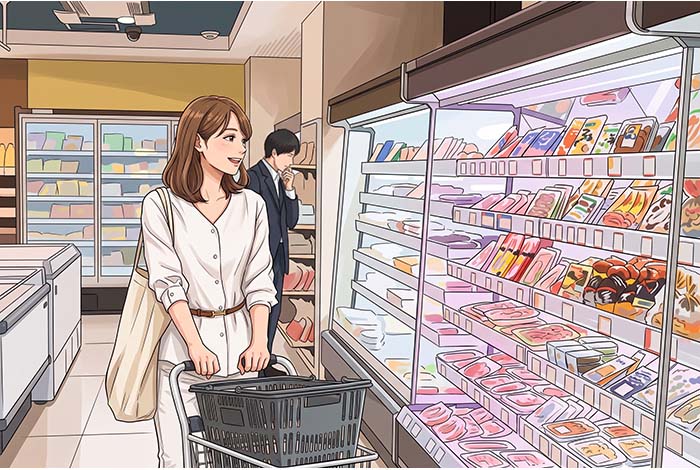
The Premium Quality of “Sozai” When you visit a typical American grocery store, the pre-made hot food section is usually a small afterthought, featuring thick pizzas or rotisserie chickens that sit under a heat lamp all day. But in Japan, the prepared deli section—known as “Sozai”—is a massive, highly competitive culinary wonderland. Japanese supermarkets dedicate huge aisles to freshly made bento boxes, golden fried pork cutlets (Tonkatsu), perfectly grilled fish, and beautiful trays of high-grade sushi. The quality is so remarkably high that many Japanese workers and housewives rely on these meals for their daily dinners. However, this dedication to…
View More The Half-Price Rush: Surviving the Twilight Hour at Japanese Supermarkets