Share This Article



Last updated: June 30, 2026
The Ultimate Welcome Ritual
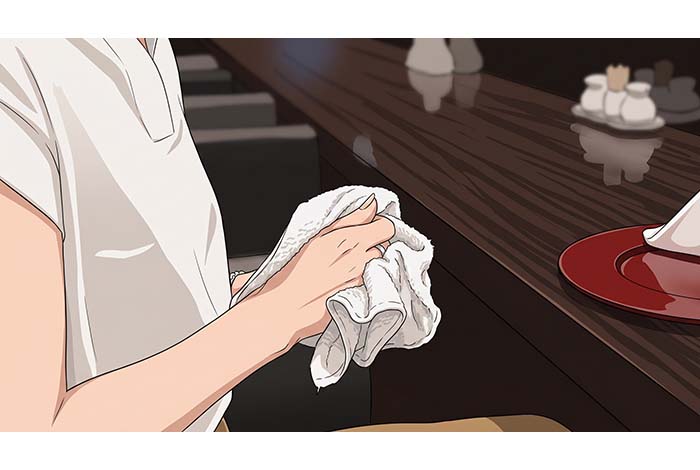
When you sit down at a restaurant in Los Angeles, you are usually given a dry paper napkin wrapped around your silverware. If you order messy food like barbecue ribs, you might get a tiny, plastic-wrapped chemical wet wipe at the end of the meal. But in Japan, the moment you sit down at any dining establishment—from a cheap noodle shop to a high-end sushi restaurant—the staff will immediately hand you a rolled, steaming hot, damp cloth towel. This hot towel is called an oshibori, and to a foreigner it feels like a luxury spa treatment for your hands.

The Origins of Oshibori: A Remnant of “Kiyome” Purification
While modern tourists use the Oshibori simply to clean their hands before eating, the practice originates from “Kiyome”—the sacred Shinto ritual of physical and spiritual purification. In Japan, before entering a holy shrine or temple, you must always wash your hands at a water pavilion to cleanse yourself of the outside world’s impurities. During the Edo Period (1603-1867), traditional inns began placing a bucket of water and a cloth towel at their entrance so travelers could wash their dusty hands and feet before stepping inside. The modern Oshibori is a direct evolution of this custom: it is a ritual to instantly purify yourself, leaving the dirt and stress of the outside world behind before you enjoy your meal.
👉 Want to read more about Japanese demographics and society?
Read Next:Why Is It Almost Impossible to Return Items in Japan? (The “No Refunds” Culture Shock)

A Sensory Seasonal Reset
The hospitality of the Oshibori system is beautifully tailored to the changing seasons. In the freezing winter months, restaurants will serve an Oshibori that is aggressively hot and steaming, instantly warming up your frozen fingers and relaxing your whole body. In the brutally hot and humid summer, they will serve a chilled, ice-cold towel, often scented with refreshing mint, to instantly cool your core down. It acts as a powerful sensory reset button. The next time you visit Japan and unfold that clean, steaming cloth towel, remember that you aren’t just wiping your hands—you are participating in a thousand-year-old ritual of sacred welcome!
Oshibori FAQ
What is an oshibori?
An oshibori is a damp towel offered to guests at Japanese restaurants and homes to clean their hands before a meal. It is served hot in winter and chilled in summer as a gesture of hospitality.
What does oshibori mean?
The word comes from the Japanese verb “shiboru,” meaning to wring or squeeze, which describes how the wet towel is prepared. It reflects the care taken to present a clean, freshly wrung cloth.
Why do Japanese restaurants give you a hot towel?
The custom evolved from “kiyome,” a Shinto idea of purifying yourself before an important act. Edo-period inns offered water and cloth so travelers could wash off the dust of the road, and the oshibori carries on that welcome.
Are you supposed to wipe your face with an oshibori?
Traditionally it is meant for your hands only. Many men do wipe their face with it, but in formal settings using it just for your hands is considered more polite.
▼ Read Next:
🔗 The Silent Language: Mastering the Art of the Japanese Bow
.
.
Share This Article
NEW MAGAZINE

Related Articles
Pick Up
- Japan Now! New Sword Art Online Movie “Integra...
- Japan Now! Why a Tiny Japanese Rubber Stamp Just Too...
- Japan Now! Samurai Blue Stun Brazil with an Early Le...
- Japan Now! Why Are Japanese Teens Obsessed with R...
- Japan Now! What Is Typhoon Season in Japan, and Shou...
-

- Japan Now! BE:FIRST Drop New Song “MissingR...
- Japan Now! Why Did Male Artists Just Sweep ALL 10 of...
- Japan Now! Why is Japan Quintupling Its Visa Fees? T...
- Japan Now! A “Once in a Decade” Heatwave...
- Japan Now! It’s Tanabata! Why All of Japan Is ...
- See more Fun Facts articles >









Latest Articles
- Binge-Watch The Solitary Gourmet on Channel Oishii
- GreeNoodle: Healthy Organic Instant Noodles Made wit...
- New at Garlic High: Yuzu Seafood Tsukemen, for a Lim...
- Kendo Trial Class in SFV area: Beginners Welcome in ...
- Watch Japanese Anime Free on Channel Oishii, No Sign...
-

- Like Tempura Carlos Jr. EXPRESS on Instagram and Get...
- Limited Time! RAKKAN Ramen’s Summer Special Menu
- Two Luxurious New Wafu Noodle Dishes Arrive at Takag...
- JAPANESE SAMURAI / Motoori Norinaga
- I LIVE IN JAPAN / Carine Lantignac / Artist and Cult...
- See all articles >