Share This Article



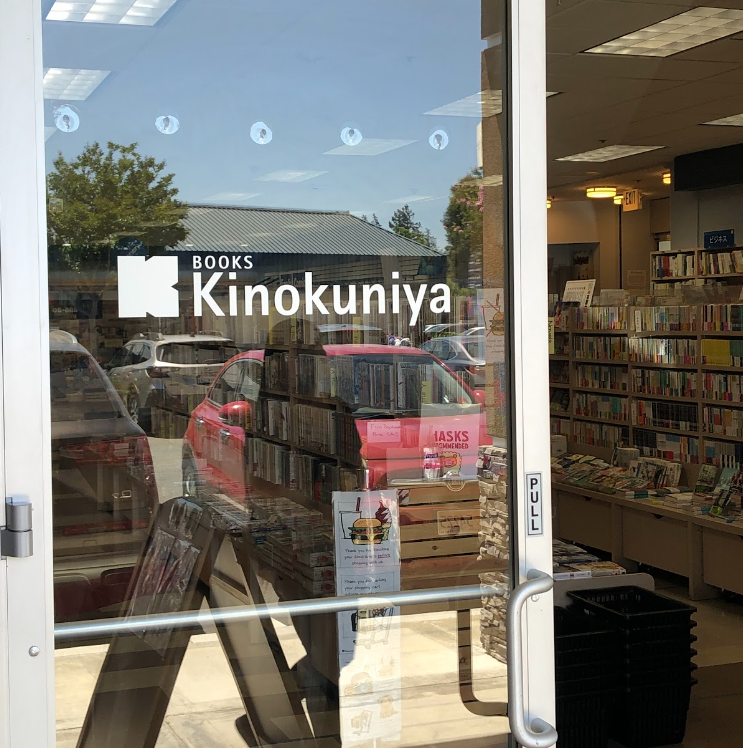
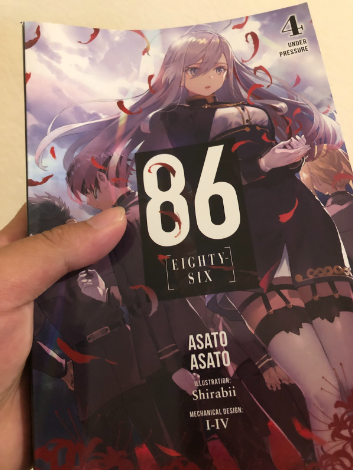
Bookstores by and large are a dying breed in America as the popularity of reading things electronically continues to rise. For many it is simply more accessible and easier to have a book on their phone, computer, or tablet instead of storing volume after volume of books in their living spaces. However, not every bookstore is gone yet. A chain bookstore that is still open today is Book Kinokuniya. Kinokuniya sells Japanese literature, ranging from manga, to light novels, to even drawing books. Kinokuniya in the United States also has both English translations and the original Japanese versions of its books.
.
Japanese literature is almost always set in a series. Manga and light novels will be sorted by volume, and the numbers can range anywhere from 6 volumes to even numbers in the 20’s! American Literature besides graphic novels or comic books do not trend to this type of serialization. Series books often max out around 6, with 3 being a common number for a series. In a bookstore like Kinokuniya, you are able to see a whole series lined up on the bookshelf occupying a whole shelf at times. There is just something satisfying about seeing all of the volumes lined up next to each other.
Sponsored Link

The store sorts its books in four ways for the most part. First, it makes the distinction between English and Japanese. Then it divides it so that manga and light novels are separated. For the English section, they are then sorted in alphabetical order by the book’s title. This makes it easier to find what you are looking for.
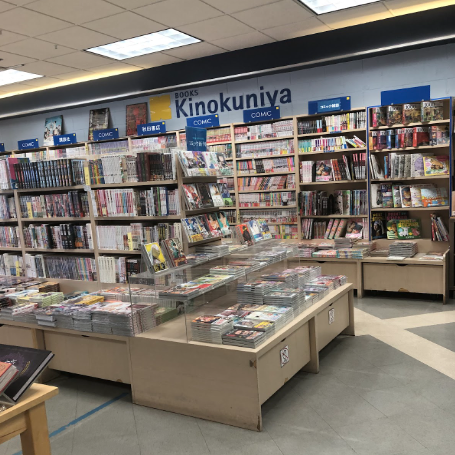
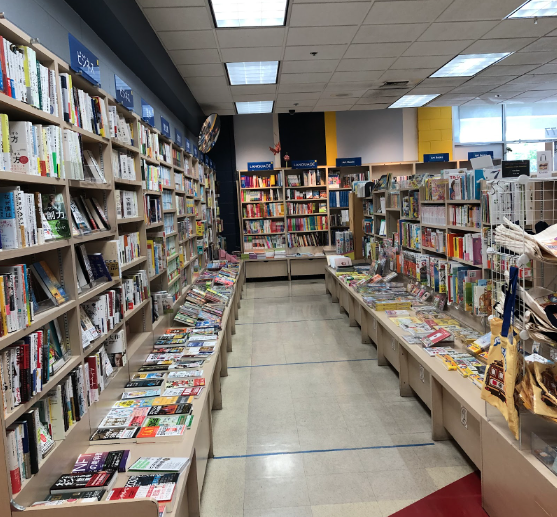
Kinokuniya was founded in 1927, and first opened up overseas from Japan in San Francisco in 1969. It has many stores open in Japan. The original Kinokuniya in San Francisco is part of a shopping center called the Japan Center in Japantown. Since then, Kinokuniya has continued to expand, with several locations in the US. California has the highest number of Kinokuniya with locations in Torrance, Santa Monica, Los Angeles, San Jose, and the aforementioned San Francisco location.
/.
Kinokuniya in many places occupy their own space such as a traditional Barnes and Noble might. But there are quite a few that are extensions to other stores. A popular collaboration exists between Kinokuniya and Mitsuwa Marketplaces, Mitsuwa being a Japanese supermarket franchise.
.
.
Personally, I have seen manga a few times in libraries or bookstores growing up, but never at this amount and I was pleasantly surprised on my first visit. The one that I visited was the Kinokuniya in San Jose. It reminds me that there are just so many more stories that are out there and available to be read. It is possible to read works like this online, but there is something special about holding a physical copy and being able to flip through the pages or look at the pictures. Kinokuniya helps to keep this feeling alive for Japanese literature in the United States.
Photos by author
Instagram:@timxthyjng
Writer: Timothy Jung
(7/12/2022)
,
.
.
.
.
Share This Article
NEW MAGAZINE
Related Articles
Pick Up
- The Empty Orchestra: Why Did the Inventor of Karaoke...
- The Lazy Man’s Onsen: Why “Ashiyu”...
- The Red Symbol of Love: Why Are Carnations the Only ...
- The Garbage Gauntlet: Why Is Taking Out the Trash So...
- The Small Mounds of Salt: What is “Mori-shio&#...
- The “Kawaii” Glow vs. The Glam Contour: ...
- More Than a Stamp Rally: The Spiritual Art of “...
- The Mystery of the Square Watermelon: Is It Actually...
- The Ultimate Crunch: Why Does Japan Have “Rock...
- The Silent Language: Mastering the Art of the Japane...
- See more POP CULTURE articles >








Latest Articles
- 👓 JINS 2026 Summer Collection: “Wearable Eyew...
- Why Do Japanese People Eat a Fish That Can Kill Them...
- Did a Japanese Woman Write the World’s First N...
- Why Does Japan Need 3 Different Alphabets? (The Ulti...
- YUKI SAORI in LOS ANGELES ~From 1969 to the Future~ ...
- Why Did Japanese Women Paint Their Teeth Pitch Black...
- Why Was Japan the Most Literate Country in the 1800s...
- Why Were Women Banned From Climbing Mount Fuji? R...
- Why Are the Deer in Japan Treated Like Royalty? (The...
- Why Are 6-Year-Olds Walking Alone in Japan? (The Ind...
- See all articles >