Share This Article



The Ultimate Japanese Symbol
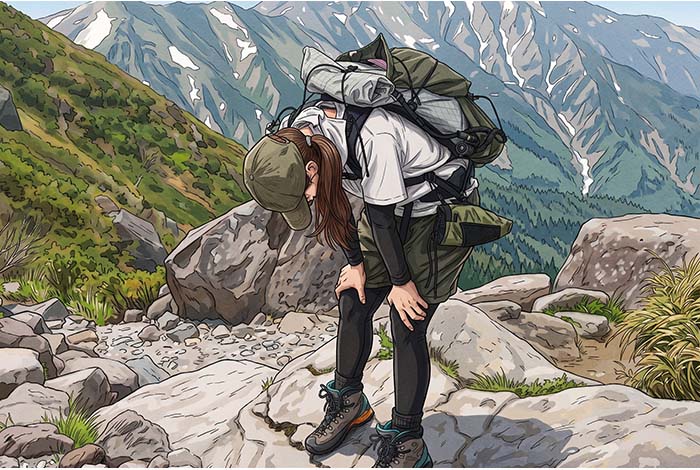
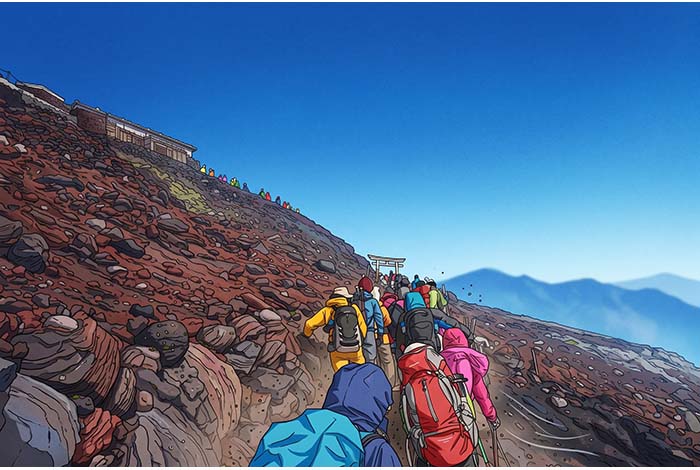
Today, Mount Fuji is the ultimate, universally loved symbol of Japan. Every summer, hundreds of thousands of tourists from all over the world—men, women, and children—hike up the volcanic trails to watch the breathtaking sunrise from the 3,776-meter summit. However, if you travel back in time just over 150 years ago, the demographic of those climbers would look completely different. For centuries, half of the human population was strictly forbidden from stepping foot on the sacred upper slopes of the mountain. Until 1872, Mount Fuji had a strict “No Women Allowed” policy!
The “Nyonin Kinsei” Taboo
This harsh rule, known as “Nyonin Kinsei” (Women Forbidden), was deeply rooted in ancient Shinto and Buddhist beliefs. The mountain was considered a highly sacred training ground for male monks. In the religious context of the time, women were considered “ritually impure” due to menstruation and childbirth. Furthermore, local folklore claimed that the deity of Mount Fuji was a beautiful but highly jealous goddess named Konohanasakuya-hime. It was believed that if another woman dared to climb the mountain, the goddess would fly into a jealous rage and cause a violent volcanic eruption! Because of this, women were stopped at the 2nd station at the base of the mountain.
👉 Want to read more about Japanese demographics and society?
Read Next: Where Does the Snow Meet the Sea? (The Magical Coast of Hokkaido)
The Meiji Revolution
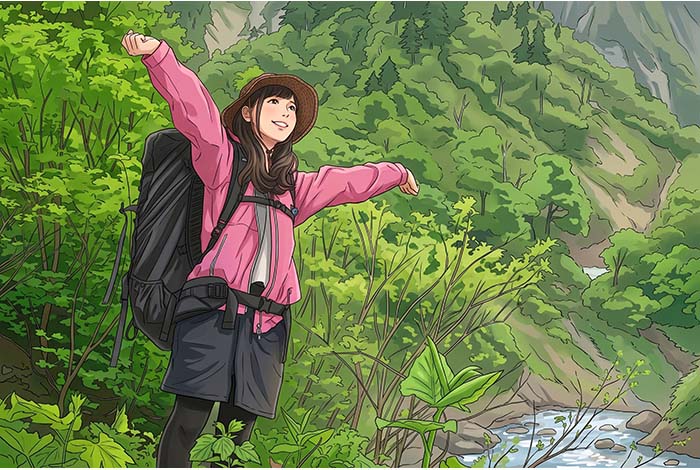
It wasn’t until the Meiji Restoration, when Japan rapidly modernized and opened its doors to the West, that this discriminatory rule was finally abolished. In 1872 (Meiji 5), the Japanese government officially lifted the ban, declaring that women were free to climb and worship at any sacred mountain in the country. A British diplomat’s wife, Lady Fanny Parkes, actually became the first non-Japanese woman to successfully reach the summit in 1867, boldly challenging the gender barrier just before it fell. Today, thankfully, anyone can enjoy the majestic beauty of Japan’s highest peak!
▼ Read Next:
🔗 Who Was the First Woman to Conquer Mount Everest? (The Legend of Junko Tabei)
.
.
Share This Article
Related Articles
Pick Up
- Japan Now! 156 km/h. Bases Loaded. No Outs. Koshien&...
- Pokemon Worlds Takes Over San Francisco, and We Got ...
- Japan Now! Whole Torched Purin on a Crepe. Ise’...
- Japan Now! Doraemon Is Taking a Steam Train to Victo...
- Japan Now! 7,000 Stranded at Narita as Record Rain S...
-

- Japan Now! She Said Yes. Olympic Champions Riku Miur...
- Japan Now! Japan Answered. The Monster Falls, and th...
- Japan Now! The Spear Won. Chiben Wakayama Takes Kosh...
- Japan Now! It’s Rice Day in Japan, So Dragon Q...
- Japan Now! The Final Four Is Set. Ariake’s Mir...
- See more Fun Facts articles >










Latest Articles
- Free Medicare Seminars, Learn the Besics and Review...
- Den’s Tea ...
- Capture Special Memories at Kimono no Kobeya ...
- Recommended for Those on a Diet! Healthy Noodles
- Savor Seasonal Specials at TAKAGI COFFEE!
-

- Daikokuya El Monte Celebrates 10th Anniversary! ...
- Check Out JINS 360°! New Store Now Open!
- Pho-Inspired Asian Spicy Ramen Returns for a Limited...
- Discover JINS’ Revolutionary Multi-Directional Movem...
- Celebrate 10 Years!! Daikokuya El Monte Launches Ann...
- See all articles >