Share This Article



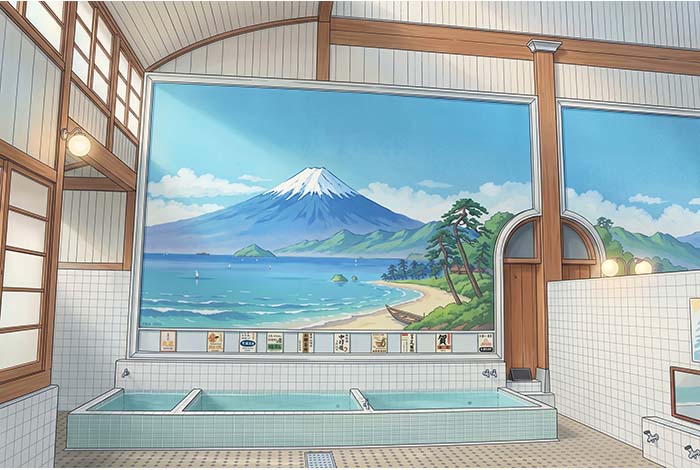
The Mt. Fuji Masterpiece
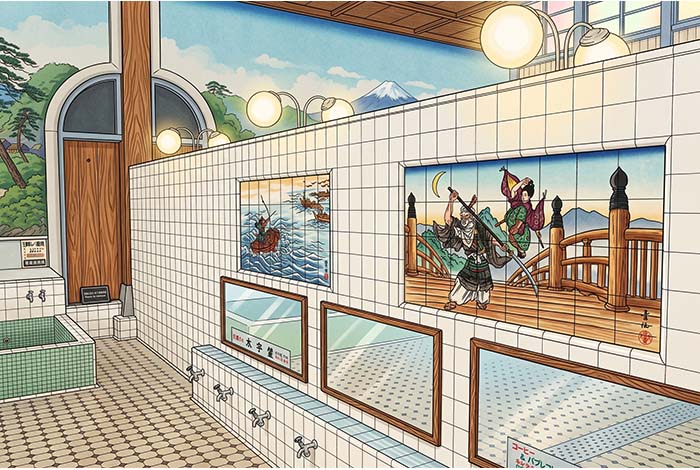
If you visit a traditional “Sento” (public bathhouse) in Japan, you will almost certainly see a massive, beautiful mural painted across the wall above the baths. These paintings are designed to help guests relax, and they usually feature a magnificent, towering Mount Fuji surrounded by peaceful nature, pine trees, and calm oceans. However, if you look closely at these gorgeous landscapes, you will realize that there are a few very specific, highly common elements of nature that are completely missing. In the traditional Sento painting world, there are three strict taboos that artists are forbidden from painting: Monkeys, Sunsets, and Autumn Leaves.
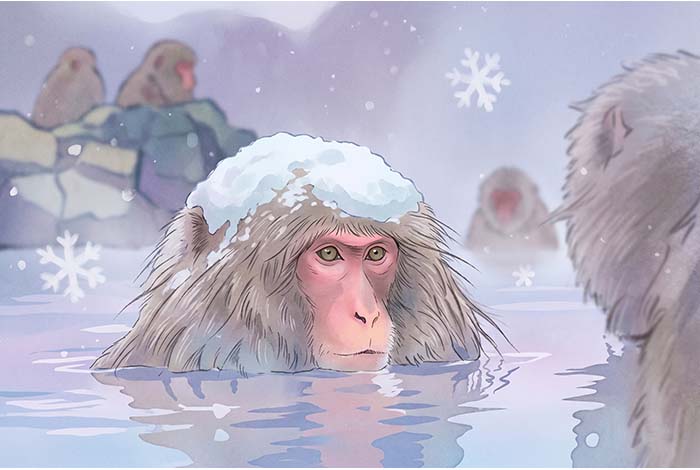
The Power of “Engi” (Superstition)
Why would such beautiful things be banned? It has nothing to do with aesthetics and everything to do with “Engi” (business luck and superstition). Japanese business owners are highly superstitious, and the reasons for these taboos are entirely based on a brilliant play on words. Let’s start with the monkey. In Japanese, the word for monkey is “Saru.” However, the word “Saru” also sounds exactly like the verb for “to leave” or “to go away.” Therefore, painting a monkey is a terrible omen that implies all the customers will leave the bathhouse and never return!
👉 Want to read more about Japanese demographics and society?
Read Next: Why Do All Japanese Baseball Stadiums Face the Same Direction? (The Architectural Secret)
Red Ink and Sinking Sales
The other two taboos follow the exact same business logic. A beautiful “Sunset” (Yuuhi) might look romantic, but for a business owner, it symbolizes the sun going down, implying that the family business will sink and sales will plummet. Finally, “Autumn Leaves” (Momiji) are famously bright red and eventually fall from the trees. In Japanese accounting, just like in English, being “in the red” (Akaji) means the business is losing money and failing. So, the falling red leaves symbolize falling profits and bankruptcy! It is a fascinating glimpse into how deeply wordplay and superstition influence traditional Japanese business culture.
▼ Read Next:
🔗 How Do Japanese People Live So Comfortably in Tiny Homes? (The Space-Saving Magic)
.
.
Share This Article
Related Articles
Pick Up
- Japan Now! Whole Torched Purin on a Crepe. Ise’...
- Pokemon Worlds Takes Over San Francisco, and We Got ...
- Japan Now! 156 km/h. Bases Loaded. No Outs. Koshien&...
- Japan Now! 7,000 Stranded at Narita as Record Rain S...
- Japan Now! Japan Answered. The Monster Falls, and th...
-

- Japan Now! She Said Yes. Olympic Champions Riku Miur...
- Japan Now! It’s Rice Day in Japan, So Dragon Q...
- Japan Now! The Final Four Is Set. Ariake’s Mir...
- Japan Now! Doraemon Is Taking a Steam Train to Victo...
- Japan Now! The Spear Won. Chiben Wakayama Takes Kosh...
- See more Fun Facts articles >



Latest Articles
- Looking for a Car? Visit South Bay Toyoya! Reliable...
- WA Dining Suya Enjoy the Flavors of Fall with Limit...
- Free Medicare Seminars, Learn the Besics and Review...
- Den’s Tea ...
- Capture Special Memories at Kimono no Kobeya ...
-

- Recommended for Those on a Diet! Healthy Noodles
- Savor Seasonal Specials at TAKAGI COFFEE!
- Daikokuya El Monte Celebrates 10th Anniversary! ...
- Check Out JINS 360°! New Store Now Open!
- Pho-Inspired Asian Spicy Ramen Returns for a Limited...
- See all articles >