Share This Article



From Hollywood to a Small Classroom
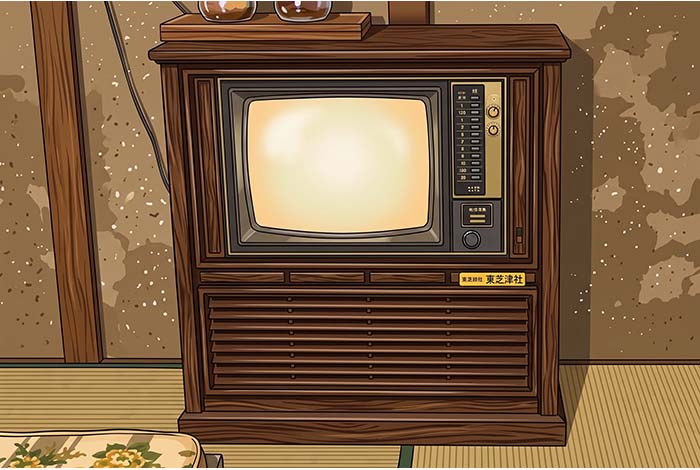
When you think of the history of television and film, your mind probably goes straight to Hollywood or the high-tech laboratories of New York. We are so used to our 4K OLED screens today that we forget the humble, flickering beginnings of broadcast technology. While many inventors around the world were racing to create an “electronic eye,” the very first successful transmission of a clear electronic image didn’t happen in a major American city. It happened on December 25, 1926, in a small classroom at a technical college in Shizuoka, Japan.

The Glowing Katakana “I”
The man behind this miracle was Dr. Kenjiro Takayanagi, often called the “Father of Japanese Television.” While others were still experimenting with clunky mechanical spinning discs, Takayanagi bet his career on a new technology called the Cathode Ray Tube (CRT). On that historic Christmas day, he successfully transmitted a single image onto a glowing green screen. The image was the Katakana character “イ” (I). He chose this specific character because it is the first letter of the traditional Japanese “Iroha” alphabet—the equivalent of the letter “A” in English. It was a simple, forty-line image, but it proved to the world that electronic television was finally a reality.
👉 Want to read more about Japanese demographics and society?
Read Next: Did You Know the World’s Oldest Company Is in Japan? (The 1,400-Year-Old Builders)
A Legacy of Innovation
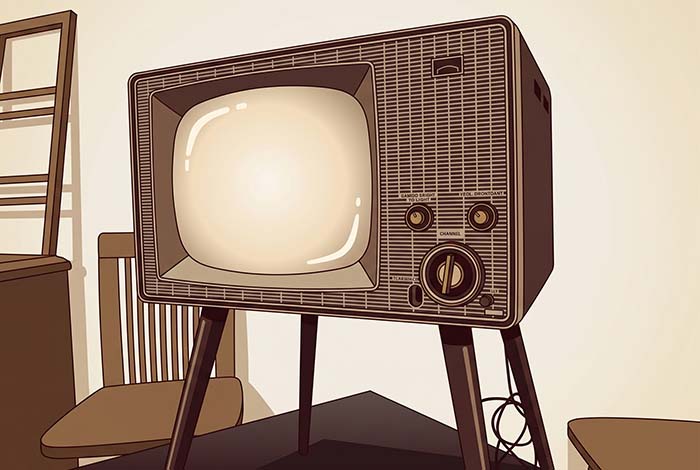
Dr. Takayanagi’s obsession with image quality laid the foundation for Japan’s eventual dominance in the global electronics market. Decades later, Japanese brands like Sony and Panasonic would become household names in America, filling living rooms in Los Angeles and across the world with the very technology he pioneered in that quiet Shizuoka classroom. The next time you turn on your massive flat-screen TV to watch a movie, remember that the entire billion-dollar industry started with a tiny, glowing green “イ” on a piece of glass in 1926.
▼ Read Next:
🔗 Was Japan a Vegetarian Nation for 1,400 Years? (The Meat-Eating Taboo)
.
.
Share This Article
Related Articles
Pick Up
- Japan Now! Whole Torched Purin on a Crepe. Ise’...
- Japan Now! The Spear Won. Chiben Wakayama Takes Kosh...
- Japan Now! The Final Four Is Set. Ariake’s Mir...
- Japan Now! It’s Rice Day in Japan, So Dragon Q...
- Japan Now! Doraemon Is Taking a Steam Train to Victo...
-

- Japan Now! Japan Answered. The Monster Falls, and th...
- Japan Now! She Said Yes. Olympic Champions Riku Miur...
- Japan Now! 7,000 Stranded at Narita as Record Rain S...
- Pokemon Worlds Takes Over San Francisco, and We Got ...
- Japan Now! 156 km/h. Bases Loaded. No Outs. Koshien&...
- See more Fun Facts articles >









Latest Articles
- Looking for a Car? Visit South Bay Toyoya! Reliable...
- WA Dining Suya Enjoy the Flavors of Fall with Limit...
- Free Medicare Seminars, Learn the Besics and Review...
- Den’s Tea ...
- Capture Special Memories at Kimono no Kobeya ...
-

- Recommended for Those on a Diet! Healthy Noodles
- Savor Seasonal Specials at TAKAGI COFFEE!
- Daikokuya El Monte Celebrates 10th Anniversary! ...
- Check Out JINS 360°! New Store Now Open!
- Pho-Inspired Asian Spicy Ramen Returns for a Limited...
- See all articles >