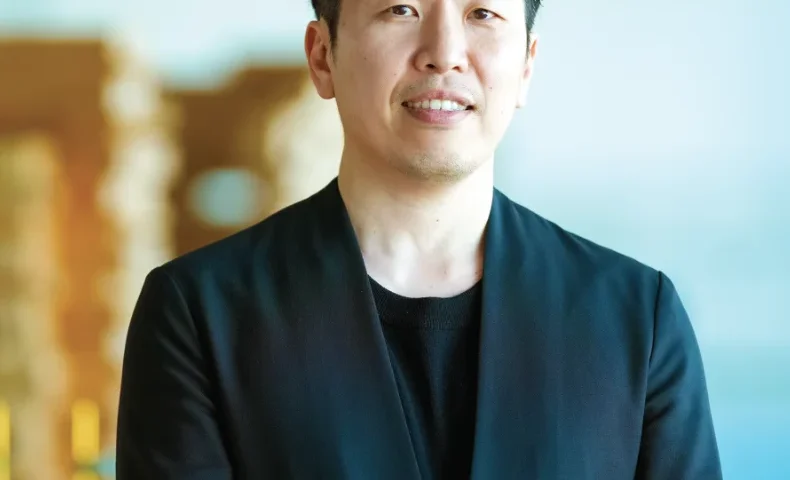
“I originally wanted to become an artist. But at some point, I changed direction and decided I wanted to support artists instead. That is who I am today.”
Yuki Mitsufuji is a researcher working at the intersection of artificial intelligence and entertainment, currently serving as a visiting professor at New York University’s Steinhardt School since 2024.
What kind of life journey led him to this point?
Category: POPULAR
The “Yes Means No” Trap: Why Answering a Simple Question in Japan is So Confusing
The Negative Question Chaos Imagine you are at a sushi restaurant in Tokyo with a Japanese friend. You notice they haven’t touched their tuna, so you ask a very standard English negative question: “Don’t you like sushi?” Your friend smiles and nods, saying, “Yes!” Relieved, you push the plate toward them. But then, they push it away, looking deeply confused. You just fell into one of the most classic, brain-bending grammatical traps between the English and Japanese languages. In English, your friend’s answer makes absolutely no sense. But in Japanese, answering “Yes” to mean “I do not like it” is…
View More The “Yes Means No” Trap: Why Answering a Simple Question in Japan is So ConfusingThe “L” and “R” Illusion: Why is English Pronunciation So Difficult for Japanese Speakers?
The Classic “Rice” or “Lice” Struggle If you have ever had a conversation with a Japanese friend speaking English, you have almost certainly noticed a very specific linguistic struggle. Words that contain the letters “L” and “R” often become completely interchangeable. For example, a simple sentence like “I eat rice” might unintentionally sound like “I eat lice,” or asking for the “right” direction might sound like asking for the “light.” To a native English speaker, “L” and “R” are two drastically different sounds that completely change the meaning of a word. But to a native Japanese speaker, distinguishing between these…
View More The “L” and “R” Illusion: Why is English Pronunciation So Difficult for Japanese Speakers?The Half-Price Rush: Surviving the Twilight Hour at Japanese Supermarkets
The Premium Quality of “Sozai” When you visit a typical American grocery store, the pre-made hot food section is usually a small afterthought, featuring thick pizzas or rotisserie chickens that sit under a heat lamp all day. But in Japan, the prepared deli section—known as “Sozai”—is a massive, highly competitive culinary wonderland. Japanese supermarkets dedicate huge aisles to freshly made bento boxes, golden fried pork cutlets (Tonkatsu), perfectly grilled fish, and beautiful trays of high-grade sushi. The quality is so remarkably high that many Japanese workers and housewives rely on these meals for their daily dinners. However, this dedication to…
View More The Half-Price Rush: Surviving the Twilight Hour at Japanese SupermarketsThe $0 Emergency: Why Calling an Ambulance in Japan Won’t Bankrupt You
The American Ambulance Terror In the United States, having a medical emergency is terrifying, but the financial aftermath can be even worse. For many Americans, calling 911 for an ambulance is an absolute last resort. Because emergency transport is often run by private companies and disconnected from insurance networks, a single 15-minute ride to the local ER can easily result in a devastating surprise bill of $1,000 to $3,000! It is incredibly common to hear stories of injured or bleeding Americans begging bystanders not to call an ambulance, opting instead to call an Uber or drive themselves to the hospital.…
View More The $0 Emergency: Why Calling an Ambulance in Japan Won’t Bankrupt You[Japanese Interviews: Life in LA] Yukari Fowler : Travel Trade Representative, Yosemite Mariposa County Tourism Bureau
“It all started with coming here to chase my dream of forming a band with Americans, touring the world, and becoming a rock star.” Atsushi Nakagawa founded AMAZAKE CO. in Los Angeles in April 2019. He is the creator of the “Amazake Latte,” which has gained popularity at Farmers Markets in Torrance and Hollywood. How did his dream evolve? We took a closer look at his life.
View More [Japanese Interviews: Life in LA] Yukari Fowler : Travel Trade Representative, Yosemite Mariposa County Tourism BureauThe $3,000 Obstacle Course: Why Getting a Driver’s License in Japan is a Nightmare
The California Breeze vs. The Japanese Marathon Taking a practical driving test in California is usually a fairly quick and painless process. You drive around the neighborhood with an evaluator for 15 minutes, and if you don’t crash, you walk out with your Interim Driver License the exact same day. However, getting a driver’s license from scratch in Japan is an entirely different, brutally exhausting universe. You cannot simply show up at the DMV and take a test. By law, you must enroll in a certified driving school (Kyoshujo), which requires completing over 60 hours of mandatory classroom lectures and…
View More The $3,000 Obstacle Course: Why Getting a Driver’s License in Japan is a NightmareWhy Do Japanese People Go to the Doctor for a Simple Cold? (The Insurance Miracle)
The American Medical Anxiety In the United States, going to the hospital is generally considered a last resort. Due to the mind-boggling complexity of insurance networks, massive deductibles, and unpredictable co-pays, most Americans will endure a painful cough, a minor injury, or a high fever for days, hoping it will just go away on its own. The fear of receiving a surprise medical bill for hundreds or thousands of dollars makes people terrified of seeking professional medical help. But if you live in Japan, this deep-seated financial anxiety regarding healthcare completely disappears. Japanese people will casually visit a specialized clinic…
View More Why Do Japanese People Go to the Doctor for a Simple Cold? (The Insurance Miracle)The Glass Shield: Why Are Japanese Train Platforms Walled Off?
The Open Edge Danger If you ride the subway system in Los Angeles or New York, waiting for the train can sometimes feel like a nerve-wracking experience. The platforms are completely open to the tracks, and standing too close to the edge when a massive, heavy train roars into the station feels genuinely dangerous. But if you walk into a major train station in Tokyo or Osaka today, you will notice a massive, high-tech physical barrier standing between the passengers and the rails. These are known as “Platform Screen Doors” (Home Door), and they are rapidly becoming the absolute standard…
View More The Glass Shield: Why Are Japanese Train Platforms Walled Off?The Deficit Coin: Why Does It Cost 3 Yen to Make a 1-Yen Coin in Japan?
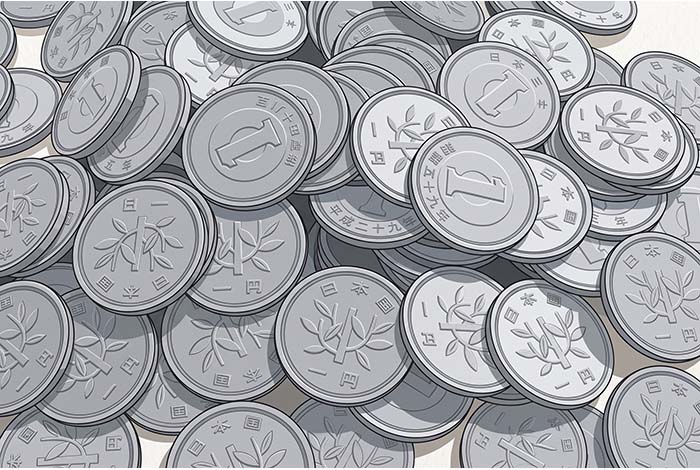
The Magic Floating Metal If you use cash while traveling in Japan, your wallet will quickly fill up with a magically lightweight silver coin. The Japanese 1-yen coin is a fascinating piece of currency. It is made entirely of 100% pure aluminum and weighs exactly one gram—in fact, it is manufactured so perfectly that people sometimes use it as a makeshift calibration weight for digital scales! Because it is so incredibly light and uniquely designed, it can literally float on the surface tension of water. However, behind this cute, feather-light piece of everyday pocket change lies a hilarious and terrible…
View More The Deficit Coin: Why Does It Cost 3 Yen to Make a 1-Yen Coin in Japan?More Than a Wet Wipe: The Sacred Origins of Japan’s “Oshibori” Culture
The Ultimate Welcome Ritual When you sit down at a restaurant in Los Angeles, you are usually given a dry paper napkin wrapped around your silverware. If you order messy food like barbecue ribs, you might get a tiny, plastic-wrapped chemical wet wipe at the end of the meal. But in Japan, the moment you sit down at any dining establishment—from a cheap noodle shop to a high-end sushi restaurant—the staff will immediately hand you a rolled, steaming hot, damp cloth towel. This hot towel is called an oshibori, and to a foreigner it feels like a luxury spa treatment…
View More More Than a Wet Wipe: The Sacred Origins of Japan’s “Oshibori” CultureDon’t Snort, Just Shout: Why It Is Perfectly Polite to Yell at Your Waiter in Japan
The US Restaurant Etiquette Gap If you dine out at a high-end restaurant in Southern California, interacting with your server requires a delicate, almost silent dance. Snapping your fingers, waving aggressively, or shouting across the dining room to get attention is considered incredibly rude and low-class. Instead, Americans rely on prolonged eye contact, subtle nods, or waiting patiently for their designated server to return to the table. However, if you try this polite, quiet approach in a traditional Japanese Izakaya or a busy local eatery, you might end up sitting there starving for an hour. Japanese restaurant etiquette works in…
View More Don’t Snort, Just Shout: Why It Is Perfectly Polite to Yell at Your Waiter in Japan