Share This Article



Last updated: March 20, 2026
No Chairs Allowed
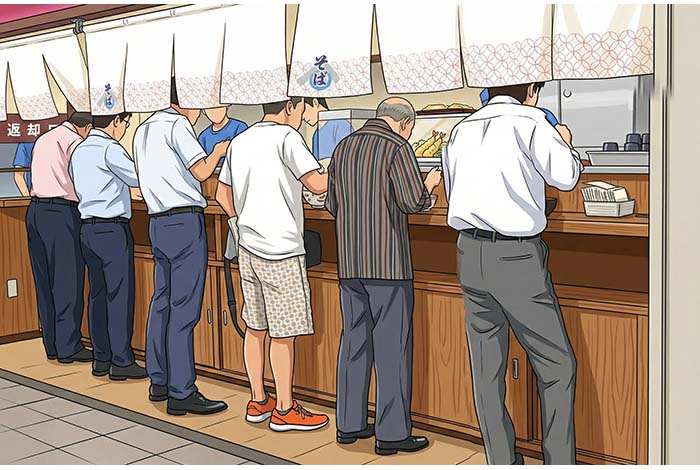
n the US, if you are eating while standing up, you are probably at a crowded bar or a casual party. But in Japan, eating while standing is a highly efficient dining genre called “Tachigui” (Stand-up eating). You walk in, and there are absolutely no chairs.
The Station Oasis
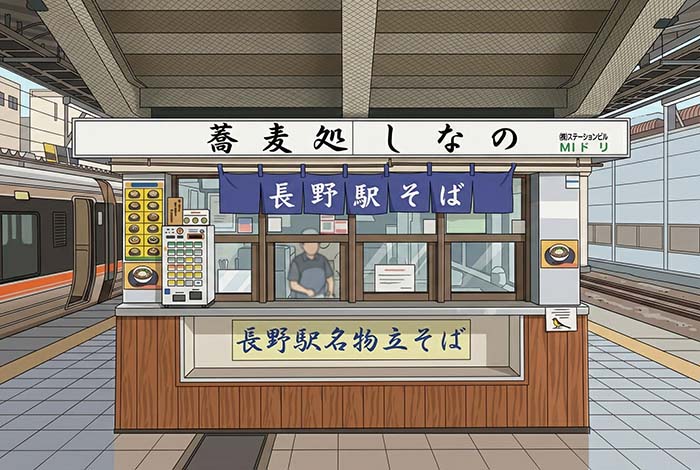
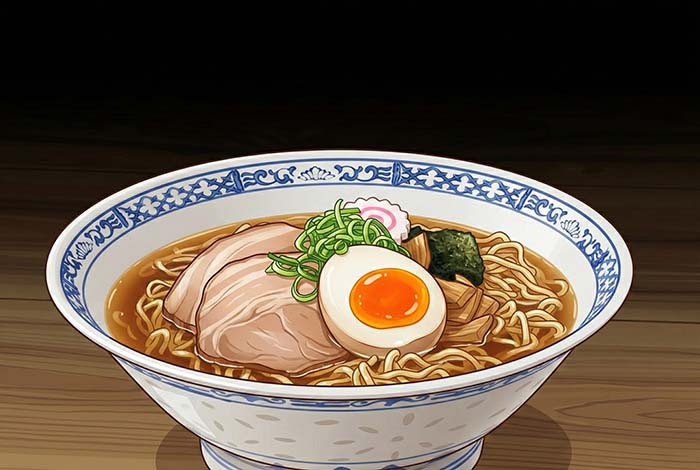
Tachigui restaurants are almost always located right in front of, or even inside, busy train stations. They primarily serve classic Japanese fast food: Soba (buckwheat noodles), Udon, Curry rice, and sometimes even high-quality Sushi!

The 15-Minute Meal
The customer base is 90% middle-aged men in business suits. They don’t go there to chat. They go there to survive. A businessman will buy a ticket from a vending machine, hand it to the chef, receive his hot noodles 30 seconds later, slurp them down in silence, and leave to catch his next train. The whole process takes less than 15 minutes.
The Urban Economics
Why are there no chairs? It is pure Tokyo economics. Real estate near train stations is insanely expensive. By removing chairs, the restaurant can fit more people into a tiny space and achieve a lightning-fast “turnover rate” (how quickly customers leave).
Cheap but Delicious
Because of this high volume of customers, Tachigui shops can offer meals at incredibly cheap prices (often around $3 to $4 for a bowl of noodles) without sacrificing taste. If you want to feel like a true Tokyo local, find a Tachigui Soba shop, stand shoulder-to-shoulder with the businessmen, and slurp your noodles!
The Rules of Fast Noodle Dining (Related Articles)
Eating noodles while standing is fast, but there are other rules to the Japanese noodle experience. From the loud noises you make to how you order more, noodle dining is highly strategic!
1. The Slurping Rule
When you stand in a Tachigui shop, you will hear a symphony of loud slurping noises! In Japan, slurping your Soba or Ramen is not rude; it is the standard and most efficient way to cool down the hot noodles and enhance the flavor!
👉 Should you try it?
Check out: “To Slurp or Not to Slurp? The Great Noodle Debate in Japan”
2. The Refill Strategy
If you finish your noodles but you are still hungry, don’t drink all your soup! Instead of serving big portions that get soggy, Ramen chefs in Japan use a cheap, fast refill system called “Kaedama,” where they drop a fresh ball of hot, extremely hard noodles directly into your remaining broth.
👉 Why not just serve more at first?
Check out: “Why Do Ramen Chefs Refuse to Serve Big Portions? (The ‘Kaedama’ Secret)”
.
.
Share This Article
Related Articles
Pick Up
- Japan Now! She Said Yes. Olympic Champions Riku Miur...
- Japan Now! Japan Answered. The Monster Falls, and th...
- Japan Now! The Final Four Is Set. Ariake’s Mir...
- Japan Now! The Spear Won. Chiben Wakayama Takes Kosh...
- Japan Now! Whole Torched Purin on a Crepe. Ise’...
-

- Japan Now! It’s Rice Day in Japan, So Dragon Q...
- Pokemon Worlds Takes Over San Francisco, and We Got ...
- Japan Now! 156 km/h. Bases Loaded. No Outs. Koshien&...
- Japan Now! 7,000 Stranded at Narita as Record Rain S...
- Japan Now! Doraemon Is Taking a Steam Train to Victo...
- See more Fun Facts articles >








Latest Articles
- Free Medicare Seminars, Learn the Besics and Review...
- Den’s Tea ...
- Capture Special Memories at Kimono no Kobeya ...
- Recommended for Those on a Diet! Healthy Noodles
- Savor Seasonal Specials at TAKAGI COFFEE!
-

- Daikokuya El Monte Celebrates 10th Anniversary! ...
- Check Out JINS 360°! New Store Now Open!
- Pho-Inspired Asian Spicy Ramen Returns for a Limited...
- Discover JINS’ Revolutionary Multi-Directional Movem...
- Celebrate 10 Years!! Daikokuya El Monte Launches Ann...
- See all articles >