

Share This Article



The Confusing Color
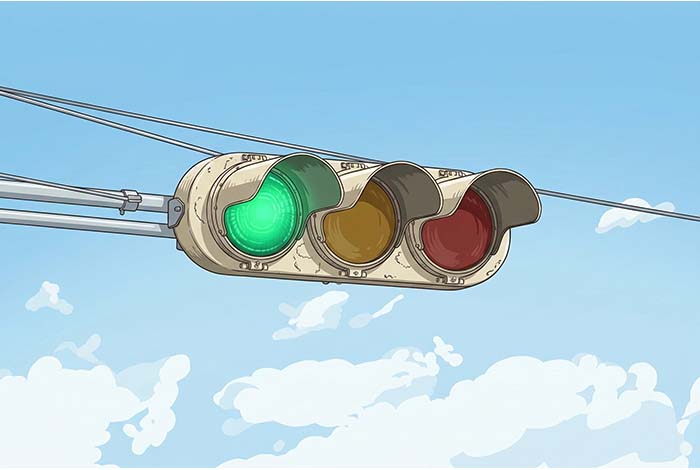
If you walk down a street in Tokyo with a Japanese friend, they might say, “Let’s cross, the light is blue!” You look at the traffic signal, and it is clearly, 100% green. Are Japanese people colorblind? Not at all. It is a fascinating linguistic quirk!
The Ancient Colors
In Japanese, “Green” is Midori, and “Blue” is Ao. But historically, the ancient Japanese language only had four basic color words: Black, White, Red, and Ao. Back then, Ao was a broad word that encompassed both the color of the blue sky and the color of green leaves.
Sponsored Link
Welcome to the Indoor Zoo
The variety is mind-blowing. At a hedgehog cafe, you are given thick gloves to hold the spiky little creatures. At a micro-pig cafe, tiny pigs will climb right into your lap to take a nap. And yes, you can actually feed giant, chill capybaras while enjoying your matcha!
The Blue Apple
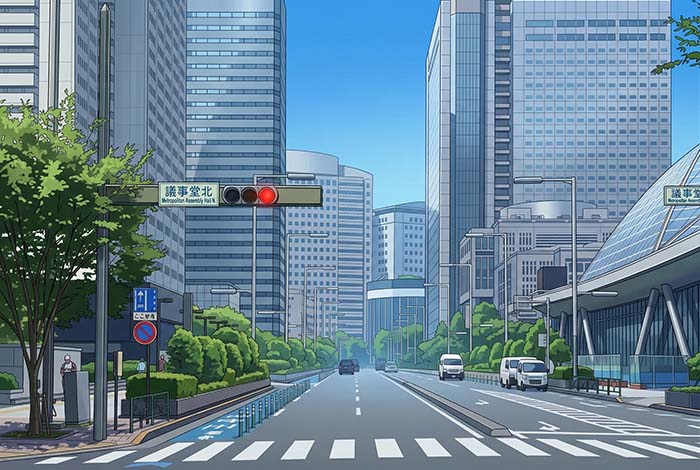
This old habit survives in the language today. Even though the word Midori (Green) exists now, Japanese people still refer to green apples as Ao-ringo (Blue apples), green vegetables as Ao-na (Blue greens), and the “Go” signal of a traffic light as Ao-shingo (Blue light).
Adjusting Reality to Words
Instead of forcing the public to change what they said, the Japanese government did something amazing in 1973. They legally mandated that traffic lights be manufactured in the bluest possible shade of green to match the word Ao! So, it really is a little bit blue.
Unspoken Rules of Transport (Related Articles)
Calling a green light “blue” is a fun linguistic quirk, but Japan also has some very strict, unspoken rules when it comes to transportation and parking!
1. The Silent Train Rule
When the traffic light turns blue (green) and you get on a commuter train, you will notice a golden rule: absolute silence. Talking loudly or making phone calls is considered “Meiwaku” (causing trouble), so you must set your phone to Manner Mode and enjoy the quiet ride.
👉 Is there any exception to this rule?
Check out: “The ‘Library Rule’: Why Japanese Trains Are So Silent”
2. The Reverse Parking Mystery
If you are driving a car instead of taking the train, you will notice another strict pattern: 99% of cars in Japanese parking lots are parked in reverse! Japanese driving culture values “Departure Safety,” meaning drivers take the time to back in when they arrive so they can pull out smoothly when they leave.
👉 What does the flashing hazard light mean?
Check out: “Why Do Japanese Drivers Always Back Into Parking Spaces?”
.
.
Share This Article
NEW MAGAZINE

Related Articles
Pick Up
- The Half-Price Rush: Surviving the Twilight Hour at ...
- The “L” and “R” Illusion: Wh...
- The Infinite Loop: Why Tokyo’s Yamanote Line i...
- The Fluffiest Mob: The Dark History and Cute Reality...
- Shattering the Myth: Why Real Japanese Ninjas Never ...
-

- The $200 Melon: Why Are Fruits Treated Like Rolex Wa...
- The Feline Kingdom: Why Cats Vastly Outnumber Humans...
- The “Yes Means No” Trap: Why Answering a...
- The $0 Emergency: Why Calling an Ambulance in Japan ...
- The 7-Minute Miracle: How Japan Cleans an Entire Bul...
- See more Fun Facts articles >









Latest Articles
- Perfect for Your Summer Trip to Japan!Hello Japan SI...
- 【Now Open!】The Ultimate Nationwide Bilingual Job B...
- JapanUp! 224 – June 2026
- [Japanese Interviews: Life in LA] Yuki Mitsufuji : B...
- YUKI SAORI in LOS ANGELES ~From 1969 to the Future~ ...
-

- JAPANESE SAMURAI /Tsunenaga Hasekura
- The Art of Not Saying “No”: How to Decod...
- [Japanese Interviews: Life in LA] Yukari Fowler : Tr...
- The “Tokyo” Trap: Why Are Tokyo Disneyla...
- The $3,000 Obstacle Course: Why Getting a DriverR...
- See all articles >