Share This Article



Not Fancy, Just Fast
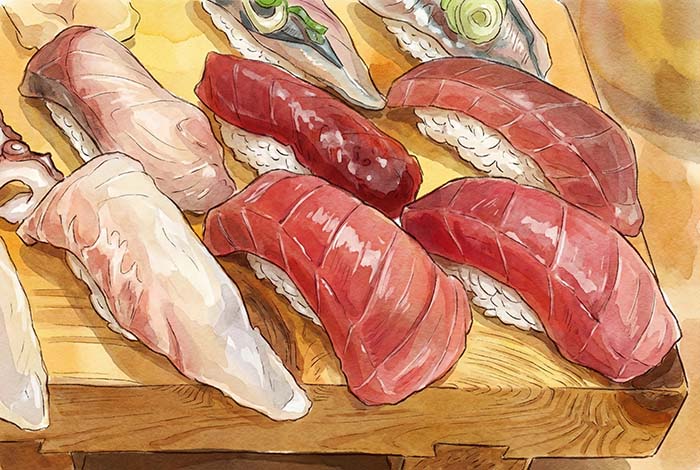
Today, Sushi is an expensive, delicate cuisine. But in the Edo period (19th century Tokyo), it was Street Food for impatient workers. Carpenters and merchants didn’t have time to sit down. They wanted to grab a quick bite at a roadside stall (Yatai) and go back to work. It was the “McDonald’s” of old Japan.
The “Onigiri” Size
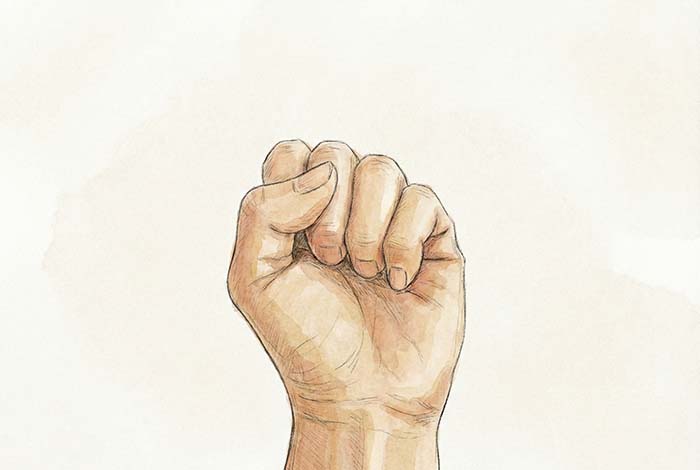
Because it was a meal for manual laborers, it had to be filling. Records show that Edo-style Sushi was 2 to 3 times larger than today’s sushi. One piece was the size of an Onigiri (Rice Ball) or a tennis ball. You only needed two or three pieces to feel full.
Why Did It Shrink?
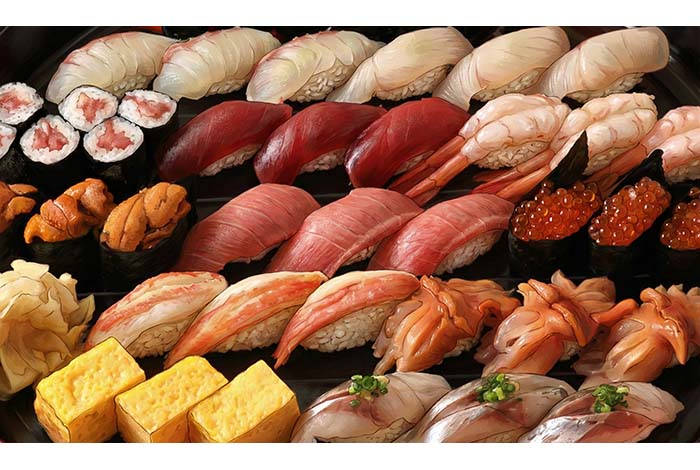
Over time, sushi moved from street stalls to indoor restaurants. It became a snack to enjoy with Sake. Eating a giant rice ball with alcohol is too heavy, so the size gradually shrank to the “bite-size” we know today. Now, you can eat 10 plates and still have room for beer.
The Red Vinegar Secret
In the old days, there were no refrigerators. To prevent the fish from rotting, chefs used Red Vinegar (Akazu) made from sake lees and plenty of salt. They also soaked the fish in soy sauce or vinegar (Zuke / Shime). This gave the rice a brownish color and a strong, sour taste compared to modern white sushi rice.
The “Two Piece” Rule
Have you noticed that sushi is usually served in pairs (two pieces per plate)? Some say this is a remnant of the “Giant Sushi” era. When the sushi became smaller, chefs started serving two small pieces to equal the volume of the original single giant piece. It is a ghost of the Edo appetite.
The Evolution of Sushi Rules (Related Articles)
Sushi started as a quick snack for workers, but today it has complex rules. From high-end trust to spiritual silence, here is the deep world of raw fish.
1. The Trust Test Ancient sushi was cheap, but modern sushi can be a gamble. “Omakase” isn’t just a fancy menu; it means “I leave it up to you.” It is the ultimate test of trust between the eater and the chef.
👉 Why is it so expensive? Check out: “Why Is Your ‘Omakase’ Not Real Omakase? (The Trust Test)”
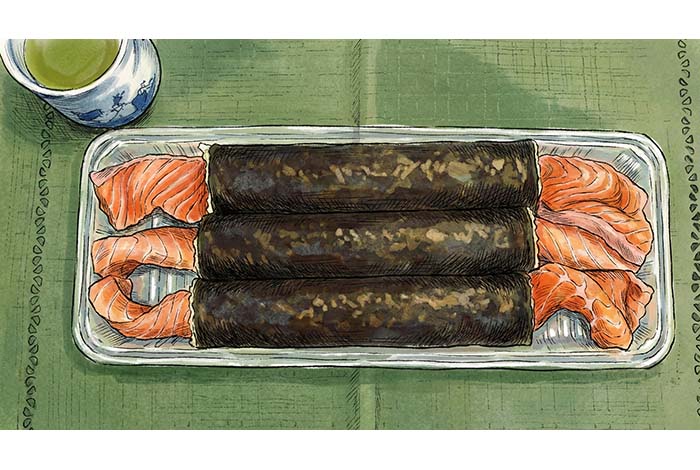
2. The Silent Ritual Sushi isn’t always about chatting. In February, Japanese people eat a giant, uncut sushi roll called “Eho-maki” while facing a specific lucky direction. The rule? You must be completely silent until you finish!
👉 Why can’t you cut it? Check out: “Why Do Japanese People Eat Sushi Silently Facing the Same Direction?”
.
.
Share This Article
Related Articles
Pick Up
- Torikizoku’s second location in Anaheim Takeout yaki...
- Daikokuya El Monte Celebrates 10th Anniversary! ...
- Savor Seasonal Specials at TAKAGI COFFEE!
- Onigiri Sun DTLA Location Now Open
- A popular spot for authentic tempura rice bowls and ...
-

- Half-Price Hakata Ramen: Shin-Sen-Gumi Rosemead̵...
- Honda-ya Charity Event Celebrates Kappo Honda’...
- LA Dassai Experience: Japan and USA’s Finest S...
- Pho-Inspired Asian Spicy Ramen Returns for a Limited...
- Celebrate 10 Years!! Daikokuya El Monte Launches Ann...
- See more Fun Facts articles >

Latest Articles
- Free Medicare Seminars, Learn the Besics and Review...
- Capture Special Memories at Kimono no Kobeya ...
- Check Out JINS 360°! New Store Now Open!
- Discover JINS’ Revolutionary Multi-Directional Movem...
- 2027 Coming-of-Age Ceremony presented by Nadeshiko-k...
-

- Kappo Honda 30th Anniversary Charity Event
- JapanUp! 228 – October 2026
- Quiz – October 2026
- Chiikawa comes to Channel Oishii with 20 curated foo...
- Kanagawa: The Many Faces of Japan, All in One Place
- See all articles >