Share This Article




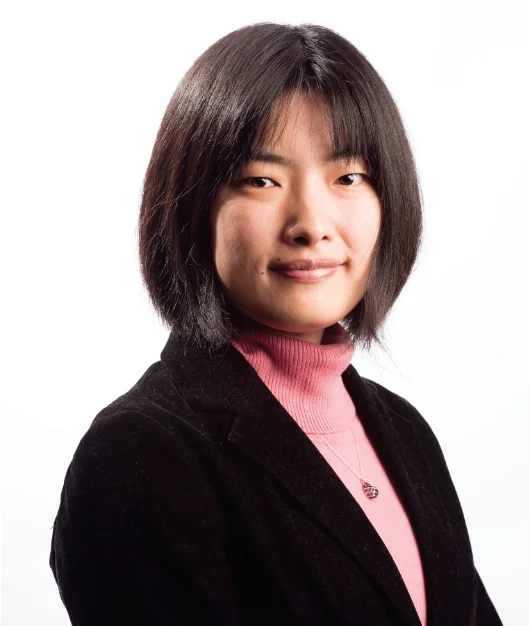
Arisa Nakamura
Profession: Graphic Designer / Manga Artist (Hokubei Hochi)
Born: Shizuoka, Japan
Education: Bachelor’s from Japan Women’s University (Housing Studies); Graduate studies at Tokyo Institute of Technology (Participatory Urban Planning); Master’s from the University of Washington (Landscape Architecture)
Career Highlights: Studied art abroad at Wellesley College. Specialized in community-based urban planning and grassroots development. Worked for eight years at the Japanese Cultural & Community Center of Washington (JCCCW) in marketing and design. Contributed to projects including a Japantown historical guide map and educational materials on Japanese American incarceration history. Currently serializing a manga in Hokubei Hochi, the oldest Japanese-language newspaper in North America.
■ Arisa Nakamura
Instagram: @arisan_artworks
Website: www.arisan-artworks.com
■ A Passion for Drawing, Hidden Away
“I’ve loved drawing since I was little, but my parents restricted it. So I used to draw in secret.”
Arisa Nakamura is currently serializing a manga in Hokubei Hochi, a Japanese-language newspaper based in Seattle, Washington. Its predecessor was founded in 1902, making it the oldest Japanese-language newspaper in North America. She also spent eight years working as a marketing and design staff member at the Japanese Cultural & Community Center of Washington (JCCCW) until July of this year. What kind of journey has shaped her life?
■ Childhood Between Restrictions and Imagination
Born in Shizuoka Prefecture, Nakamura grew up with her father, who worked in the automotive industry, her mother, a homemaker, and an older brother. At age seven, she moved to Kawasaki due to her father’s job.
As a child, she was captivated by Princess Mononoke, repeatedly watching her favorite scenes until the VHS tape wore out.
“The more my parents restricted me, the more curious I became,” she recalls. That sense of limitation may have fueled her desire to draw even more.
■ Intense Academic Pressure and a Turning Point
In the summer of fifth grade, her life shifted dramatically as she began rigorous entrance exam preparation at home.
“Our family didn’t believe in cram schools—we just studied nonstop at home,” she says.
There was no escape. The only time she was allowed to rest was during meals, which she deliberately stretched out.
“I would never want to go back to that period,” she admits.
Her efforts paid off when she was accepted into the prestigious Oin Junior and Senior High School. However, just a few months after finishing her exams, her family moved to Minnesota for four months due to her father’s work.
Unable to speak English, she struggled deeply.
“At school, the only thing I could say was my name.”
After returning to Japan, people expected her to speak English fluently because of her time abroad.
“But in reality, I barely spoke to anyone,” she says.
Motivated by those expectations, she began studying English seriously.
■ Finding Freedom Through Art
In 2006, Nakamura entered Japan Women’s University, majoring in housing studies. During her time there, she studied abroad at Wellesley College in Boston for a year, focusing on art.
“Being allowed to study art openly for the first time felt incredible,” she says.
Her interests gradually shifted from housing to broader urban spaces. In 2010, she entered the Tokyo Institute of Technology’s graduate school, where she specialized in participatory urban planning.
Her academic journey didn’t stop there. After graduating, she moved to the United States to attend the University of Washington’s graduate school, studying landscape architecture and grassroots community-based urban development, further deepening her perspective.
■ Carrying Forward a Legacy
In 2017, she began working at JCCCW, where she utilized her artistic skills as a designer.
“Japanese Americans are the only group of Americans who were forcibly incarcerated during World War II. I’m standing on the trust they built through hardship and perseverance.”
Her words reflect deep respect for the Japanese American community. She has contributed to projects such as a guide map of historic Japanese American sites in Seattle’s Japantown and educational materials about the incarceration of Japanese Americans on Bainbridge Island.
“Moving forward, I want to continue using illustration and manga as a form of expression,” she says—committed to telling stories that connect history, culture, and community.
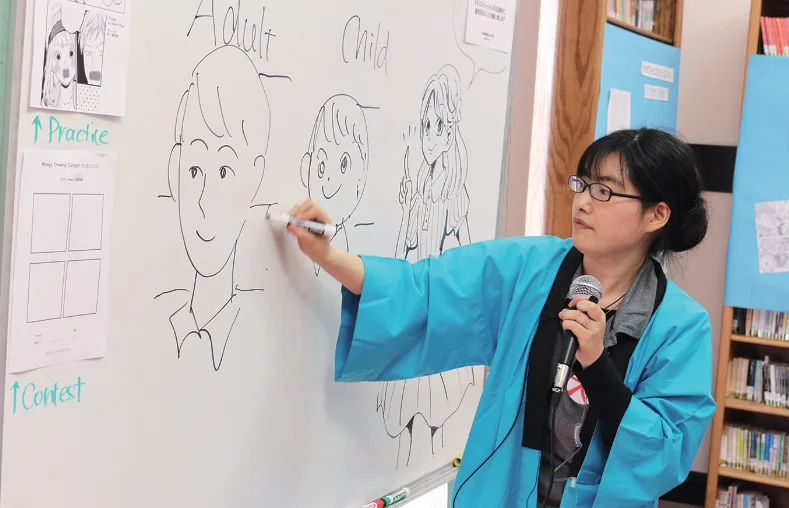
■ Teaching how to draw manga at a Children’s Day event at the Japanese Cultural & Community Center of Washington (2018) ©JCCCW
Share This Article
Related Articles
Pick Up
- [Japanese Interviews: Life in LA] Chizuko Higuchi : ...
- [Japanese Interviews: Life in LA] Kent Hayashi : The...
- [Japanese Interviews: Life in LA] Yukari Fowler : Tr...
- [Japanese Interviews: Life in LA] Izumi Mitsuda : I’...
- [ Interview ] Yuriyan Retriever – Comedian | N...
-

- [Japanese Interviews: Life in LA] Yuki Mitsufuji : B...
- I LIVE IN JAPAN / Mathilde DUBOIIS / Co-founder of t...
- The Front Line of Anime Music “Yoko Takahashi ...
- [Japanese Interviews: Life in LA] Dan Sawada : “I Ta...
- I LIVE IN JAPAN / Bernard McEntee / Teacher
- See more Interview articles >

Latest Articles
- Free Medicare Seminars, Learn the Besics and Review...
- Den’s Tea ...
- Capture Special Memories at Kimono no Kobeya ...
- Recommended for Those on a Diet! Healthy Noodles
- Savor Seasonal Specials at TAKAGI COFFEE!
-

- Daikokuya El Monte Celebrates 10th Anniversary! ...
- Check Out JINS 360°! New Store Now Open!
- Pho-Inspired Asian Spicy Ramen Returns for a Limited...
- Discover JINS’ Revolutionary Multi-Directional Movem...
- Celebrate 10 Years!! Daikokuya El Monte Launches Ann...
- See all articles >