
Share This Article



The American Nuisance vs. The Japanese VIP
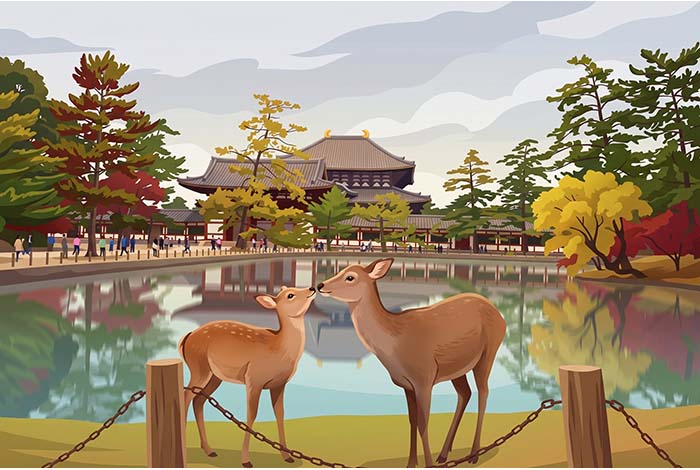
In many parts of the United States, deer are often seen as either a target for seasonal hunting or a dangerous nuisance that jumps in front of cars on dark suburban roads. But if you visit the ancient city of Nara in Japan, you will step into a completely different reality. Inside Nara Park, over 1,000 wild deer roam freely among the temples, humans, and traffic. They are not afraid of people; in fact, they politely bow their heads to tourists to ask for special “deer crackers” (Shika Senbei). The locals do not chase them away. Instead, they treat the deer with the utmost respect, stopping traffic to let them cross the street like absolute VIPs.
The Messengers of the Gods
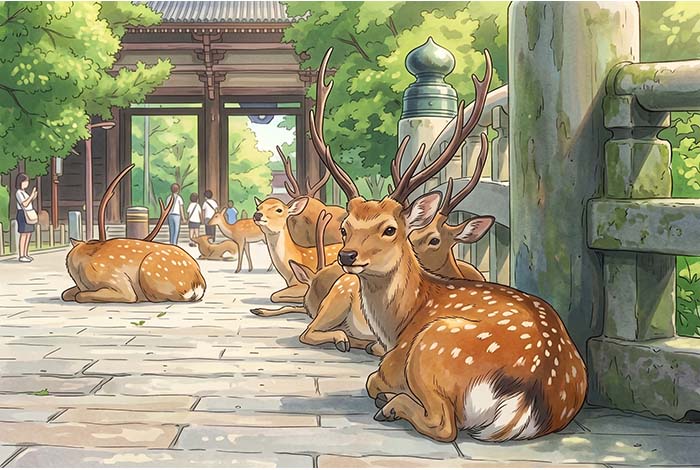
Why do these specific deer get royal treatment? The answer lies in an ancient Shinto mythology from the 8th century. According to legend, when the Kasuga Grand Shrine was established in Nara to protect the new capital city, a powerful thunder deity named Takemikazuchi traveled all the way from Ibaraki Prefecture to guard the shrine. How did he make the journey? He arrived triumphantly riding on the back of a majestic, sacred white deer! Ever since that day, the deer in Nara have been legally and spiritually recognized as “Shinshi” (divine messengers of the gods).
👉 Want to read more about Japanese demographics and society?
Read Next: Why Do Japanese People Love Black Cats? (The “Fuku Neko” Superstition)
A History of Capital Punishment
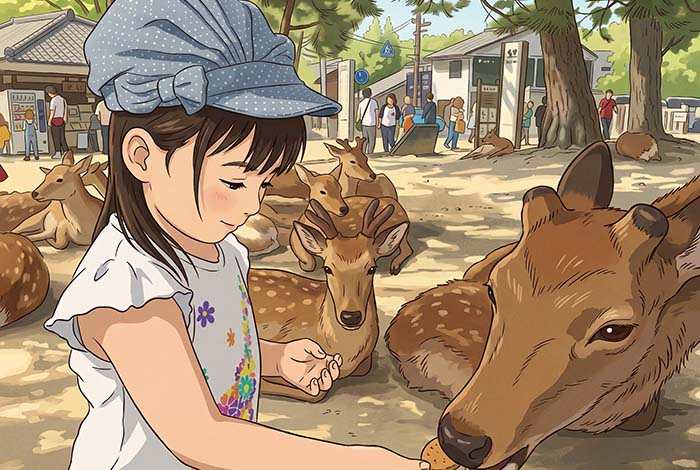
The reverence for these animals was incredibly extreme. For centuries, if anyone dared to harm or kill a Nara deer, the punishment was absolutely brutal: death. There are actual historical records of people being executed in the Edo period just for accidentally throwing a stone and hitting a deer! Fortunately, the death penalty was abolished long ago, but the deer are still highly protected today. After World War II, the Nara deer were officially designated as “National Natural Treasures” by the Japanese government. It is a beautiful example of how ancient Japanese animism and respect for nature continue to thrive in the modern world.
▼ Read Next:
🔗 Why Are People Drinking Coffee with Capybaras? (The Wild Animal Cafes)
.
.
Share This Article
Related Articles
Pick Up
- Japan Now! She Said Yes. Olympic Champions Riku Miur...
- Pokemon Worlds Takes Over San Francisco, and We Got ...
- Japan Now! Japan Answered. The Monster Falls, and th...
- Japan Now! It’s Rice Day in Japan, So Dragon Q...
- Japan Now! Doraemon Is Taking a Steam Train to Victo...
-

- Japan Now! The Final Four Is Set. Ariake’s Mir...
- Japan Now! Whole Torched Purin on a Crepe. Ise’...
- Japan Now! 156 km/h. Bases Loaded. No Outs. Koshien&...
- Japan Now! The Spear Won. Chiben Wakayama Takes Kosh...
- Japan Now! 7,000 Stranded at Narita as Record Rain S...
- See more Fun Facts articles >










Latest Articles
- Free Medicare Seminars, Learn the Besics and Review...
- Den’s Tea ...
- Capture Special Memories at Kimono no Kobeya ...
- Recommended for Those on a Diet! Healthy Noodles
- Savor Seasonal Specials at TAKAGI COFFEE!
-

- Daikokuya El Monte Celebrates 10th Anniversary! ...
- Check Out JINS 360°! New Store Now Open!
- Pho-Inspired Asian Spicy Ramen Returns for a Limited...
- Discover JINS’ Revolutionary Multi-Directional Movem...
- Celebrate 10 Years!! Daikokuya El Monte Launches Ann...
- See all articles >