

Share This Article



The Open Edge Danger
If you ride the subway system in Los Angeles or New York, waiting for the train can sometimes feel like a nerve-wracking experience. The platforms are completely open to the tracks, and standing too close to the edge when a massive, heavy train roars into the station feels genuinely dangerous. But if you walk into a major train station in Tokyo or Osaka today, you will notice a massive, high-tech physical barrier standing between the passengers and the rails. These are known as “Platform Screen Doors” (Home Door), and they are rapidly becoming the absolute standard across all urban areas in Japan.
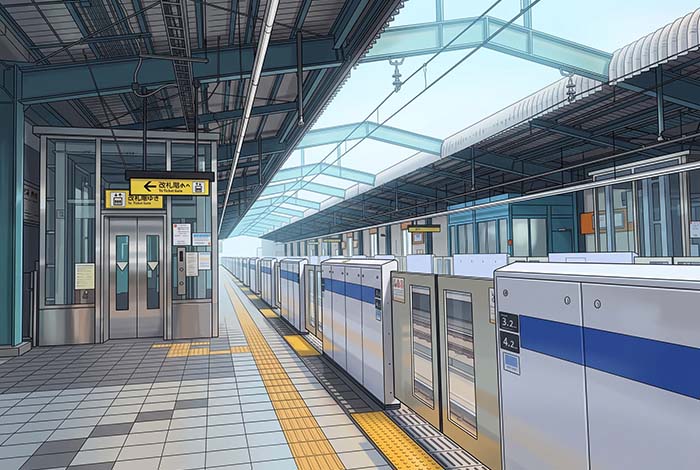
Precision Engineering and Crowd Control
The primary purpose of these heavy doors is extreme physical safety. During the legendary Japanese rush hour, station platforms become packed tightly with thousands of exhausted commuters. A simple trip, a dizzy spell, or a sudden push from the massive crowd could easily send someone tumbling onto the tracks. These automated sliding doors eliminate that risk entirely. The system works because Japanese train drivers are trained with unbelievable precision; they can manually stop a massive, speeding commuter train so perfectly that the train doors align exactly with the platform doors down to the single centimeter!
👉 Want to read more about Japanese demographics and society?
Read Next:Why Do Cashiers Refuse to Take Money Directly From Your Hand?
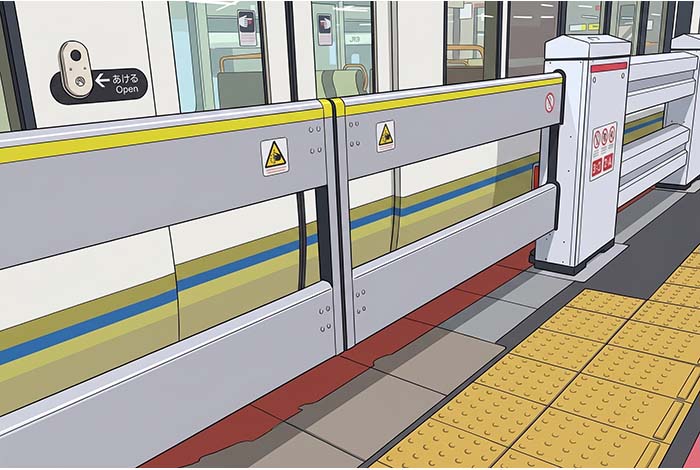
The Darker Necessity
However, there is a much darker and more serious reason behind the massive national investment in these expensive barriers: suicide prevention. In Japan, severe train delays caused by someone intentionally jumping onto the tracks are tragically common, euphemistically broadcasted to passengers as a “Jinshin Jiko” (human body accident). By completely walling off the tracks, the government and private railway companies have successfully and drastically reduced these tragic incidents. It is a brilliant mix of compassionate safety engineering and logistical necessity, ensuring that the world’s most crowded and punctual railway system keeps moving safely every single day.
▼ Read Next:
🔗Why Can’t Japanese Students Go on the School Roof? (The Anime Illusion)
.
.
Share This Article
Related Articles
Pick Up
- Japan Now! The Final Four Is Set. Ariake’s Mir...
- Pokemon Worlds Takes Over San Francisco, and We Got ...
- Japan Now! Doraemon Is Taking a Steam Train to Victo...
- Japan Now! 156 km/h. Bases Loaded. No Outs. Koshien&...
- Japan Now! Japan Answered. The Monster Falls, and th...
-

- Japan Now! Whole Torched Purin on a Crepe. Ise’...
- Japan Now! It’s Rice Day in Japan, So Dragon Q...
- Japan Now! She Said Yes. Olympic Champions Riku Miur...
- Japan Now! 7,000 Stranded at Narita as Record Rain S...
- Japan Now! The Spear Won. Chiben Wakayama Takes Kosh...
- See more Fun Facts articles >









Latest Articles
- WA Dining Suya Enjoy the Flavors of Fall with Limit...
- Free Medicare Seminars, Learn the Besics and Review...
- Den’s Tea ...
- Capture Special Memories at Kimono no Kobeya ...
- Recommended for Those on a Diet! Healthy Noodles
-

- Savor Seasonal Specials at TAKAGI COFFEE!
- Daikokuya El Monte Celebrates 10th Anniversary! ...
- Check Out JINS 360°! New Store Now Open!
- Pho-Inspired Asian Spicy Ramen Returns for a Limited...
- Discover JINS’ Revolutionary Multi-Directional Movem...
- See all articles >