
Share This Article



The Magic Floating Metal
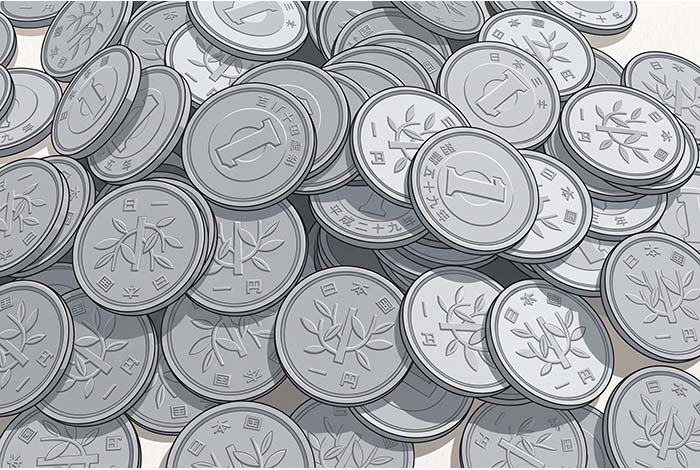
If you use cash while traveling in Japan, your wallet will quickly fill up with a magically lightweight silver coin. The Japanese 1-yen coin is a fascinating piece of currency. It is made entirely of 100% pure aluminum and weighs exactly one gram—in fact, it is manufactured so perfectly that people sometimes use it as a makeshift calibration weight for digital scales! Because it is so incredibly light and uniquely designed, it can literally float on the surface tension of water. However, behind this cute, feather-light piece of everyday pocket change lies a hilarious and terrible economic paradox.

The 3-Yen Deficit
To put it simply, the Japanese government loses money every single time they create a 1-yen coin! Currently, it is estimated that it costs roughly 3 yen to manufacture a single 1-yen coin. When you factor in the soaring global price of raw aluminum, the high-temperature energy required for processing, and the human labor involved in the minting factory, the coin operates on a massive structural “deficit.” It is a bizarre piece of national currency that is literally worth less on the street than the physical effort and materials it takes to produce it!
👉 Want to read more about Japanese demographics and society?
Read Next:Why Do Cashiers Refuse to Take Money Directly From Your Hand?

The Cashless Future
So why does the government keep making them? Unlike the US penny, which many Americans happily toss into a tip jar or throw away, the 1-yen coin is absolutely necessary in Japan. Due to the country’s complex consumption tax rates (8% for takeout food, 10% for other goods), grocery totals constantly result in odd numbers that require exact change. However, as Japan rapidly shifts toward a cashless society with IC cards like Suica and mobile payment apps like PayPay, the demand for physical change is dropping. The government has drastically cut down on minting new 1-yen coins, meaning this bizarre, money-losing aluminum disc might soon become a rare collector’s item!
▼ Read Next:
🔗Why Does the Cashier Ask Me a Question I Don’t Understand? (The “Point Card” Culture)
.
.
Share This Article
Related Articles
Pick Up
- Japan Now! It’s Rice Day in Japan, So Dragon Q...
- Japan Now! 7,000 Stranded at Narita as Record Rain S...
- Japan Now! The Final Four Is Set. Ariake’s Mir...
- Japan Now! 156 km/h. Bases Loaded. No Outs. Koshien&...
- Pokemon Worlds Takes Over San Francisco, and We Got ...
-

- Japan Now! She Said Yes. Olympic Champions Riku Miur...
- Japan Now! Doraemon Is Taking a Steam Train to Victo...
- Japan Now! The Spear Won. Chiben Wakayama Takes Kosh...
- Japan Now! Japan Answered. The Monster Falls, and th...
- Japan Now! Whole Torched Purin on a Crepe. Ise’...
- See more Fun Facts articles >









Latest Articles
- WA Dining Suya Enjoy the Flavors of Fall with Limit...
- Free Medicare Seminars, Learn the Besics and Review...
- Den’s Tea ...
- Capture Special Memories at Kimono no Kobeya ...
- Recommended for Those on a Diet! Healthy Noodles
-

- Savor Seasonal Specials at TAKAGI COFFEE!
- Daikokuya El Monte Celebrates 10th Anniversary! ...
- Check Out JINS 360°! New Store Now Open!
- Pho-Inspired Asian Spicy Ramen Returns for a Limited...
- Discover JINS’ Revolutionary Multi-Directional Movem...
- See all articles >