
Share This Article



An American Tradition Reborn in Japan
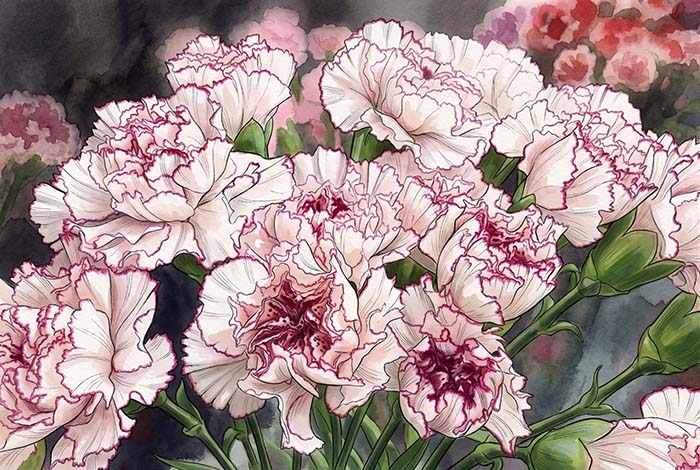
While Mother’s Day originated in the United States in the early 20th century, Japan has transformed it into one of the most significant and strictly observed gift-giving holidays on the calendar. In the U.S., a bouquet for Mom might include roses, lilies, or tulips, but in Japan, the red carnation reigns supreme as the undisputed symbol of the day. This tradition was popularized in the 1930s through a clever marketing campaign by a major Japanese confectionery company, which promoted the idea of giving a red carnation alongside sweets. Today, during the second week of May, Japanese flower shops become an overwhelming sea of red, reflecting a nation’s unified gratitude toward mothers.

The Spiritual Language of Flowersar
The obsession with the red carnation isn’t just about marketing; it’s rooted in “Hanakotoba” (the Japanese language of flowers). In Japan, the red carnation symbolizes “deep love,” “affection,” and “motherly devotion.” However, there is a crucial cultural warning that every visitor—and even Japanese youth—must remember: the color of the flower carries a heavy spiritual meaning. While pink carnations are a popular alternative representing “warm gratitude,” a white carnation is a strict taboo for a living mother. In Japan, white carnations are reserved exclusively for “Mother’s Day in Heaven,” serving as a symbol of mourning for those whose mothers have passed away. Giving a white flower to a living mother would be a shocking cultural faux pas!
👉 Want to read more about Japanese demographics and society?
Read Next: Why Are There Giant Fish Flying in the Japanese Sky? (The Legend of Koinobori)
The Evolution of Motherly Gifts
In recent years, while the red carnation remains the foundational pillar of the holiday, the gifts accompanying them have become more sophisticated. In a high-pressure society like Japan, many children now opt to give “experience gifts” alongside their flowers, such as luxury spa vouchers or high-end bento deliveries, to encourage their hardworking mothers to finally take a break. Despite these modern upgrades, the simple act of handing over a single red carnation remains the ultimate emotional bridge. It represents a rare moment in Japanese culture where deep feelings of love, which are often left unspoken in daily life, are expressed clearly through a single, vibrant bloom.
▼ Read Next:
🔗 Why Do Japanese Families Hide These Beautiful Dolls Immediately? (The “Hina Matsuri” Mystery)
.
.
Share This Article
Related Articles
Pick Up
- Japan Now! The Spear Won. Chiben Wakayama Takes Kosh...
- Japan Now! It’s Rice Day in Japan, So Dragon Q...
- Japan Now! 7,000 Stranded at Narita as Record Rain S...
- Japan Now! Japan Answered. The Monster Falls, and th...
- Japan Now! Doraemon Is Taking a Steam Train to Victo...
-

- Japan Now! Whole Torched Purin on a Crepe. Ise’...
- Japan Now! She Said Yes. Olympic Champions Riku Miur...
- Japan Now! The Final Four Is Set. Ariake’s Mir...
- Pokemon Worlds Takes Over San Francisco, and We Got ...
- Japan Now! 156 km/h. Bases Loaded. No Outs. Koshien&...
- See more Fun Facts articles >










Latest Articles
- Free Medicare Seminars, Learn the Besics and Review...
- Den’s Tea ...
- Capture Special Memories at Kimono no Kobeya ...
- Recommended for Those on a Diet! Healthy Noodles
- Savor Seasonal Specials at TAKAGI COFFEE!
-

- Daikokuya El Monte Celebrates 10th Anniversary! ...
- Check Out JINS 360°! New Store Now Open!
- Pho-Inspired Asian Spicy Ramen Returns for a Limited...
- Discover JINS’ Revolutionary Multi-Directional Movem...
- Celebrate 10 Years!! Daikokuya El Monte Launches Ann...
- See all articles >