Share This Article



Last updated: August 22, 2025


1838 – 1922
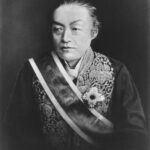
大隈 重信
Shigenobu Okuma
From Samurai to Prime Minister: The Man Who Transformed a Nation
Shigenobu Okuma was one of the key figures in shaping modern Japan. He played a role in establishing the yen as the country’s currency, introduced Japan’s first railway, adopted the solar calendar, and developed the postal system. He also has served as Prime Minister and played a vital role in shaping the country’s political and economic landscape. And he is known as the founder of Waseda University, one of Japan’s most prestigious institutions of higher learning (It’s still a well known university at present).
The Funny Reason of Shigenobu Liked the Foreign Culture
Born in 1838 as the eldest son of a mid-ranking samurai family in Hizen Province (Saga Prefecture). Since his homeland was geographically close to Nagasaki, one of the few Japanese ports open to foreign trade during the Edo period, Shigenobu grew up in an environment that provided foreign knowledge. And he was able to access to Western ideas and technology, setting the stage for his later reformist mindset.
At the age of six, he entered a clan school called Kodokan, where he studied Neo-Confucian, and the Samurai Attitude. He excelled academically and was recognized as one of the top students. However, he was also known for his stubborn personality and unwillingness to conform to outdated traditions.
At the age of 13, he lost his father, but his mother ensured that Shigenobu continued his education. However, as he matured, he grew increasingly dissatisfied with the school’s rigid curriculum. He felt that traditional confucian teachings alone were inadequate for Japan’s future and that more emphasis should be placed on Western knowledge. His radical ideas led to conflicts with both his teachers and fellow students to the point where there were fist-fighting. In the end, he was expelled from Kodokan due to his disagreements over educational reforms. This event foreshadowed his lifelong tendency to challenge the status quo and advocate for change.
Shigenobu Built His Hometown Powerful
Determined to pursue modern knowledge, Shigenobu shifted his focus to Rangaku (Dutch studies), which was the primary source of Western knowledge at the time. He enrolled in an institution called Rangaku-ryo (Dutch Studies Dormitory), where he studied foreign languages, science, and politics. His ability to analyze and incorporate foreign ideas set him apart from his peers.
In his early twenties, Shigenobu was recognized by Naomasa Nabeshima, the feudal lord of Hizen, who appointed him to work in Nagasaki. There, he met the Dutch missionary and educator Guido Verbeck, from whom he learned English and Western political philosophy. With his newfound linguistic skills, Shigenobu engaged in trade with foreign merchants, generating significant revenue for his domain. This financial success helped Hizen become an economically powerful region.
What Shigenobu Achieved in Japan’s Modernization
As Japan transitioned from the Edo period to the Meiji era, Shigenobu quickly rose to prominence due to his expertise in foreign affairs, economics, and governance. He was appointed to key government positions, where he implemented significant reforms to modernize Japan’s infrastructure. One of his most notable achievements was the development of Japan’s railway system. Recognizing that efficient transportation was essential for economic growth, Shigenobu pushed for the construction of railways connecting major cities. This laid the foundation for Japan’s rapid industrialization. Additionally, he played a crucial role in adopting the solar calendar, which replaced the traditional lunar system. He also modernized Japan’s postal system, making communication more efficient. However, his aggressive push for reform often placed him in conflict with conservative factions within the government.
At the time, political power was concentrated in the hands of leaders from cities called, Satsuma and Choshu, who had played a dominant role in overthrowing the Tokugawa shogunate. As an outsider from Hizen, Shigenobu faced resistance and struggled to have his policies fully accepted. To counter this, he helped establish Japan’s first political party, advocating for a parliamentary democracy where elected representatives would have a greater role in governance.
A Popular Politician Among the People
Despite his struggles within the government, Shigenobu gained immense popularity among the public. Unlike many politicians of his time, he actively engaged with ordinary citizens, giving speeches at train stations and town squares. This grassroots approach earned him widespread support. In 1898, he became Prime Minister for the first time. However, his administration lasted less than a year due to internal conflicts within his coalition government. Despite his short tenure, he made history by leading Japan’s first cabinet formed by a political party, paving the way for the future of parliamentary democracy.
He returned as Prime Minister in 1914, during a time of global instability due to World War I. His leadership during this period was crucial in shaping Japan’s role in international affairs. He made the controversial decision to join the war on the side of the Allies, which ultimately influenced Japan’s international standing.
Shigenobu Lost His Right Leg
One of the most dramatic events in Shigenobu’s life occurred in 1889, when he was serving as Foreign Minister. At the time, Japan was attempting to renegotiate its unequal treaties with Western powers. Shigenobu proposed a bold reform plan, but it was met with fierce opposition from nationalists who believed Japan should not make any compromises with foreign nations. A radical nationalist attempted to assassinate him by throwing a bomb at his carriage. Shigenobu survived but lost his right leg in the explosion. Despite the attack, he showed remarkable resilience and even expressed admiration for his assailant’s conviction. This extraordinary display of magnanimity solidified his reputation as a strong and forgiving leader.
The Founding of Waseda University
Shigenobu was a passionate advocate for education. He believed that Japan’s future depended on fostering intellectual independence and creativity. In 1882, he founded Tokyo Senmon Gakko, which later became Waseda University. Unlike many government-run schools that focused on producing bureaucrats, Waseda emphasized free thought, international perspectives, and scientific research. The university quickly grew into one of Japan’s leading institutions, producing influential graduates in various fields, including politics, business, and academia.
300,000 People Gathered at Shigenobu’s Funeral
Even after retiring from politics, Shigenobu remained an active public figure. He developed a personal philosophy of longevity, advocating for a balanced diet and daily exercise. He believed that humans could live up to 125 years if they maintained a healthy lifestyle. Although he passed away at the age of 84 due to illness, his legacy endured. His funeral, held a week after his death, was attended by approximately 300,000 people, a testament to his enduring influence. Shigenobu was a visionary leader who played a crucial role in Japan’s modernization. As a politician, he introduced groundbreaking reforms in infrastructure, governance, and education. As an educator, he founded Waseda University, which continues to be one of Japan’s top institutions. His ability to embrace foreign ideas while preserving Japan’s national identity made him one of the most influential figures in modern Japanese history. Today, he is remembered as a pioneer of political and educational reform, whose impact continues to shape Japan.
.
.
.
Share This Article
Related Articles
Pick Up
- JAPANESE SAMURAI / Sakanoue no Tamuramaro
- JAPANESE SAMURAI / Raichō Hiratsuka
- JAPANESE SAMURAI /Tsutaya Jūzaburō
- JAPANESE SAMURAI /Tsunenaga Hasekura
- Japan Now! Why Elon Musk Is Being Reimagined as an A...
-

- JAPANESE SAMURAI /Ashikaga Takauji
- JAPANESE SAMURAI / Tokugawa Yoshinobu
- JAPANESE SAMURAI / John Manjirō
- JAPANESE SAMURAI /Sugawara no Michizane
- JAPANESE SAMURAI /Iwakura Tomomi
- See more History articles >





Latest Articles
- Looking for a Car? Visit South Bay Toyoya! Reliable...
- WA Dining Suya Enjoy the Flavors of Fall with Limit...
- Free Medicare Seminars, Learn the Besics and Review...
- Den’s Tea ...
- Capture Special Memories at Kimono no Kobeya ...
-

- Recommended for Those on a Diet! Healthy Noodles
- Savor Seasonal Specials at TAKAGI COFFEE!
- Daikokuya El Monte Celebrates 10th Anniversary! ...
- Check Out JINS 360°! New Store Now Open!
- Pho-Inspired Asian Spicy Ramen Returns for a Limited...
- See all articles >