Share This Article



Last updated: March 20, 2026

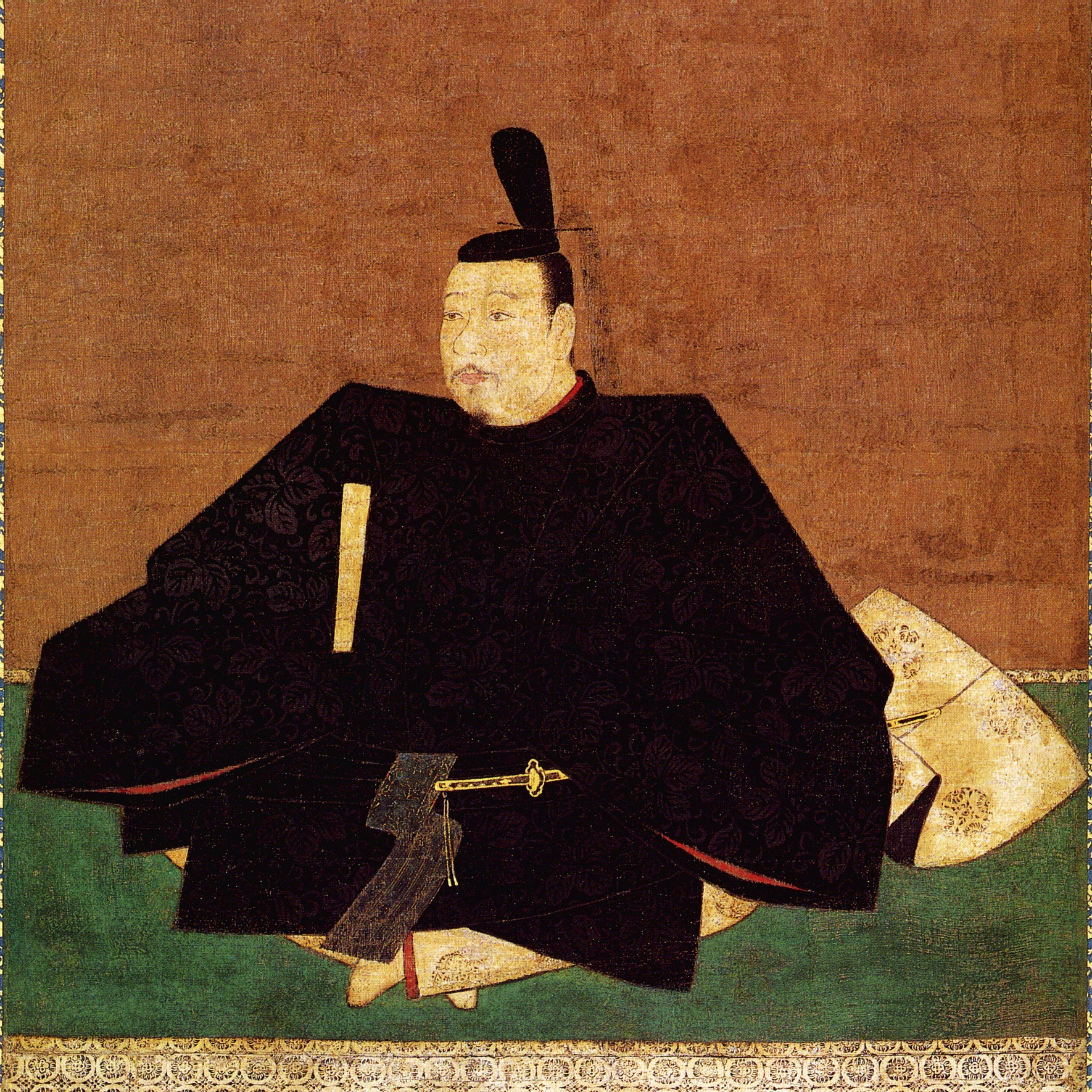
1305–1358
足利尊氏
Ashikaga Takauji
The general who toppled a shogunate and honored a rival
.
Early life as the second son
Seven centuries ago, Japan’s political center stood in Kamakura, where the shogunate united the warriors who governed the land. In that world of competing samurai families, Ashikaga Takauji was born into the prestigious Ashikaga clan. His mother was not his father’s principal wife, and the young Takauji may not have been highly regarded within the household. His exact birthplace is uncertain, which adds to the sense that he began life slightly off the main stage.
Fate turned in 1317, when he was twelve. His elder brother died suddenly, and the second son was thrust into the position of heir. In 1331, his father, Sadauji, passed away, and at twenty-seven Takauji formally became head of the Ashikaga family. For roughly the next thirty years, he would remain at the center of Japan’s political stage, a figure both polarizing and magnetic.
Emperor Go-Daigo’s uprising
Only months after his father’s death, Emperor Go-Daigo raised a banner against the shogunate in 1331. The court sought to restore direct imperial rule, accusing the military government of meddling in politics and neglecting the capital’s needs. The shogunate ordered warriors nationwide to suppress the rebellion, and Takauji was called to serve. Still in mourning, he refused at first, but the government compelled him to join the campaign. Thanks in part to his efforts, the uprising was crushed. Nobles involved were executed or exiled, and the emperor was banished to the remote Oki Islands.
Though praised for his military service, Takauji returned home without offering formal thanks at court. That pointed silence hinted at a growing dissatisfaction with the regime that had forced him into battle before his grief had cooled.
The fall of the Kamakura shogunate
Resistance continued even after Go-Daigo’s exile. Escaping from Oki, the emperor proclaimed a new bid to overthrow the regime. Ordered once more to fight, Takauji instead chose to support the emperor, raising his standard in Kyoto. He drew disaffected warriors to his side and struck key strongholds, including the Rokuhara Tandai, the shogunate’s crucial outpost in the capital. On the field he fought boldly, sometimes disguising himself among common soldiers at the front. Inspired by his courage, many rallied to him, and momentum swung toward Kyoto. The Kamakura shogunate collapsed, ending an era that had defined the country for well over a century. Historians often point to two reasons for his break with the regime. First, he resented being forced to fight while still in mourning for his father. Second, the Ashikaga had long been saddled with heavier fiscal obligations than other families, which strained their resources and loyalty. With the shogunate’s fall, political power shifted from Kamakura to Kyoto, and the stage was reset for a new kind of rule.
A more human Takauji
Takauji’s reputation is usually cast in iron and lacquer, all banners and battles. Yet there are moments when the armor feels thinner and the person underneath more visible. Despite commanding armies, he often stood on the front line in the same gear as his men. That choice to share risk and perspective spoke to camaraderie more than rank, and it won the devotion of warriors who saw their commander shoulder the same dust and danger.
After his rival Go-Daigo died, Takauji sponsored the construction of Tenryu-ji in Arashiyama, Kyoto, to honor the late emperor. Building a temple for a foe is not the instinct of a purely ruthless victor. It reveals a leader who valued reconciliation and human feeling alongside victory, transforming a contested political memory into a place of quiet beauty.
Alliance, distrust, and escalation
In 1333, Go-Daigo launched the Kenmu Restoration, aiming to reestablish direct imperial rule. Takauji, central to the shogunate’s defeat, was welcomed into the new order, and his influence grew rapidly. Soon it began to rival the emperor’s, and that imbalance seeded distrust. The following year, remnants of the Hōjō rose and seized Kamakura. Takauji sought appointment as Seii Taishōgun, the title conferring supreme military authority and the power to shape provincial governance. The request was refused. Acting without sanction, he marched to retake Kamakura, won it back, and distributed rewards on his own terms. Practical in wartime, these actions nonetheless deepened imperial suspicion and set their relationship on a course toward collision.
Confrontation and the Birth of Muromachi rule
Tensions soon broke into open conflict. Takauji repelled imperial forces from Kamakura and advanced swiftly toward Kyoto. His capture of the capital forced negotiations in which Go-Daigo abdicated in favor of Emperor Komyō, transferring both the throne and the imperial regalia. The balance of power had decisively shifted.
In 1336, Takauji established the Muromachi shogunate and formally received the title of Seii Taishōgun. Go-Daigo left Kyoto and founded a rival court at Yoshino, beginning the era of the Northern and Southern Courts, when two imperial lines coexisted and contested legitimacy.
The years that followed were relentless for Takauji, as he faced repeated Southern Court campaigns and internal factional disputes within the new military government. He died in 1358 at the age of fifty-four, but the shogunate he founded endured for more than two centuries—until 1573, when Ashikaga Yoshiaki was expelled from Kyoto by Oda Nobunaga.
Places to feel his legacy
Takauji’s legacy can be felt in historical sites across Japan. Tenryu-ji in Arashiyama, Kyoto, was founded by Ashikaga Takauji to honor Emperor Go-Daigo. Its Sōgenchi Garden uses the surrounding mountains as borrowed scenery, exemplifying the principles of Muromachi garden design. At Kyoto’s Tōji-in, the Ashikaga family temple, visitors can find a wooden statue of Takauji alongside statues of later shoguns. The temple grounds feature gardens and structures that reflect the aesthetics of the Muromachi period. In Ashikaga City, Tochigi—the clan’s original homeland—Banna-ji preserves both the legacy of the Ashikaga family and the architecture of their former residence. Together, these sites offer direct insight into Takauji’s life and the era he helped shape.
Closing
Ashikaga Takauji toppled a shogunate and built another. He stood shoulder to shoulder with his men on the front line, and he honored a rival with a temple. Those choices cut against the stereotype of the cold conqueror, revealing someone who balanced resolve with regard. Trace his path from Tenryu-ji to Tōji-in and out to the streets of Ashikaga, and the story becomes more than dates and titles. It becomes a map of feeling—where power and grace meet, and where a second son found a way to redefine what leadership could look like.
.
.
Share This Article
Related Articles
Pick Up
- JAPANESE SAMURAI /Sugawara no Michizane
- JAPANESE SAMURAI / Shigenobu Okuma
- JAPANESE SAMURAI /Tsunenaga Hasekura
- JAPANESE SAMURAI / Tokugawa Yoshinobu
- JAPANESE SAMURAI /Iwakura Tomomi
-

- JAPANESE SAMURAI / Sakanoue no Tamuramaro
- JAPANESE SAMURAI / Raichō Hiratsuka
- JAPANESE SAMURAI / John Manjirō
- JAPANESE SAMURAI /Tsutaya Jūzaburō
- Japan Now! Why Elon Musk Is Being Reimagined as an A...
- See more History articles >





Latest Articles
- Looking for a Car? Visit South Bay Toyoya! Reliable...
- WA Dining Suya Enjoy the Flavors of Fall with Limit...
- Free Medicare Seminars, Learn the Besics and Review...
- Den’s Tea ...
- Capture Special Memories at Kimono no Kobeya ...
-

- Recommended for Those on a Diet! Healthy Noodles
- Savor Seasonal Specials at TAKAGI COFFEE!
- Daikokuya El Monte Celebrates 10th Anniversary! ...
- Check Out JINS 360°! New Store Now Open!
- Pho-Inspired Asian Spicy Ramen Returns for a Limited...
- See all articles >