
Share This Article



Last updated: March 20, 2026

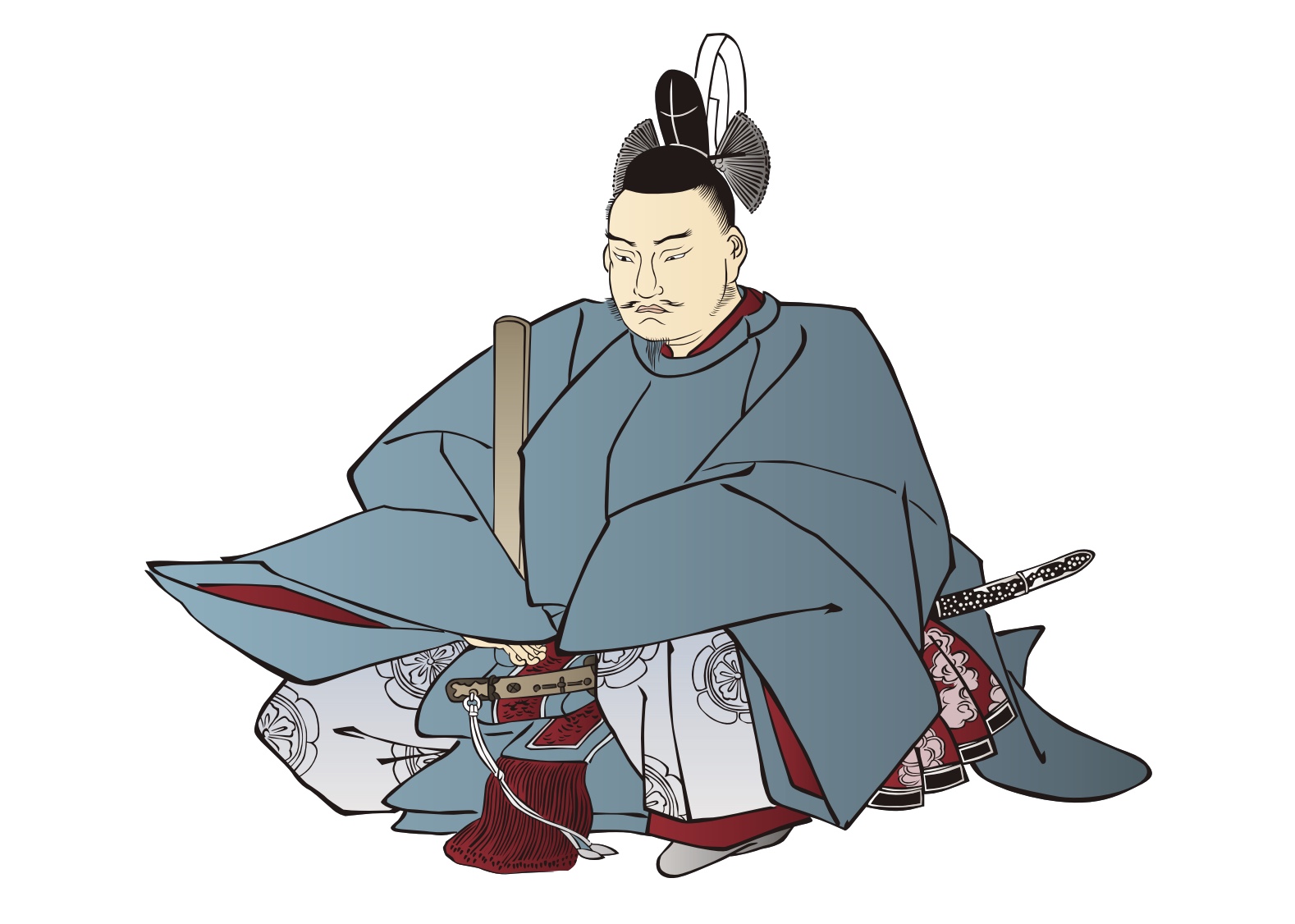
845–903
菅原道真
Sugawara no Michizane
The Scholar, Poet, and God Who Inspired Generations
.
A Child Prodigy in the Heian Court
From an early age, Sugawara no Michizane showed an extraordinary gift for learning. His teachers quickly recognized his ability as he mastered the Chinese classics, Confucian philosophy, and calligraphy with remarkable ease. Unlike many aristocrats who treated scholarship as cultural ornament, Michizane embraced study as the essence of life. His early poems already revealed a depth of thought that hinted at his enduring influence.
His upbringing was rigorous. He spent long hours memorizing texts, but also debating their meaning with teachers and peers. He came to believe that education was not passive absorption but an active engagement with wisdom. This conviction guided him throughout his life, forming the foundation of his philosophy: knowledge was a living force meant to guide society forward.
The Scholar Who Questioned the World
Michizane’s intellectual path was not without tension. As he matured, he began to question rigid traditions of education that valued rote memorization without deeper reflection. He argued—implicitly in poetry and explicitly in politics—that true scholarship required a union of intellect and morality, knowledge and action.
This position set him at odds with some contemporaries. Officials who valued unquestioning loyalty saw him as bold, even arrogant. Yet his independence reflected a spirit of reform. He recognized that Japan could not rely forever on imported wisdom; it needed ideas rooted in its own soil. His insistence on applying learning practically marked him as a scholar willing to challenge complacency.
Rising Through Power and Falling Into Exile
His brilliance soon carried him into government service. Rising through the ranks, he eventually became Right Minister—one of the highest positions in the imperial court. He contributed to reforms in finance, diplomacy, and education. His integrity and devotion to the emperor won admiration, but also envy.
The Fujiwara clan, who dominated Heian politics, came to see him as a threat. In 901, a conspiracy led by Fujiwara no Tokihira resulted in his exile to Dazaifu in Kyushu. Stripped of his titles and separated from his family, Michizane endured his final years in isolation.
In Dazaifu, he turned again to poetry, using words to express both grief and resilience. These verses, among the most poignant in Japanese literature, blend sorrow with reflections on impermanence and justice. He died there in 903, far from the capital he had served so faithfully. Yet exile did not end his story. It transformed him into something greater: a parable of the conflict between power and virtue.
Poetry and Calligraphy as Enduring Influence
Michizane’s literary contributions were immense. He was among the first Japanese writers to blend the refined forms of Chinese poetry with the natural sensibilities of Japan. His poems spoke of loyalty, longing, and the search for truth.
His calligraphy was equally admired. Known for its flowing strokes, it reflected the same harmony of intellect and spirit that defined his life. Preserved in temples and archives, his works were studied for centuries as models of artistic and moral excellence.
Through poetry and prose, Michizane continued to teach long after death. Students were reminded that scholarship was not simply a path to advancement but a sacred duty. Thus he became an ideal, a standard for later generations.
Words That Lit the Path
At the heart of his philosophy was the conviction that knowledge must illuminate life. One of his most quoted sayings, “Learning illuminates the path of humanity,” captures his belief that scholarship should be a moral compass, not a pursuit of prestige.
He rejected the separation of intellect from virtue. A brilliant mind without integrity was dangerous, he argued, while even modest intellect guided by moral clarity could uplift society. This balance between knowledge and ethics became central to his legacy.
His thought also carried a warning: to neglect learning was to invite decline. Nations, like individuals, required wisdom to endure. This idea still resonates today, reminding us that education is the foundation of progress.
The Flying Plum Tree and Legendary Tales
Among the many legends surrounding him, the most beloved is that of the plum tree. Michizane adored plum blossoms, often composing poems in their praise. When he was exiled, it is said a plum tree in Kyoto uprooted itself and flew to Dazaifu to be with him. This “Flying Plum Tree” tale has inspired countless works of poetry, art, and folklore. Even today, plum blossoms are tied to Tenjin shrines and the spirit of scholarship.
His life inspired not only folklore but also art and theater. Noh and Kabuki dramatized his exile and divine transformation. Painters and poets celebrated him as a symbol of loyalty and integrity. In modern Japan, his image still appears in textbooks and festivals, a cultural bridge linking learning and faith.
The Shrines of Tenjin: A Living Legacy
After his death, the capital was struck by disasters—lightning, fires, and plagues—that people believed were caused by Michizane’s angry spirit. To appease him, the court posthumously restored his titles and later deified him as Tenjin, the kami of learning.
Today, thousands of Tenjin shrines across Japan honor him. The most famous are Dazaifu Tenmangu in Fukuoka, built on the site of his grave, and Kitano Tenmangu in Kyoto, established in 947. These shrines remain major pilgrimage sites, especially for students who pray for success in examinations. Visitors write their wishes on wooden votive tablets called ema, often hung beneath blooming plum trees—the flowers Michizane cherished in life.
During exam season, crowds of young people gather at these shrines, a vivid reminder of how deeply his spirit is woven into Japanese culture. For over a millennium, he has stood not only as a historical figure but also as a guardian deity guiding ambition with virtue.
A Scholar Who Became a God
Sugawara no Michizane’s life is a story that transcends history. He was a scholar of brilliance, a statesman who pursued justice, and a poet whose words still resonate. His exile transformed him into legend, and his deification as Tenjin ensured his influence would never fade.
To this day, when students bow before Tenjin shrines or when readers encounter his verses, they are reminded of a man who believed in the power of knowledge to illuminate the human path. His life shows that true learning is not confined to books but must live in the heart, shaping action and inspiring generations.
Michizane remains a timeless example of how a single life, dedicated to scholarship and integrity, can echo through centuries. His legacy as both man and deity continues to remind us that the pursuit of wisdom, balanced with virtue, is the most enduring path of all.
.
.
Share This Article
Related Articles
Pick Up
- JAPANESE SAMURAI / Raichō Hiratsuka
- Japan Now! Why Elon Musk Is Being Reimagined as an A...
- JAPANESE SAMURAI / John Manjirō
- JAPANESE SAMURAI / Sakanoue no Tamuramaro
- JAPANESE SAMURAI /Tsunenaga Hasekura
-

- JAPANESE SAMURAI / Tokugawa Yoshinobu
- JAPANESE SAMURAI / Shigenobu Okuma
- JAPANESE SAMURAI /Tsutaya Jūzaburō
- JAPANESE SAMURAI /Ashikaga Takauji
- JAPANESE SAMURAI /Iwakura Tomomi
- See more History articles >




Latest Articles
- WA Dining Suya Enjoy the Flavors of Fall with Limit...
- Free Medicare Seminars, Learn the Besics and Review...
- Den’s Tea ...
- Capture Special Memories at Kimono no Kobeya ...
- Recommended for Those on a Diet! Healthy Noodles
-

- Savor Seasonal Specials at TAKAGI COFFEE!
- Daikokuya El Monte Celebrates 10th Anniversary! ...
- Check Out JINS 360°! New Store Now Open!
- Pho-Inspired Asian Spicy Ramen Returns for a Limited...
- Discover JINS’ Revolutionary Multi-Directional Movem...
- See all articles >