
Share This Article



Last updated: March 20, 2026

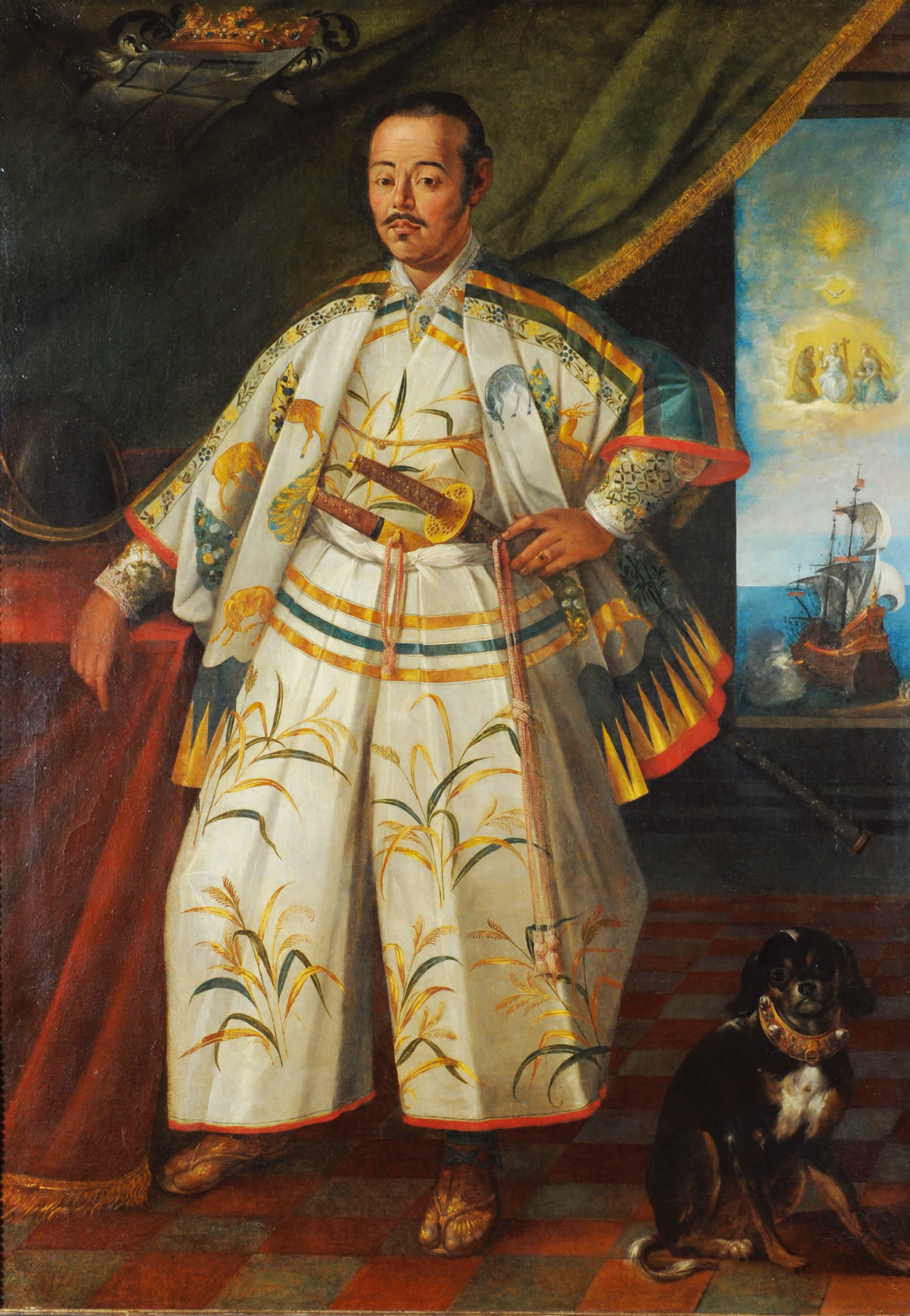
1571–1622
支倉常長
Tsunenaga Hasekura
The Samurai Envoy Who Crossed Two Oceans and Became a Roman Nobleman
.
Early Life and a Turbulent Family Background
Tsunenaga Hasekura was born in 1571 in the Okitama District of Ushū, modern-day Yamagata Prefecture in northern Japan. He came from the prestigious Kanmu Heishi lineage, tracing his ancestry back to Emperor Kanmu. His father, Tsunenari Yamaguchi, was a respected samurai retainer of the Sendai domain, serving under the powerful feudal lord Date Masamune. With a stipend of 600 koku, Tsunenari was able to support a substantial household and commanded troops as both a gunner and an infantry officer. He had even traveled abroad during Toyotomi Hideyoshi’s campaigns in Korea, gaining rare first-hand experience of foreign lands.
When Tsunenaga was only seven years old, his life took a dramatic turn. He was adopted by his uncle, Hasekura Tokimasa, and assumed the new family name of Hasekura. Adoption in samurai households was often tied to politics and inheritance, but it also shifted a young man’s loyalties and responsibilities. For a time, Tsunenaga’s prospects seemed secure. Yet a political scandal soon shook the family. His father became implicated in the so-called Nabemaru Incident, a bitter dispute between the Hasekura and Sagane clans. The Sendai authorities judged Tsunenari guilty and ordered him to commit seppuku, ritual suicide. Although Tsunenaga himself was not directly involved, he too suffered consequences—expelled from the domain and stripped of his position. For a samurai, this was a devastating fall from grace, casting his future into uncertaint.
Chosen as Envoy of the Keichō Embassy
Despite this disgrace, Date Masamune did not forget Tsunenaga’s potential. Known for his discipline, calm temperament, and leadership qualities, Tsunenaga was eventually entrusted with an extraordinary mission. In 1613, Masamune appointed him chief envoy of the Keichō Embassy, an ambitious delegation destined for Europe. The embassy’s primary goal was to open trade with New Spain—modern Mexico—then a crucial colony of the Spanish Empire.
At the time, Japan was not yet closed to the outside world, though the Tokugawa shogunate was moving steadily toward isolation. Christianity had already been outlawed, yet Tokugawa Ieyasu remained fascinated by New Spain’s advanced mining and refining technologies for gold and silver. However, diplomatic trust had been badly damaged by the San Felipe Affair, when a Spanish galleon was seized and its crew implicated missionaries. Rebuilding relations would not be easy.
Tsunenaga’s first attempt came in 1612 aboard the San Sebastián, sailing from Uraga. A violent storm struck, forcing the ship aground. Undeterred, he prepared a second attempt. On October 28, 1613, the massive galleon San Juan Bautista, constructed in Japan with European shipwright assistance, departed from Ishinomaki. Onboard were Hasekura, 180 companions, and the bold ambition of linking Japan with the farthest reaches of Europe.
Crossing the Pacific and Meeting the King of Spain
The Pacific crossing tested their endurance. Weeks of storms, scarce provisions, and constant threats of disease strained the crew. Yet Tsunenaga’s steady leadership preserved morale. In early 1614, the ship finally reached Acapulco, gateway to New Spain.
From Mexico, the delegation crossed the Atlantic and in 1615 entered Madrid, the glittering capital of the Spanish Empire. Tsunenaga was granted an audience with King Philip III. In an extraordinary moment of diplomacy and faith, he was baptized into Catholicism before the monarch. His baptismal name—Don Felipe Francisco Faxicura—honored both the King and the Franciscan order.
Yet negotiations were fraught. Spain hesitated to extend trade privileges to a nation persecuting Christians. Tsunenaga pressed Japan’s case but after months of delay, little progress was made. Refusing to surrender, he resolved to bring his appeal to Europe’s highest spiritual authority—the Pope himself.
A Warm Welcome in Rome and Ennoblement
In late 1615, Tsunenaga and his entourage entered Rome, heart of Catholic Christendom. Their grand procession—silk-clad samurai accompanied by banners—captivated the city. Pope Paul V received them warmly, recognizing both the symbolic and diplomatic importance of this unprecedented mission.
Tsunenaga presented Date Masamune’s letters, offering friendship, missionary exchange, and trade. The Pope responded positively, promising to send missionaries to Japan. In an unparalleled gesture, Rome granted Hasekura citizenship and conferred upon him the title of Roman nobleman. No other Asian in history has ever received this distinction. His mission, though precarious, had achieved extraordinary symbolic success.
Return to Japan and the Fate of the Mission
After Rome, Tsunenaga returned to Spain, hoping to revive trade negotiations. This time, however, the answer was an unequivocal rejection. Bound by their alliance with the Church and wary of Japan’s anti-Christian stance, Spanish officials refused his petitions.
In 1617, after nearly four years and tens of thousands of miles traveled, Tsunenaga sailed back to Japan. He had become the first Japanese ever to cross both the Pacific and the Atlantic. Though the embassy failed in its commercial aims, its scope and daring were without precedent.
Anecdotes of Cultural Exchange and Achievements
Beyond politics, the journey yielded striking cultural encounters. One famous anecdote involved kaishi, thin folded Japanese paper carried inside a samurai’s kimono. Europeans, accustomed to cloth handkerchiefs or simply using their hands, were astonished when Tsunenaga used and discarded the paper after blowing his nose. Locals rushed to collect the sheets, marveling at their softness and novelty. Small episodes such as this symbolized the exchange of ideas and practices his embassy represented.
The mission also left tangible legacies. Maps, documents, and artifacts brought back to Japan later became designated National Treasures. Tsunenaga himself accumulated several historic “firsts”: the first Japanese to cross both oceans, the first to be baptized in Spain, the first to meet its king, and the only Asian ever ennobled by Rome. His achievements expanded the horizon of Japanese diplomacy, even as his homeland drifted into isolation.
Legacy
Tsunenaga Hasekura’s life embodied ambition, resilience, and cultural curiosity. His embassy reflected the tensions of early 17th-century Japan: outward-looking curiosity clashing with inward-facing policies. While his trade mission collapsed, his journey proved that Japanese envoys could stand on the world stage as equals, navigating courts, faith, and politics across continents.
Today, statues of Hasekura rise in Sendai, Acapulco, and Coria del Río in Spain, where descendants of his entourage still bear the surname “Japón.” His story endures as a reminder of courage in the face of uncertainty, the will to cross uncharted oceans, and the universal desire for connection between cultures.
Share This Article
Related Articles
Pick Up
- JAPANESE SAMURAI /Ashikaga Takauji
- JAPANESE SAMURAI / John Manjirō
- JAPANESE SAMURAI /Tsutaya Jūzaburō
- JAPANESE SAMURAI /Sugawara no Michizane
- JAPANESE SAMURAI / Tokugawa Yoshinobu
-

- Japan Now! Why Elon Musk Is Being Reimagined as an A...
- JAPANESE SAMURAI / Raichō Hiratsuka
- JAPANESE SAMURAI /Iwakura Tomomi
- JAPANESE SAMURAI / Sakanoue no Tamuramaro
- JAPANESE SAMURAI / Shigenobu Okuma
- See more History articles >






Latest Articles
- Looking for a Car? Visit South Bay Toyoya! Reliable...
- WA Dining Suya Enjoy the Flavors of Fall with Limit...
- Free Medicare Seminars, Learn the Besics and Review...
- Den’s Tea ...
- Capture Special Memories at Kimono no Kobeya ...
-

- Recommended for Those on a Diet! Healthy Noodles
- Savor Seasonal Specials at TAKAGI COFFEE!
- Daikokuya El Monte Celebrates 10th Anniversary! ...
- Check Out JINS 360°! New Store Now Open!
- Pho-Inspired Asian Spicy Ramen Returns for a Limited...
- See all articles >