Shinsengumi Yakitori Izakaya is coming soon to Little Tokyo!

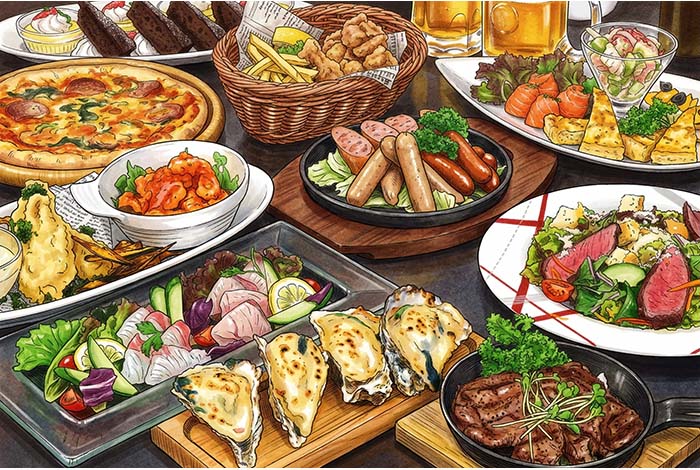
Opening a new shop in Little Tokyo A well-loved yakitori izakaya in Southern California. 「Shin-Sen-Gumi Yakitori」 After more than 30 years of offering authentic izakaya experiences, the chain is opening its 17th store! With a relaxed interior and authentic Japanese hospitality, the restaurant offers yakitori while quickly becoming a new hotspot in downtown. Follow us on social media for the latest updates! Shinsengumi Yakitori Izakaya – Little Tokyo 📍368 East 2nd St. Los Angeles, CA 90012 TEL:213-328-7778Instagram:@ssg.yakitori.littletokyo この投稿をInstagramで見る Shin-Sen-Gumi Yakitori Izakaya Little Tokyo(@ssg.yakitori.littletokyo)がシェアした投稿

View More Shinsengumi Yakitori Izakaya is coming soon to Little Tokyo!

Sake Cocktails Now Served at LA Galaxy Home Stadium | Hakutsuru Sake

Hakutsuru Sake is serving Japanese sake cocktails at LA Galaxy’s stadium – come try them! Enjoy drinks made with Hakutsuru Sayuri Nigori Sake, a popular sake in the U.S., at a special sake bar! As the official sake partner for the 2026 season, Hakutsuru Sake is introducing a new cocktail, the “Sake Horchata.” This drink takes inspiration from Mexico’s traditional rice-based beverage, Horchata, offering a creamy and indulgent taste. At the stadium, you can also enjoy other unique nigori sake cocktails, including the refreshing “Sayuri Margarita” with bright citrus flavors and the “Sayuri Frozen Margarita,” perfect for hot days. Don’t…

View More Sake Cocktails Now Served at LA Galaxy Home Stadium | Hakutsuru Sake

Why Are Japanese Graduations So Quiet? (The Silent Choreography of “Sotsugyoshiki”)

The Hollywood Celebration In the US, high school and college graduations are massive, loud celebrations. Families blow air horns from the bleachers, students decorate their mortarboard caps, and at the end, everyone joyfully throws their hats into the sky. In Japan, the atmosphere is the exact opposite. The Solemn Ritual A Japanese graduation, known as “Sotsugyoshiki,” is a profoundly serious, formal, and highly emotional ritual. There is no cheering, no cap-tossing, and absolutely no customized outfits. Students usually wear their crisp school uniforms or, for university, elegant traditional Hakama or formal black suits. The Strict Choreography The entire ceremony is…

View More Why Are Japanese Graduations So Quiet? (The Silent Choreography of “Sotsugyoshiki”)

The Greatest Sushi Lie: What Does “Negitoro” Actually Mean? (The Hidden Bone Scrapings)

The Sushi Menu Favorite If you go to any sushi restaurant, from high-end Ginza counters to casual conveyor-belt chains in Torrance, you will find “Negitoro” on the menu. It is a delicious, soft, minced fatty tuna usually served in a sushi roll or on top of a rice bowl, often sprinkled with chopped green onions. The Green Onion Misunderstanding If you speak a little Japanese, the name seems obvious. “Negi” means green onion, and “Toro” means fatty tuna. Therefore, Negitoro means fatty tuna with green onions, right? Shockingly, this is a massive linguistic misunderstanding! The “Negi” in Negitoro has nothing…

View More The Greatest Sushi Lie: What Does “Negitoro” Actually Mean? (The Hidden Bone Scrapings)

LOS ANGELES CAREER FORUM 2026 – A Job & Career Event for Japanese-English Bilinguals

LOS ANGELES CAREER FORUM 2026       – A Job & Career Event for Japanese-English Bilinguals A career event for Japanese-English bilinguals featuring approximately 50 global companies, with opportunities to interview at company booths and potentially receive job offers. We also offer special programs to support your job search, including resume workshops, mock interviews, and case study workshops. For registration details and the event schedule, please visit the website. ◼︎Event Date & Venue

View More LOS ANGELES CAREER FORUM 2026 – A Job & Career Event for Japanese-English Bilinguals

Why Does All of Japan Eat Eel in the Summer? (The Edo Period Marketing Genius)

The Summer Fatigue Summer in Japan is brutally hot and humid. It is so exhausting that there is a specific word for it: “Natsubate” (summer fatigue). To survive this draining heat, Japanese people turn to a very specific, luxurious comfort food: grilled freshwater eel, or “Unagi.” The Day of the Ox Every year in late July, Japan celebrates “Doyo no Ushi no Hi” (The Day of the Ox). On this specific day, almost every supermarket and restaurant in the country pushes massive displays of Unagi covered in sweet, sticky soy glaze. But why eel, and why in the middle of…

View More Why Does All of Japan Eat Eel in the Summer? (The Edo Period Marketing Genius)

Why Do Japanese Train Stations Sell Hundreds of Lunch Boxes? (The “Ekiben” Experience)

The Train Journey In the US, flying or driving is the standard way to travel long distances. In Japan, the “Shinkansen” (bullet train) is king. And no Japanese train ride is truly complete without buying an “Ekiben.” What is Ekiben? The word combines “Eki” (station) and “Ben” (bento box). These are not your average convenience store lunches. They are high-quality, beautifully packaged meals sold exclusively at train stations, specifically designed to be eaten while watching the scenery zoom by at 200 mph. The Regional Pride The best part about Ekiben is the incredible regional variety. Almost every major station sells…

View More Why Do Japanese Train Stations Sell Hundreds of Lunch Boxes? (The “Ekiben” Experience)

Why Is the Green Tea Free at Japanese Sushi Restaurants? (The “Agari” Culture)

The Beverage Bill When you dine out in the US, ordering a pot of hot green tea will usually add a few dollars to your bill. But in Japan, the moment you sit down at a sushi counter or a traditional “Washoku” (Japanese cuisine) restaurant, a steaming cup of green tea is placed in front of you—completely free of charge. The Palate Cleanser In the sushi world, this hot tea is specifically called “Agari.” It is not just meant to quench your thirst; it is a culinary tool. The hot, bitter tea is designed to melt and wash away the…

View More Why Is the Green Tea Free at Japanese Sushi Restaurants? (The “Agari” Culture)

Why Do Japanese People “Hunt” for Leaves? (The “Momijigari” Autumn Escape)

The Autumn “Hunt” When autumn arrives in Japan, you will often hear people say they are going “Momijigari” (Autumn Leaf Hunting). But don’t worry, no one is actually taking weapons into the forest to shoot down tree branches! The Art of Viewing In traditional Japanese, the word “hunting” can also mean searching for and admiring beautiful things in nature. Just like “Hanami” (Cherry Blossom Viewing) in the spring, Momijigari is the beloved autumn tradition of traveling to the mountains or countryside simply to appreciate the stunning, fiery red and gold leaves. The Mountain Canvas Because Japan is 70% mountainous and…

View More Why Do Japanese People “Hunt” for Leaves? (The “Momijigari” Autumn Escape)

Where Do Anime Characters Eat Their Watermelon? (The “Engawa” Chill Zone)

The Anime Trope If you watch Japanese anime or movies set in the summer, you have definitely seen this scene:Characters sit on a narrow wooden floor strip outside the house, their feet dangling over the garden, eating slices of watermelon and listening to wind chimes. What is Engawa? That wooden strip is called the “Engawa.”It is a traditional Japanese veranda that wraps around the outside of a classic wooden house.It acts as a brilliant architectural buffer zone — it is technically outside, yet still sheltered by the extended roof. 👉 Curious about other traditional Japanese games?Read Next: https://japanupmagazine.com/archives/19351 The Ultimate…

View More Where Do Anime Characters Eat Their Watermelon? (The “Engawa” Chill Zone)

Why Are Japanese Kids Attacking a Watermelon? (The “Suikawari” Ritual)

The Beach Battlefield Imagine walking down a beautiful Japanese beach in mid-summer.Suddenly, you see a group of people cheering as a blindfolded person wildly swings a long wooden stick at a giant watermelon sitting in the sand. The Rules of the Game This chaotic event is called “Suikawari” (Watermelon Splitting). The rules are simple: Place a watermelon on a tarp or the ground, blindfold the “hitter,” spin them around a few times, and let them try to smash the fruit while listening to the frantic, often conflicting directions shouted by their friends! 👉 Want to master Japanese grocery shopping?Read Next:…

View More Why Are Japanese Kids Attacking a Watermelon? (The “Suikawari” Ritual)

What Is the Endless Noodle Challenge? (The “Wanko Soba” Experience)

The Ultimate Eating Contest In the US, competitive eating usually involves hot dogs or pies. In Japan, the ultimate food endurance test is “Wanko Soba.” It is a fast-paced, traditional dining experience where you eat bite-sized portions of buckwheat noodles from tiny bowls until you physically cannot take another bite. The Relentless Servers The moment you finish your tiny bowl, a server standing right next to you instantly drops another bite of noodles into it. They do this with a rhythmic, encouraging chant like “Hai, dondon!” (More, more!) or “Hai, jan-jan!” (Keep going!). It is an overwhelming, hilarious battle of…

View More What Is the Endless Noodle Challenge? (The “Wanko Soba” Experience)