Share This Article




1750–1797
蔦屋重三郎
Tsutaya Jūzaburō
Sponsored Link
The Edo Publisher Who Shaped the Golden Age of Ukiyo-e
.
A Talent Blossomed in Yoshiwara
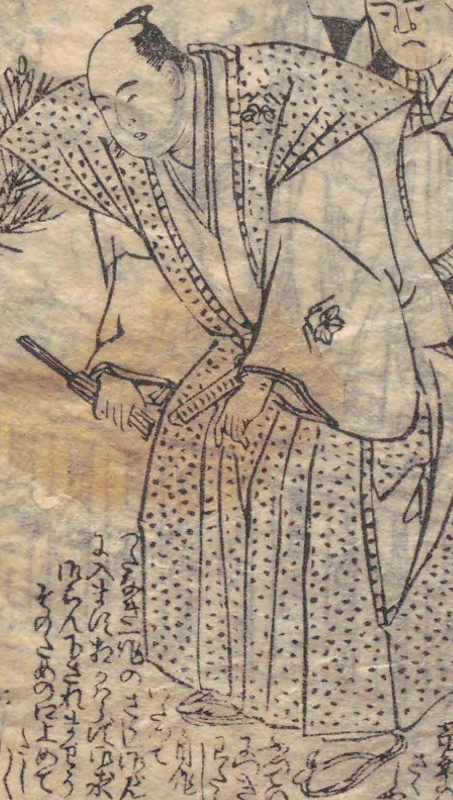
Tsutaya Jūzaburō was one of the most influential publishers of the mid-Edo period, a man whose vision helped define what is now remembered as the “golden age” of ukiyo-e woodblock prints. He was born in 1750 in the bustling Yoshiwara district of Edo (modern-day Tokyo). His birth name was Kitagawa Karimaru, and he lost his mother at a young age. He was later adopted by Kitagawa Tokubei, who ran the “Tsutaya” teahouse.
Yoshiwara was unlike any other neighborhood in Edo. It was a glamorous, tightly regulated pleasure district where courtesans, entertainers, actors, and poets mingled with wealthy patrons. Growing up in this lively environment, young Karimaru absorbed the rhythms of Edo’s urban culture. Surrounded by music, poetry, and fashion, he developed a sharp sensitivity to style, wit, and the desires of the public. This immersion in cultural trends would later become the foundation of his publishing career.
Building a Reputation with Yoshiwara Saiken
In the early 1770s, Jūzaburō opened a small bookshop in the front of his elder brother’s teahouse. His breakthrough came in 1775 when he began selling and later publishing the Yoshiwara Saiken, a guidebook to the pleasure district. These guides included lists of brothels, profiles of courtesans, prices, and even maps. They served as both practical handbooks for customers and as cultural records of Edo’s nightlife.
The previous publisher of the Saiken had been punished for unauthorized reproductions, leaving an opening that Jūzaburō quickly seized. His edition, informed by his insider knowledge of Yoshiwara, was more accurate and visually appealing. Patrons trusted it, and soon his reputation grew.
Around this time, he also published his first original work, Hitome Senbon (“A Thousand Flowers at a Glance”), which compared famous courtesans to seasonal flowers. The witty metaphors and elegant illustrations charmed readers. Brothels often gifted this book to special clients, and its popularity established Jūzaburō as a publisher with flair, intelligence, and strong business instincts.
Moving to Nihonbashi and Expanding Horizons
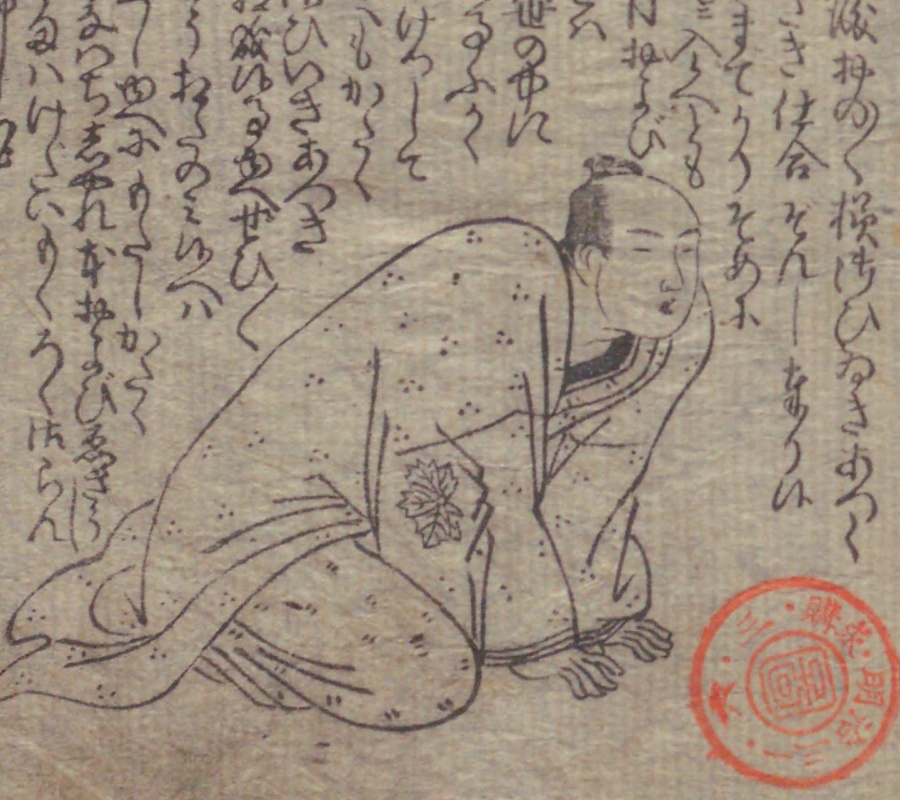
In 1783, Jūzaburō relocated to Nihonbashi Tōriabura-chō, the heart of Edo’s publishing world, and opened a new shop called “Kōshodō.” From this strategic base, he expanded beyond pleasure quarter guides. He began cultivating ties with leading cultural figures, most notably the celebrated poet Ōta Nanpo, a master of kyōka—humorous 31-syllable poems filled with satire and wordplay.
Jūzaburō himself contributed poems under the pen name “Tsutakaramaru,” and his anthologies of kyōka quickly became bestsellers among Edo’s literate townspeople. He also ventured into kibyōshi (illustrated satirical fiction) and sharebon (witty prose books about the pleasure quarters). These genres combined sharp humor, social commentary, and attractive illustrations, appealing to Edo’s merchants and artisans who were eager for entertainment.
More importantly, Jūzaburō had a unique approach to nurturing talent. He provided promising writers and artists with housing, food, and stipends, allowing them to focus entirely on their creative work. Among those he supported were Kitagawa Utamaro, who would become the most celebrated portraitist of beautiful women, and Jippensha Ikku, later famous for his comic travel epic Tōkaidōchū Hizakurige.
Censorship and the Kansei Reforms
Jūzaburō’s boldness, however, brought him into conflict with authority. In 1787, senior councilor Matsudaira Sadanobu introduced the Kansei Reforms, a series of measures designed to restore frugality and moral order. These reforms targeted the very heart of Edo’s publishing industry. Satirical kibyōshi, risqué sharebon, and anything that appeared to mock the government were banned or severely restricted.
Jūzaburō had published works that pushed against these limits, including satirical stories that lampooned policy. For this, he was fined and temporarily forbidden from continuing some publishing activities. Yet his adaptability was remarkable. Rather than abandoning his work, he shifted his focus toward new kinds of visual art that could avoid censorship while still captivating audiences.
Utamaro and the Reinvention of Bijin-ga
In the early 1790s, Jūzaburō placed his confidence in the young artist Utamaro. Together, they revolutionized the genre of bijin-ga (pictures of beautiful women). Instead of depicting women as generic, idealized figures, Utamaro, under Jūzaburō’s guidance, produced ōkubi-e (“large-headed portraits”), where the women were shown from the chest up, with striking attention to facial features, hairstyles, and subtle expressions.
Works like Three Beauties of the Present Day became instant sensations. They captured not only beauty but also individuality, turning courtesans and ordinary women into icons of style. This innovation set Utamaro apart from his predecessors and cemented Jūzaburō’s reputation as a visionary publisher who knew how to spot and cultivate genius.
The Mystery of Sharaku
Always seeking novelty, Jūzaburō introduced yet another artist in 1794: Tōshūsai Sharaku. Practically nothing is known about Sharaku, and his career lasted less than a year. But in that short span, Jūzaburō published more than 140 of his prints—most of them portraits of kabuki actors.
Unlike previous flattering depictions, Sharaku’s works were bold, exaggerated, and often unflattering. Actors were shown in moments of high emotion, their faces twisted with passion, tension, or arrogance. Edo audiences were shocked. Some were unsettled, while others admired the raw honesty of the images. Though Sharaku’s career ended abruptly, his prints are now considered among the greatest achievements of ukiyo-e. That Jūzaburō recognized and supported this radical talent is a testament to his daring instincts.
A Premature Death and Lasting Legacy
By 1796, years of financial pressure, constant innovation, and battles with censorship had worn Jūzaburō down. His health declined, and in 1797 he died of beriberi at only 47 years old. His shop, Kōshodō, continued under successors, but the unique combination of aesthetic judgment, business acumen, and courage that Jūzaburō embodied was irreplaceable.
In just over two decades, he had transformed Edo’s publishing world. He had bridged literature, satire, and visual art; nurtured talents who would define Japanese cultural history; and responded to political restrictions with remarkable adaptability. The masterpieces of Utamaro and Sharaku—inseparable from Jūzaburō’s vision—remain central to our understanding of ukiyo-e today.
Legacy
Jūzaburō’s story is ultimately one of innovation under constraint. He saw publishing not simply as a business of printing and selling books, but as a cultural enterprise—one that required sensing the mood of the city, identifying voices that could define it, and presenting them in ways that resonated with audiences.
He was not merely a publisher but a producer, orchestrating collaborations between poets, writers, and artists, and shaping trends in a restless metropolis hungry for novelty. More than two centuries later, his legacy endures. His name is inseparable from the flowering of Edo culture, a reminder that creativity thrives not in freedom alone but also in resilience against pressure.
Share This Article
Related Articles
Pick Up
- JAPANESE SAMURAI / Raichō Hiratsuka
- JAPANESE SAMURAI / Sakanoue no Tamuramaro
- JAPANESE SAMURAI / Tokugawa Yoshinobu
- JAPANESE SAMURAI / Shigenobu Okuma
- JAPANESE SAMURAI / Heihachiro Togo
- JAPANESE SAMURAI / Shinsaku Takasugi
- JAPANESE SAMURAI / Shoin Yoshida
- JAPANESE SAMURAI / Bakin Kyokutei
- JAPANESE SAMURAI / Umayado no Oji (Prince Umayado)
- SAMURAI Legends: A Samurai Spirit Lives On / Hideo N...



Latest Articles
- Why Does Japan Need Professional “Train Pusher...
- Tired of Dating Apps? In Japan, You Can Just Rent a ...
- [Japanese Interviews: Life in LA] Arisa Nakamura : “...
- What Is the Japanese Secret to a Long Life? (The 84-...
- Need a Best Man? Just Rent One! (Japan’s Fake ...
- Is Japan Actually a Concrete Jungle? (The 65% Forest...
- [Japanese Interviews: Life in LA] Dan Sawada : “I Ta...
- Why Is Japanese Anime So Incredibly Addictive? (The ...
- Why Does Japan Have 300,000 Different Last Names? (T...
- [ Interview ] Yuriyan Retriever – Comedian | N...